OB Hesi 2021 Questions with all the correct answers
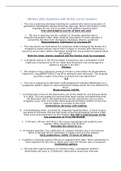
OB Hesi 2021 Questions with all the correct answers 1. The nrse is planning discharge teaching for a patient who had an evacuation of gestational trophoblastic disease (GTD) two days ago. Which information is most important for the nrse to include in this patient’s teaching plan? 2. The nrse is planning care for a patient at 30-weeks gestation who is experiencing preterm labor. What maternal prescription is most important in preventing this fetus from developing respiratory distress syndrome? 3. The nrse places one hand above the symphysis while massaging the fundus of a multiparous patient whose uterine tone is boggy 15 minutes after delivering a 7 pound 10 ounce infant. Which information should the nrse provide the patient about this finding? 4. A pregnant woman in the first trimester of pregnancy has a hemoglobin of 8.6 mg/dl and a hematocrit of 25.1%. What food should the nrse encourage this patient to include in her diet? 5. The newborn nrsery admission protocol includes a prescription for phytonadione (Vitamin K1, AquaMEPHYTON) 0.5 mg IM to newborns upon admission. The ampoule provides 2 mg/ml. How many ml should the nrse administer? 6. The nrse is preparing to administer methylergonovine maleate (Methergine) to a postpartum patient. Based on what assessment finding should the nrse withhold the drug? 7. A primigravida arrives at the observation unit of the maternity unit because thinks is in labor. The nrse applies the external fetal heart monitor and determines that the fetal heart rate is 140 beats/minute and the contractions are occurring irregularly every 10 to 15 minutes. What assessment finding confirms to the nrse that the patient is not labor at this time? 8. A breastfeeding infant, screened for congenital hypothyroidism, is found to have low levels of thyroxine (T4) and high levels of thyroid stimulating hormone (TSH). What is the best explanation for this finding?. 9. A full-term, 24-hour-old infant in the nrsery regurgitates and suddenly turns cyanotic. What should the nrse do first? 10. At 6-weeks gestation, the rubella titer of a patient indicates she is non-immune. When is the best time to administer a rubella vaccine to this patient? 11. A patient is receiving oxytocin (Pitocin) to augment early labor. Which assessment is most important for the nrse to obtain each time the infusion rate is increased? 12. One day after vaginal delivery of a full-term baby, a postpartum patient’s white blood cell count is 15,000/mm3. What action should the nrse take first? 13. A patient delivers a viable infant, but begins to have excessive uncontrolled vaginal bleeding after the IV Pitocin is infused. When notifying the healthcare provider of the patient’s condition, what information is most important for the nrse to provide? 14. A neonate who has congenital adrenal hyperplasia (CAH) presents with ambiguous genitalia. What is the primary nursing consideration when supporting the parents of a child with this anomaly? 15. During a 26-week gestation prenatal exam, a patient reports occasional dizziness and lightheadness when she is lying down. What intervention is best for the nrse to recommend to this patient. 16. The current vital signs for a primipara who delivered vaginally during the previous shift are: temperature 100.4 F, heart rate 58 beats/minute, respiratory rate 16 breaths/minute, and blood pressure 130/74. What action should the nrse implement? 17. A 4-day postpartum patient calls the clinic and reports that her nipples are so sore that she does not know if she can continue to breastfeed her infant. What instruction is best for the nrse to provide? 18. A loading dose of terbutaline (Bretine) 250 mcg IV is prescribed for a patient in preterm labor. Brethine 20 mg is added to 1000 ml D5W. How many ml of the solution should the nrse administer? (Enter numeric value only) 19. The mother of a 5-week-old tells the nrse that her baby has acne and asks if she can use her teenage son’s acne cream, benzoyl peroxide, on the baby’s face. Which answer should the nrse to provide? 20. A 36-week primigravida is admitted to labor and delivery with severe abdominal pain and bright red vaginal bleeding. Her abdomen is rigid and tender to touch. The fetal heart rate (FHR) is 90 beats/minute, and the maternal heart rate is 120 beats/minute. What action should the nrse implement first? 21. A laboring patient’s membranes rupture spontaneously. The nrse notices that the amniotic fluid is greenish- brown. What intervention should the nrse implement first? 22. A 34-week primigravida with pregnancy induced hypertension (PIH) is receiving Ringer’s Lactate 500 ml with magnesium sulfate 20 grams at the rate of 3 grams/hour. How many ml/hour should the nrse program the infusion pump? (Enter numeric value only) 23. Artificial rupture of the membranes of a laboring patient reveals meconium-stained fluid. What intervention has the greatest priority? 24. A patient whose labor is being augmented with an oxytocin (Pitocin) infusion requests an epidural for pain control. Findings of the last vaginal exam, performed 1 hour ago, were 3 cm cervical dilatation, 60% effacement, and a -2 station. What action should the nrse implement first? 25. A patient with gestational diabetes is undergoing a non-stress test (NST) at 34-weeks gestation. The baseline fetal heart rate (FHR) is 144 beats/minute. The patient is instructed to mark the fetal monitor paper by pressing a button attached to the fetal monitor each time the baby moves. After 20 minutes, the nrse evaluates the fetal monitor strip. Which outcome indicates a reactive NST? 26. A newborn who was a breech presentation is admitted to the nrsery. Which assessment procedure is a priority for the nrse to perform? 27. The nrse is assessing a 38-week gestation newborn infant immediately following a vaginal birth. Which assessment finding best indicates that the infant is transitioning well to extrauterine life? 28. A 16-year-old gravida 1, para 0 patient has just been admitted to the hospital with a diagnosis of eclampsia. She is not presently convulsing. Which intervention should the nrse plan to include in this patient’s nursing care plan? 29. What goal is most important for the nrse to include in the plan of care for a patient with gestational diabetes? 30. A new mother is having trouble breastfeeding her newborn son. He is making frantic rooting motions and will not grasp the nipple. What intervention would be most helpful to this mother? 31. The nrse is interacting with a female patient who is diagnosed with postpartum depression. Which finding should the nrse document as an objective signs of depression? (Select all that apply.) Has a disheveled appearance. 32. A pregnant woman with hypermesis gravidarium, what is the best nrse intervention.
Written for
- Institution
- Hesi OB
- Module
- Hesi OB
Document information
- Uploaded on
- December 11, 2021
- Number of pages
- 4
- Written in
- 2021/2022
- Type
- Exam (elaborations)
- Contains
- Questions & answers
Subjects
-
ob hesi 2021 questions with all the correct answers
-
1 the nrse is planning discharge teaching for a patient who had an evacuation of gestational trophoblastic disease gtd two days ago which inform

Also available in package deal