Rosie Coleman
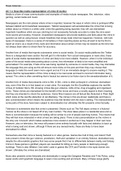
AC 1.4. Describe media representation of crime (6 marks)
Media is a form of mass communication and examples of media include newspaper, film, television, video
gaming, social media and music.
Newspapers are the main places where crime is reported, however the ways in which crime is portrayed differ
between tabloid and broadsheet newspapers. Tabloid newspapers will sensationalise the crime that is being
written about so if there is a white collar crime like gambling being reported, they will use dramatised
hyperbolic headlines which are eye catching but not necessarily factually accurate to make the cime seem
more severe and exciting. However, broadsheet newspapers will provide statistics and facts about the crime in
question as well as using factual, simple headlines that simply state what has happened. However, with both
types of newspaper, there is a sense of immediacy in their reporting styles as they all want to be the first to
report an event, as a result of this, facts and information about certain crimes may be skewed as the time has
not always been taken to check them for accuracy.
Another form of media that reports on/presents crime is social media. On social media platforms like Twitter
there is a designated news section that will get it’s information from actual newspapers or news sites; these
parts of social media representation of crime are likely to be more reliable. However, when it is the individual
users of the social media sites posting about a crime, this information is likely to be more simplified and
personalised. For example, if hate crime was being reported by someone on social media, they may dramatise
the language they are using as this will ensure more clicks on the post and then they may choose their
language to make the event seem more urgent and as if it is an immediate danger to anyone reading it. This
means that the representation of this crime is likely to be inaccurate and lead to incorrect information being
spread. The crime is often something that is factual but seems to be fiction due to the sensationalisation of it.
Another form of media that presents crime is film. In film, crime is often portrayed in a fictional, dramatised
way, even if the film is in fact based on a real crime. For example, the film Goodfellas explores the real-life
crimes of mobster Henry Hill, showing crimes like gun violence, knife crime, drug smuggling and organised
crime. These crimes are dramatised for the benefit of the movie and have a novelty aspect to them meaning
that they are intended to shock the audiences. Some films however are all factual like Abducted in Plain Sight
which looks at the real life abduction of Jan Banberg. The crimes in this are shown realistically and there is
also conventionalism which means the audience may feel familiar with the story’s setting. The reenactments of
some parts of the story have been subject to dramatisation but ultimately this flm presents crime factually.
Television is somewhere else that crime is presented. Shows such as The Fall depict crimes in a fictional
manner as the show is not based off of any real murders. The show takes place in a residential area and so
there is conventionalism because the setting will be similar to a lot of people watching homes. This means that
they will feel more interested in what crimes are taking place. There is also personalisation as the victims in
the story are ‘innocent’ which makes audiences more scared or excited as it may happen in their own lives.
However, also on television, the news will present crime entirely factually with facts and statistics to back up
what is being said and shown, although if there are any reenactments, these are likely to have been
dramatised for effect.
Somewhere else that crime is heavily featured is in video games. Games like Call of Duty and Grand Theft
Auto present crimes like gun violence, prostitution, theft and vandalism in an entirely fictional, dramatised way
despite the ultra-realistic graphics that mea some people find it har to differentiate between reality and fantasy.
Crime in these games is glorified; players are rewarded for killing as many people or destroying enough
buildings. There is also titillation (‘sex-sells’) used in games like GTA and Fortnite in the wyas women are
shown. Ultimately the crimes are dramatised.
Music also presents crime fictionally and dramatically in songs like Gangstas Paradise and F the Police, using
swear words and hyperbolic language to seem more exciting and prominent. Many of these songs glorify
AC 1.4. Describe media representation of crime (6 marks)
Media is a form of mass communication and examples of media include newspaper, film, television, video
gaming, social media and music.
Newspapers are the main places where crime is reported, however the ways in which crime is portrayed differ
between tabloid and broadsheet newspapers. Tabloid newspapers will sensationalise the crime that is being
written about so if there is a white collar crime like gambling being reported, they will use dramatised
hyperbolic headlines which are eye catching but not necessarily factually accurate to make the cime seem
more severe and exciting. However, broadsheet newspapers will provide statistics and facts about the crime in
question as well as using factual, simple headlines that simply state what has happened. However, with both
types of newspaper, there is a sense of immediacy in their reporting styles as they all want to be the first to
report an event, as a result of this, facts and information about certain crimes may be skewed as the time has
not always been taken to check them for accuracy.
Another form of media that reports on/presents crime is social media. On social media platforms like Twitter
there is a designated news section that will get it’s information from actual newspapers or news sites; these
parts of social media representation of crime are likely to be more reliable. However, when it is the individual
users of the social media sites posting about a crime, this information is likely to be more simplified and
personalised. For example, if hate crime was being reported by someone on social media, they may dramatise
the language they are using as this will ensure more clicks on the post and then they may choose their
language to make the event seem more urgent and as if it is an immediate danger to anyone reading it. This
means that the representation of this crime is likely to be inaccurate and lead to incorrect information being
spread. The crime is often something that is factual but seems to be fiction due to the sensationalisation of it.
Another form of media that presents crime is film. In film, crime is often portrayed in a fictional, dramatised
way, even if the film is in fact based on a real crime. For example, the film Goodfellas explores the real-life
crimes of mobster Henry Hill, showing crimes like gun violence, knife crime, drug smuggling and organised
crime. These crimes are dramatised for the benefit of the movie and have a novelty aspect to them meaning
that they are intended to shock the audiences. Some films however are all factual like Abducted in Plain Sight
which looks at the real life abduction of Jan Banberg. The crimes in this are shown realistically and there is
also conventionalism which means the audience may feel familiar with the story’s setting. The reenactments of
some parts of the story have been subject to dramatisation but ultimately this flm presents crime factually.
Television is somewhere else that crime is presented. Shows such as The Fall depict crimes in a fictional
manner as the show is not based off of any real murders. The show takes place in a residential area and so
there is conventionalism because the setting will be similar to a lot of people watching homes. This means that
they will feel more interested in what crimes are taking place. There is also personalisation as the victims in
the story are ‘innocent’ which makes audiences more scared or excited as it may happen in their own lives.
However, also on television, the news will present crime entirely factually with facts and statistics to back up
what is being said and shown, although if there are any reenactments, these are likely to have been
dramatised for effect.
Somewhere else that crime is heavily featured is in video games. Games like Call of Duty and Grand Theft
Auto present crimes like gun violence, prostitution, theft and vandalism in an entirely fictional, dramatised way
despite the ultra-realistic graphics that mea some people find it har to differentiate between reality and fantasy.
Crime in these games is glorified; players are rewarded for killing as many people or destroying enough
buildings. There is also titillation (‘sex-sells’) used in games like GTA and Fortnite in the wyas women are
shown. Ultimately the crimes are dramatised.
Music also presents crime fictionally and dramatically in songs like Gangstas Paradise and F the Police, using
swear words and hyperbolic language to seem more exciting and prominent. Many of these songs glorify