MODULE EED2601
ASSIGNMENT 3
UNIQUE NUMBER 544433
DATE 31/08/2021
, QUESTION 1
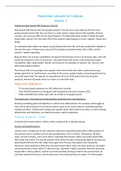
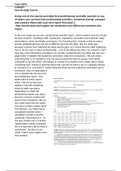
6 key characteristics of environmental education
1. It must be inter-, trans- and multi-disciplinary: it should be taught across all
subject disciplines.
2. It should include environmental concepts such as biodiversity, limiting factors,
carrying capacity, and sustainability.
3. It should employ hands-on experiences and activities: environmental
education requires the utilisation of real-life situations where learning is
acquired through exploring real-life experiences and activities which foster a
deep respect and love for the natural world.
4. It must be life-long learning: environmental education is not reactive, but
instead continually assesses the present and promotes an ideology for a
desirable and better future.
5. Reform of education processes and systems: the nature of environmental
education implies modification of existing systems and structures of
education.
6. Teacher education: effective environmental education requires continuous
professional development through pre-service and in-service channels as a
means for educators to be conversant with and to apply new content
knowledge, teaching and learning approaches, and assessment strategies.
QUESTION 2
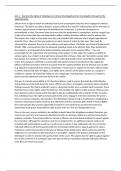
The difference between weak and strong sustainability
Weak sustainability is characterized by a non-declining combined stock of
capital and assumes that man-made capital can be replaced with natural
capital. The technocentric approach is a belief that humankind will find a
technical solution to any environmental problem that may arise. This approach
implies that nature can be exploited, unlimitedly and human demands on
nature need never to change.
Strong sustainability, on the other hand, implies that natural capital cannot be
replaced by any other capital. It implies that resources must be managed
effectively and creating alternative substitutes for non-renewable resources
(prevention is better than cure)
ASSIGNMENT 3
UNIQUE NUMBER 544433
DATE 31/08/2021
, QUESTION 1
6 key characteristics of environmental education
1. It must be inter-, trans- and multi-disciplinary: it should be taught across all
subject disciplines.
2. It should include environmental concepts such as biodiversity, limiting factors,
carrying capacity, and sustainability.
3. It should employ hands-on experiences and activities: environmental
education requires the utilisation of real-life situations where learning is
acquired through exploring real-life experiences and activities which foster a
deep respect and love for the natural world.
4. It must be life-long learning: environmental education is not reactive, but
instead continually assesses the present and promotes an ideology for a
desirable and better future.
5. Reform of education processes and systems: the nature of environmental
education implies modification of existing systems and structures of
education.
6. Teacher education: effective environmental education requires continuous
professional development through pre-service and in-service channels as a
means for educators to be conversant with and to apply new content
knowledge, teaching and learning approaches, and assessment strategies.
QUESTION 2
The difference between weak and strong sustainability
Weak sustainability is characterized by a non-declining combined stock of
capital and assumes that man-made capital can be replaced with natural
capital. The technocentric approach is a belief that humankind will find a
technical solution to any environmental problem that may arise. This approach
implies that nature can be exploited, unlimitedly and human demands on
nature need never to change.
Strong sustainability, on the other hand, implies that natural capital cannot be
replaced by any other capital. It implies that resources must be managed
effectively and creating alternative substitutes for non-renewable resources
(prevention is better than cure)