NR 222 Developmental theories Ch 11 2021
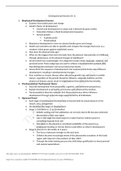
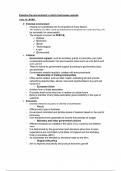
NR 222 Developmental theories Ch 11 2021 1. Biophysical Development theories o Examine how bodies grow and change o Gesell’s theory of development Growth and development is unique and is directed by gene activity Maturation follows a fixed developmental sequence Human growth: Cephalocaudal Proximodistal o Biophysical development is how our physical bodies grow and change. o Health care providers are able to quantify and compare the changes that occur as a newborn infant grows against established norms. o How does the physical body age? o What are the triggers that move the body from the physical characteristics of childhood, through adolescence, to the physical changes of adulthood? o Arnold Gesell was a psychologist. His categories include motor, language, adaptive, and personal-social. These subgroups are used to achieve a developmental quotient (DQ) that distinguishes between normal and abnormal infants. o Genes direct the sequence of development; but environmental factors also influence development, resulting in developmental changes. o Poor nutrition or chronic disease often affects the growth rate and results in smaller stature, regardless of the genetic blueprint. However, adequate nutrition and the absence of disease cannot result in height beyond that determined by heredity. 2. Psychoanalytical/ Psychosocial Theory o Describe development from personality, cognitive, and behavioral perspectives. o Explain development as primarily unconscious and influenced by emotion. o Psychoanalytical theorists maintain that these unconscious drives influence development through universal stages experienced by all individuals. 3. Sigmound Freud o Each stage of psychosexual development is characterized by sexual pleasure in the mouth, anus, and genitals o He identified five stages of development: o Stage 1: Oral (birth to 12 to 18 months) Initially sucking and oral satisfaction are not only vital to life but also extremely pleasurable in their own rights. Late in this stage the infant begins to realize that the mother/parent is something separate from self. Disruption in the physical or emotional availability of the parent (e.g., inadequate bonding or chronic illness) could affect an infant’s development. o Stage 2: Anal (12 to 18 months to 3 years) The focus of pleasure changes to the anal zone. Children become increasingly aware of the pleasurable sensations of this body region with interest in the products of their effort. Through the toilet-training process the child delays gratification to meet parental and societal expectations.
Written for
- Institution
- Chamberlain College Of Nursing
- Module
- NR 222 Developmental theories Ch 11
Document information
- Uploaded on
- October 11, 2021
- Number of pages
- 8
- Written in
- 2021/2022
- Type
- Exam (elaborations)
- Contains
- Questions & answers
Subjects
-
nr 222 developmental theories ch 11 2021
-
nr 222 developmental theories ch 11
-
nr 222 developmental theories ch 11 2021 question and answers

Also available in package deal