ESS IB NOTES
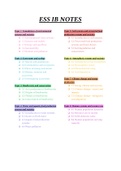
Topic 1: Foundations of environmental Topic 5: Soil systems and terrestrial food
systems and societies production systems and societies
❏ 1.1 Environmental value systems ❏ 5.1 Introduction to soil systems
❏ 1.2 Systems and models ❏ 5.2 Terrestrial food production
❏ 1.3 Energy and equilibria systems and food choices
❏ 1.4 Sustainability ❏ 5.3 Soil degradation and
❏ 1.5 Humans and pollution conservation
Topic 2: Ecosystems and ecology Topic 6: Atmospheric systems and societies
❏ 2.1 Species and populations ❏ 6.1 Introduction to the atmosphere
❏ 2.2 Communities and ecosystems ❏ 6.2 Stratospheric ozone
❏ 2.3 Flows of energy and matter ❏ 6.3 Photochemical smog
❏ 2.4 Biomes, zonation and ❏ 6.4 Acid deposition
succession
❏ 2.5 Investigating ecosystems Topic 7: Climate change and energy
production
Topic 3: Biodiversity and conservation ❏ 7.1 Energy choices and security
❏ 3.1 An introduction to biodiversity ❏ 7.2 Climate change—causes and
❏ 3.2 Origins of biodiversity impacts
❏ 3.3 Threats to biodiversity ❏ 7.3 Climate change—mitigation
❏ 3.4 Conservation of biodiversity and adaptation
Topic 4: Water and aquatic food production Topic 8: Human systems and resource use
systems and societies ❏ 8.1 Human population dynamics
❏ 4.1 Introduction to water systems ❏ 8.2 Resource use in society
❏ 4.2 Access to fresh water ❏ 8.3 Solid domestic waste
❏ 4.3 Aquatic food production ❏ 8.4 Human population carrying
systems capacity
❏ 4.4 Water pollution
, 1
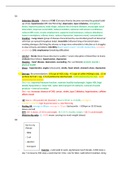
Topic 6: Atmospheric systems and societies
6.1 Introduction to the atmosphere
The atmosphere: dynamic system w inputs outputs storages and flows
- Essential to life on Earth:
- As a shield from meteorites.
- By protecting us from harmful radiation from the sun.
- By moderating and stabilizing our climate (including temperature).
- Stores the oxygen we breathe and the carbon dioxide plants use for
photosynthesis.
- Mix of N2, O2, CO2, WATER VAPOUR
- Human activities alter inputs & outputs of the system, affecting ecosystems
FACTS TO REMEMBER:
- Climate is influenced by abiotic (temp) & biotic factors (plants and animals)
- The atmosphere is maintained by the Earth’s gravitational pull
- The atmosphere is linked to LITHOSPHERE HYDROSPHERE & BIOSPHERE
through biogeochemical cycles (ie Carbon cycle)
- The atmosphere’s composition changed over time, as living organisms develop
- Human activity can damage the atmosphere (ie: combustion of fossil fuels increase
CO2 levels in the air, leading to climate change)
- The atmosphere is made of layers, with dif temps & pressure (warmest: inner layer,
which heats the tropics more than polar regions, leading to temp dif, driving the movement of
air around the planet, transferring pollutants globally, leading to global issues)
- Before, (4.6bil yrs ago) Earth was unlivable bc extreme temps. Then heat radiated into
space, Earth cooled, water condensed into oceans, so life came on Earth 3.8 bil yrs
ago, then photosynthetic bacteria, so more O2 and less CO2, so more biotic species.
EARTH’S ATMOSPHERE TODAY:
78% Nitrogen; 21% Oxygen; 1% Other gases (CO2, Argon, O3 …)
INPUTS OUTPUTS
- Water - Precipitation
- CO2, SO4, NO2 - Solar radiation
- NH4 form livestock - O2 for respiration
- Solar radiation - CO2 for photosynthesis
- O2 from photosynthesis
- Aerosols
Topic 1: Foundations of environmental Topic 5: Soil systems and terrestrial food
systems and societies production systems and societies
❏ 1.1 Environmental value systems ❏ 5.1 Introduction to soil systems
❏ 1.2 Systems and models ❏ 5.2 Terrestrial food production
❏ 1.3 Energy and equilibria systems and food choices
❏ 1.4 Sustainability ❏ 5.3 Soil degradation and
❏ 1.5 Humans and pollution conservation
Topic 2: Ecosystems and ecology Topic 6: Atmospheric systems and societies
❏ 2.1 Species and populations ❏ 6.1 Introduction to the atmosphere
❏ 2.2 Communities and ecosystems ❏ 6.2 Stratospheric ozone
❏ 2.3 Flows of energy and matter ❏ 6.3 Photochemical smog
❏ 2.4 Biomes, zonation and ❏ 6.4 Acid deposition
succession
❏ 2.5 Investigating ecosystems Topic 7: Climate change and energy
production
Topic 3: Biodiversity and conservation ❏ 7.1 Energy choices and security
❏ 3.1 An introduction to biodiversity ❏ 7.2 Climate change—causes and
❏ 3.2 Origins of biodiversity impacts
❏ 3.3 Threats to biodiversity ❏ 7.3 Climate change—mitigation
❏ 3.4 Conservation of biodiversity and adaptation
Topic 4: Water and aquatic food production Topic 8: Human systems and resource use
systems and societies ❏ 8.1 Human population dynamics
❏ 4.1 Introduction to water systems ❏ 8.2 Resource use in society
❏ 4.2 Access to fresh water ❏ 8.3 Solid domestic waste
❏ 4.3 Aquatic food production ❏ 8.4 Human population carrying
systems capacity
❏ 4.4 Water pollution
, 1
Topic 6: Atmospheric systems and societies
6.1 Introduction to the atmosphere
The atmosphere: dynamic system w inputs outputs storages and flows
- Essential to life on Earth:
- As a shield from meteorites.
- By protecting us from harmful radiation from the sun.
- By moderating and stabilizing our climate (including temperature).
- Stores the oxygen we breathe and the carbon dioxide plants use for
photosynthesis.
- Mix of N2, O2, CO2, WATER VAPOUR
- Human activities alter inputs & outputs of the system, affecting ecosystems
FACTS TO REMEMBER:
- Climate is influenced by abiotic (temp) & biotic factors (plants and animals)
- The atmosphere is maintained by the Earth’s gravitational pull
- The atmosphere is linked to LITHOSPHERE HYDROSPHERE & BIOSPHERE
through biogeochemical cycles (ie Carbon cycle)
- The atmosphere’s composition changed over time, as living organisms develop
- Human activity can damage the atmosphere (ie: combustion of fossil fuels increase
CO2 levels in the air, leading to climate change)
- The atmosphere is made of layers, with dif temps & pressure (warmest: inner layer,
which heats the tropics more than polar regions, leading to temp dif, driving the movement of
air around the planet, transferring pollutants globally, leading to global issues)
- Before, (4.6bil yrs ago) Earth was unlivable bc extreme temps. Then heat radiated into
space, Earth cooled, water condensed into oceans, so life came on Earth 3.8 bil yrs
ago, then photosynthetic bacteria, so more O2 and less CO2, so more biotic species.
EARTH’S ATMOSPHERE TODAY:
78% Nitrogen; 21% Oxygen; 1% Other gases (CO2, Argon, O3 …)
INPUTS OUTPUTS
- Water - Precipitation
- CO2, SO4, NO2 - Solar radiation
- NH4 form livestock - O2 for respiration
- Solar radiation - CO2 for photosynthesis
- O2 from photosynthesis
- Aerosols