06-09-2021 1
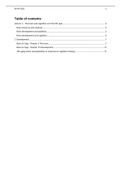
Table of contents
Lecture 1 – The brain and cognition over the life span...........................................................................2
Brain structure and anatomy..............................................................................................................2
Brain development and plasticity.......................................................................................................5
Brain development and cognition......................................................................................................6
1. Development......................................................................................................................................7
Baars & Cage - Chapter 5 The brain....................................................................................................7
Baars & Cage - Chapter 15 Development.........................................................................................11
The aging mind: neuroplasticity in response to cognitive training...................................................17
,06-09-2021 2
Lecture 1 – The brain and cognition over the life span
Brain structure and anatomy
Identify: Cell body, axon, axon hillock, dendrites, synaps and synaptic cleft and myelin sheath
Neurons:
Different types by shape and function
Sensory – to the brain (afferent)
Interneurons – connect cell types within the brain
Motor – out of the brain to the motor systems (efferent)
Action potential threshold, non-decremental, all or nothing response.
Problems with connectivity because of damages myelin sheath.
All the signals coming to the cell, with action potentials are summing together summation of
excitatory potentials.
Synapse:
Action potential leads to neurotransmitter release into synaptic cleft (between two cells). This
gains an effect on the other side.
Some neurons can release more than one type of neurotransmitters different types
(acetycholine, dopamine, norepinephrine, serotonin, glutamate, GABA)
Receptor cell in postsynaptic membrane can adapt to under or over-use
Distribution of synapse connection to a cell influences its excitability
Glia cells: in between of the neuro-cells
Distinguished based on shape and function:
Astrocytes: blood-brain barrier and for structural support
Oligodendrocytes: wrap around the CNS cells with myelin
Microglial cells: waste disposal and fight infections
Ependymal cells: creating cerebral spinal fluid
Schwann cells: myelin for peripheral neurons
Organization:
Organised in different layers
Sensory, interneurons and motor neurons who each have different layers depending on the
location in the brain and function
Grey matter consists of neuronal cell bodies and glia cells, situated on the outer layer of the cortex
and subcortical nuclei
, 06-09-2021 3
Signals through white matter tracts: bundles of myelinated axons
Connecting neurons throughout the central and peripheral nervous system. How all the brain
areas connected to each other.
˃ Association fibers connecting areas within a hemisphere
˃ Commissural fibers crossing to the other hemisphere, to the same (homotopic) or a
different place (heterotopic)
˃ Projection fibers project outwards to subcortical regions, cerebellum or spinal cord
Major components of CNS
Forebrain/telencephalon/cerebrum
Frontal lobe: movement, attention, reward, short-term memory, planning, impulse control
Central sulcus
Parietal lobe: integration and association, bringing information together sensory integration,
association processes, language functions, spatial processing, sense of tough, visual processes etc
Temporal lobe: Memory, emotional association, primary auditory cortex, some visual processes
Occipital lobe: Visual areas
˃ Basal ganglia: Caudate putamen, putamen, globus pallidus, subthalamic nucleus,
substantia nigra
Circuits in the brain go through the basal ganglia:
- Motor circuit: organizing voluntary movement through inhibitory and excitatory
pathways
- Associative circuit: contributing to learning, predictive processing, sequencing,
motor learning
- Reward circuit: producing pleasure responses, motivational functions
˃ Limbic structures: cingulate, hippocampus, hypothalamus, amygdala
- Emotional processing and fight/flight response
Diencephalon
˃ Thalamus, hypothalamus and pituary gland
˃ Thalamus: made up of all different parts and sub nuclei. In contact with a lot of different
areas of the train. Damage will have a lot of consequences. (Dutch train network,
thalamus is Utrecht: everything passes Utrecht)
Midbrain/mesencephalon
˃ Superior/inferior colliculi: contribute to sensory processing
˃ Substantia nigra: contributes to movement initiation
˃ Origin of cranial nerves
Hindbrain
˃ Medulla oblongata: connection spinal cord and brainstem. Contributes to vital reflexes,
damage is often fatal
˃ Pons: contralateral motor control
˃ Cerebellum: automated movements, balance, timing and time perception, sensorimotor
coupling, attention shifting etc. (alcohol hits the hardest here)
˃ Origin of cranial nerves
Spinal cord
Table of contents
Lecture 1 – The brain and cognition over the life span...........................................................................2
Brain structure and anatomy..............................................................................................................2
Brain development and plasticity.......................................................................................................5
Brain development and cognition......................................................................................................6
1. Development......................................................................................................................................7
Baars & Cage - Chapter 5 The brain....................................................................................................7
Baars & Cage - Chapter 15 Development.........................................................................................11
The aging mind: neuroplasticity in response to cognitive training...................................................17
,06-09-2021 2
Lecture 1 – The brain and cognition over the life span
Brain structure and anatomy
Identify: Cell body, axon, axon hillock, dendrites, synaps and synaptic cleft and myelin sheath
Neurons:
Different types by shape and function
Sensory – to the brain (afferent)
Interneurons – connect cell types within the brain
Motor – out of the brain to the motor systems (efferent)
Action potential threshold, non-decremental, all or nothing response.
Problems with connectivity because of damages myelin sheath.
All the signals coming to the cell, with action potentials are summing together summation of
excitatory potentials.
Synapse:
Action potential leads to neurotransmitter release into synaptic cleft (between two cells). This
gains an effect on the other side.
Some neurons can release more than one type of neurotransmitters different types
(acetycholine, dopamine, norepinephrine, serotonin, glutamate, GABA)
Receptor cell in postsynaptic membrane can adapt to under or over-use
Distribution of synapse connection to a cell influences its excitability
Glia cells: in between of the neuro-cells
Distinguished based on shape and function:
Astrocytes: blood-brain barrier and for structural support
Oligodendrocytes: wrap around the CNS cells with myelin
Microglial cells: waste disposal and fight infections
Ependymal cells: creating cerebral spinal fluid
Schwann cells: myelin for peripheral neurons
Organization:
Organised in different layers
Sensory, interneurons and motor neurons who each have different layers depending on the
location in the brain and function
Grey matter consists of neuronal cell bodies and glia cells, situated on the outer layer of the cortex
and subcortical nuclei
, 06-09-2021 3
Signals through white matter tracts: bundles of myelinated axons
Connecting neurons throughout the central and peripheral nervous system. How all the brain
areas connected to each other.
˃ Association fibers connecting areas within a hemisphere
˃ Commissural fibers crossing to the other hemisphere, to the same (homotopic) or a
different place (heterotopic)
˃ Projection fibers project outwards to subcortical regions, cerebellum or spinal cord
Major components of CNS
Forebrain/telencephalon/cerebrum
Frontal lobe: movement, attention, reward, short-term memory, planning, impulse control
Central sulcus
Parietal lobe: integration and association, bringing information together sensory integration,
association processes, language functions, spatial processing, sense of tough, visual processes etc
Temporal lobe: Memory, emotional association, primary auditory cortex, some visual processes
Occipital lobe: Visual areas
˃ Basal ganglia: Caudate putamen, putamen, globus pallidus, subthalamic nucleus,
substantia nigra
Circuits in the brain go through the basal ganglia:
- Motor circuit: organizing voluntary movement through inhibitory and excitatory
pathways
- Associative circuit: contributing to learning, predictive processing, sequencing,
motor learning
- Reward circuit: producing pleasure responses, motivational functions
˃ Limbic structures: cingulate, hippocampus, hypothalamus, amygdala
- Emotional processing and fight/flight response
Diencephalon
˃ Thalamus, hypothalamus and pituary gland
˃ Thalamus: made up of all different parts and sub nuclei. In contact with a lot of different
areas of the train. Damage will have a lot of consequences. (Dutch train network,
thalamus is Utrecht: everything passes Utrecht)
Midbrain/mesencephalon
˃ Superior/inferior colliculi: contribute to sensory processing
˃ Substantia nigra: contributes to movement initiation
˃ Origin of cranial nerves
Hindbrain
˃ Medulla oblongata: connection spinal cord and brainstem. Contributes to vital reflexes,
damage is often fatal
˃ Pons: contralateral motor control
˃ Cerebellum: automated movements, balance, timing and time perception, sensorimotor
coupling, attention shifting etc. (alcohol hits the hardest here)
˃ Origin of cranial nerves
Spinal cord