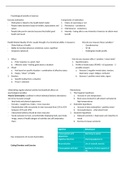
Psychological benefits of exercise
Exercise motivation Components of motivation:
- Motivation is linked to the health belief model 1. Choice of exercising or not
- People make decisions based on beliefs, expectations and 2. Persistence - consistency
values 3. Maintenance - consistency
- People take part in exercise because they belief good 4. Intensity - being able to vary intensity of exercise to obtain most
health will result benefit
Health Related Quality of Life: usually thought of as functional ability. 6 measures: How do you measure these variables?
- Global indices of health - Questionnaires
- Ability to function (physical, emotional, social, cognitive) - SF-36
- Symptoms (physical) - Nottingham health profile
1. Affect: How do you measure affect / emotion / mood state?
a. Polar response i.e. good / bad 1. Questionnaires
b. Affective state = feeling good about a situation 2. Profile of mood states (POMS) = 65 questions – 5
2. Mood possible answers
a. Not based on specific situation - combination of affective states a. Assesses 5 negative mood states: tension,
b. Happy, “down”, irritable depression, anger, fatigue, confusion
3. Emotion b. Assesses 1 positive mood state: vigour
a. Specific feeling from a situation
b. Proud / ashamed
Undertaking regular physical activity has beneficial effects on Mechanisms:
psychological variables 1. Thermogenic hypothesis
Muscle Dysmorphia: condition in which individual believes themselves a. Increase in core temperature
not to be muscular enough: b. Brain areas involved in self-esteem activated at
- Ideal body and physical appearance high temperatures
- Females = weight loss, Males = more muscular 2. Endorphin hypothesis
- Dissatisfaction with muscularity in men increased from 25% to 45% a. Increase in beta-endorphins = positive mood
between 1972 and 1996 b. Increased plasma – what about brain
- Obsessively believes should be more muscular 3. Serotonin hypothesis
- Social exclusion to train, uncomfortable displaying body, poor body a. Reduced serotonin = depression and reduction in
image, aware of health dangers of activities but still undertakes mood
them b. Exercise increases serotonin
Key components of muscle dysmorphia:
Eating Disorders and Exercise
, 1. Anorexia Nervosa - Exercisers may have more risk of suffering from an eating disorder
2. Bulimia Nervosa than non exercises
3. Binge Eating Disorder - People with eating disorders are more likely to be excessive
4. Disordered Eating exercisers than healthy controls
Eating disorders and exercise Exercise Dependence
- Compulsion to exercise, they feel like they - Undertaking excessive levels of exercise that becomes unhealthy
can’t eat unless they’ve exercised a lot - Withdrawal symptoms
- More compulsion = increased likelihood of - Need to exercise to maintain body image
eating disorder
- Particularly when exercise for issues related Exercise dependency may be related to the role of Interleukin-6:
to appearance - Anti-inflammatory cytokine which results in fatigue, anxiety, depression,
- Guilt reduced concentration and sleep
- Missing exercise sessions leads to increased - Overproduction of IL-6 in exercise dependency
likelihood of eating disorder due to internal - Exercise relieves symptoms
pressure to exercise - Management involves educating patients, modifying eating disorder /
behaviour and monitoring
Depression: Symptoms of depression:
- Most common affective mood disorder a. Emotional
- Major depressive disorder, dysthymia, bipolar disorder - Misery
- Incidence of - Apathy
- 4% of males, 8% of females - may be due to males not reporting it as freely as - Pessimism
females - Low self esteem
- Often not treated - less than a third seek help, 90% less than adequate treatment - Inadequacy
- Indecisiveness
Types of depression: b. Biological
1. Unipolar: reactive depression (75%) - Retardation of thought and
a. Not familial and often combined with anxiety action
2. Endogenous depression (25%) - Loss of libido, problems with
a. Genetically inherited depression alternated with mania sleep, loss of appetite
Mechanisms of depression: Exercise and Depression
- Functional deficit of monoamine transmitters: - Most studies on major depressive disorder
serotonin, dopamine, norepinephrine - Fewer symptoms in physically active individuals
- Mania caused by excess - Appears to help in all ages
- Very hard to study - Similar effects in males and females
- Pharmacological aids that affect function and - Improvements depend on initial level of depression
uptake influences extent of depression - Mode of exercise does not seem to be important
- Intensity, frequency and duration the same as public health guidelines
Conclusions from research studies on exercise and Negative Psychological Responses
Exercise motivation Components of motivation:
- Motivation is linked to the health belief model 1. Choice of exercising or not
- People make decisions based on beliefs, expectations and 2. Persistence - consistency
values 3. Maintenance - consistency
- People take part in exercise because they belief good 4. Intensity - being able to vary intensity of exercise to obtain most
health will result benefit
Health Related Quality of Life: usually thought of as functional ability. 6 measures: How do you measure these variables?
- Global indices of health - Questionnaires
- Ability to function (physical, emotional, social, cognitive) - SF-36
- Symptoms (physical) - Nottingham health profile
1. Affect: How do you measure affect / emotion / mood state?
a. Polar response i.e. good / bad 1. Questionnaires
b. Affective state = feeling good about a situation 2. Profile of mood states (POMS) = 65 questions – 5
2. Mood possible answers
a. Not based on specific situation - combination of affective states a. Assesses 5 negative mood states: tension,
b. Happy, “down”, irritable depression, anger, fatigue, confusion
3. Emotion b. Assesses 1 positive mood state: vigour
a. Specific feeling from a situation
b. Proud / ashamed
Undertaking regular physical activity has beneficial effects on Mechanisms:
psychological variables 1. Thermogenic hypothesis
Muscle Dysmorphia: condition in which individual believes themselves a. Increase in core temperature
not to be muscular enough: b. Brain areas involved in self-esteem activated at
- Ideal body and physical appearance high temperatures
- Females = weight loss, Males = more muscular 2. Endorphin hypothesis
- Dissatisfaction with muscularity in men increased from 25% to 45% a. Increase in beta-endorphins = positive mood
between 1972 and 1996 b. Increased plasma – what about brain
- Obsessively believes should be more muscular 3. Serotonin hypothesis
- Social exclusion to train, uncomfortable displaying body, poor body a. Reduced serotonin = depression and reduction in
image, aware of health dangers of activities but still undertakes mood
them b. Exercise increases serotonin
Key components of muscle dysmorphia:
Eating Disorders and Exercise
, 1. Anorexia Nervosa - Exercisers may have more risk of suffering from an eating disorder
2. Bulimia Nervosa than non exercises
3. Binge Eating Disorder - People with eating disorders are more likely to be excessive
4. Disordered Eating exercisers than healthy controls
Eating disorders and exercise Exercise Dependence
- Compulsion to exercise, they feel like they - Undertaking excessive levels of exercise that becomes unhealthy
can’t eat unless they’ve exercised a lot - Withdrawal symptoms
- More compulsion = increased likelihood of - Need to exercise to maintain body image
eating disorder
- Particularly when exercise for issues related Exercise dependency may be related to the role of Interleukin-6:
to appearance - Anti-inflammatory cytokine which results in fatigue, anxiety, depression,
- Guilt reduced concentration and sleep
- Missing exercise sessions leads to increased - Overproduction of IL-6 in exercise dependency
likelihood of eating disorder due to internal - Exercise relieves symptoms
pressure to exercise - Management involves educating patients, modifying eating disorder /
behaviour and monitoring
Depression: Symptoms of depression:
- Most common affective mood disorder a. Emotional
- Major depressive disorder, dysthymia, bipolar disorder - Misery
- Incidence of - Apathy
- 4% of males, 8% of females - may be due to males not reporting it as freely as - Pessimism
females - Low self esteem
- Often not treated - less than a third seek help, 90% less than adequate treatment - Inadequacy
- Indecisiveness
Types of depression: b. Biological
1. Unipolar: reactive depression (75%) - Retardation of thought and
a. Not familial and often combined with anxiety action
2. Endogenous depression (25%) - Loss of libido, problems with
a. Genetically inherited depression alternated with mania sleep, loss of appetite
Mechanisms of depression: Exercise and Depression
- Functional deficit of monoamine transmitters: - Most studies on major depressive disorder
serotonin, dopamine, norepinephrine - Fewer symptoms in physically active individuals
- Mania caused by excess - Appears to help in all ages
- Very hard to study - Similar effects in males and females
- Pharmacological aids that affect function and - Improvements depend on initial level of depression
uptake influences extent of depression - Mode of exercise does not seem to be important
- Intensity, frequency and duration the same as public health guidelines
Conclusions from research studies on exercise and Negative Psychological Responses