

Obesity: describes a person who’s overweight, with a lot of body fat. WHO: overweight and obesity are defined as abnormal
or excessive fat accumulation that presents a risk to health
- Hippocrates: corpulence (obesity) is not a disease itself, but the harbinger of others.
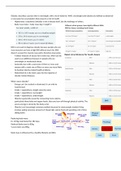
- Body mass index = body mass (kg) / height^2
BMI is not used to diagnose obesity because people who are
very muscular can have a high BMI without much fat. BMI
doesn’t account for muscle mass and is therefore inaccurate.
- A better measure of excess fat is waist size, which can be
used as an additional measure in people who are
overweight or moderately obese.
- Generally men with a waist size of 94cm or more and
women with a waist size of 80cm or more are more likely
to develop obesity-related health problems
- Abdominal fat is the main cause for the majority of
obesity-related diseases.
What causes obesity?
- Energy can’t be created or destroyed, it can only be
transformed
- Intake = expenditure; weight stays the same
- Intake > expenditure; overweight
- Intake < expenditure; underweight
- Obesity is generally caused by consuming more calories,
particularly those fatty and sugary foods, than you burn off through physical activity. The
excess energy is stored by the body as fat.
- Obesity is an increasingly common problem because for many people modern living
involves eating excessive amounts of cheap high-calorie food and spending a lot of time
sitting down.
Reducing body mass:
Ex. 207kg male fasted for 382 days
Reduced body mass to 82kg
5 years later was 89kg
Body mass is influenced by a healthy lifestyle and DNA
,
or excessive fat accumulation that presents a risk to health
- Hippocrates: corpulence (obesity) is not a disease itself, but the harbinger of others.
- Body mass index = body mass (kg) / height^2
BMI is not used to diagnose obesity because people who are
very muscular can have a high BMI without much fat. BMI
doesn’t account for muscle mass and is therefore inaccurate.
- A better measure of excess fat is waist size, which can be
used as an additional measure in people who are
overweight or moderately obese.
- Generally men with a waist size of 94cm or more and
women with a waist size of 80cm or more are more likely
to develop obesity-related health problems
- Abdominal fat is the main cause for the majority of
obesity-related diseases.
What causes obesity?
- Energy can’t be created or destroyed, it can only be
transformed
- Intake = expenditure; weight stays the same
- Intake > expenditure; overweight
- Intake < expenditure; underweight
- Obesity is generally caused by consuming more calories,
particularly those fatty and sugary foods, than you burn off through physical activity. The
excess energy is stored by the body as fat.
- Obesity is an increasingly common problem because for many people modern living
involves eating excessive amounts of cheap high-calorie food and spending a lot of time
sitting down.
Reducing body mass:
Ex. 207kg male fasted for 382 days
Reduced body mass to 82kg
5 years later was 89kg
Body mass is influenced by a healthy lifestyle and DNA
,


