OMISSIONS
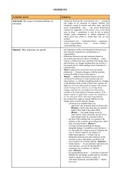
Academic source Summary
Ashworth, The scope of criminal liability for - distinction between the conventional view — criminal
omissions law ought to be reluctant to impose liability for
omissions except in serious and clear cases, and the
social responsibility view — the moral distinction
claimed by supporters of the former view is not that
easy to draw + sometimes, it may be fair to place
citizens under obligations to render assistance to
others given the extent to which they rely on one
another.
- conventional view — individual liberty + autonomy /
social responsibility view — social welfare +
communitarian ideas.
Simester, Why omissions are special - the importance of the moral distinction between acts
and omissions depends on considerations of
responsibility.
- distinction between acts and omissions based on
movement and non-movement is mistaken — same
instance of behaviour may constitute both things done
and not done, e.g. hunger striking does not involve a
movement per se, while reading a novel instead of a
textbook does.
- Moore supports the movement/ non-movement
distinction — Simester disagrees with his position
because he finds it to be overly narrow.
- Honore — supports distinction between acts and
omissions by reference to interventions and non-
interventions, i.e. whether something leads to a change
in the baseline of the world: [T]hat what explains the
difference between doing and not-doing is the notion
of intervening in the world so as to bring about
change; and that at a secondary level this notion
extends to the interruption of human routines. If the
human routine is required by a norm, the violation of
it is an omission which will entail responsibility.
- the criminal law ought to restrict liability for not-
doings more severely than for doings:
- omissions less culpable than acts
- opposed to the neutrality thesis (advanced by
Bennett), which states that they are morally
equal if they lead to the same effect.
- Honore — acts make things worse by
intervention, while omissions merely fail to
make things better by non-intervention.
- the aim of the criminal law is to preserve the
stability of the world by preventing harm, rather
than coercing benefits. (Honore)
- if a legal system proscribed not-doings
alongside doings, it would be overly intrusive —
it is desirable for a legal system to minimise the
way in which it deprives its subjects of
behavioural options => if there was no
distinction between acts and omissions in the
criminal system, individuals would have far
fewer options of avoiding liability. (Simester)
- human nature — we are entitled to prioritise out
own interests + not act for the benefit of
somebody else in absence of ‘distinct
duty’ (Honore).
- the responsibility thesis — a doctrine of general
liability for not-doings would result in a system
which is largely insensitive to ideas of
individual autonomy and authorship => liberty
not to act.
, distinction between acts/ omissions and criminalisation
not based on movement (position untenable)
based on responsibility (Simester)
baseline argument
introduction of bad Samaritan laws
impractical
counter-productive effect
overly vague
difficult to prove MR
too much prosecutorial discretion
infringement on liberty
autonomy vs. social responsibility
utilitarian grounds untenable
wishful thinking
Academic source Summary
Ashworth, The scope of criminal liability for - distinction between the conventional view — criminal
omissions law ought to be reluctant to impose liability for
omissions except in serious and clear cases, and the
social responsibility view — the moral distinction
claimed by supporters of the former view is not that
easy to draw + sometimes, it may be fair to place
citizens under obligations to render assistance to
others given the extent to which they rely on one
another.
- conventional view — individual liberty + autonomy /
social responsibility view — social welfare +
communitarian ideas.
Simester, Why omissions are special - the importance of the moral distinction between acts
and omissions depends on considerations of
responsibility.
- distinction between acts and omissions based on
movement and non-movement is mistaken — same
instance of behaviour may constitute both things done
and not done, e.g. hunger striking does not involve a
movement per se, while reading a novel instead of a
textbook does.
- Moore supports the movement/ non-movement
distinction — Simester disagrees with his position
because he finds it to be overly narrow.
- Honore — supports distinction between acts and
omissions by reference to interventions and non-
interventions, i.e. whether something leads to a change
in the baseline of the world: [T]hat what explains the
difference between doing and not-doing is the notion
of intervening in the world so as to bring about
change; and that at a secondary level this notion
extends to the interruption of human routines. If the
human routine is required by a norm, the violation of
it is an omission which will entail responsibility.
- the criminal law ought to restrict liability for not-
doings more severely than for doings:
- omissions less culpable than acts
- opposed to the neutrality thesis (advanced by
Bennett), which states that they are morally
equal if they lead to the same effect.
- Honore — acts make things worse by
intervention, while omissions merely fail to
make things better by non-intervention.
- the aim of the criminal law is to preserve the
stability of the world by preventing harm, rather
than coercing benefits. (Honore)
- if a legal system proscribed not-doings
alongside doings, it would be overly intrusive —
it is desirable for a legal system to minimise the
way in which it deprives its subjects of
behavioural options => if there was no
distinction between acts and omissions in the
criminal system, individuals would have far
fewer options of avoiding liability. (Simester)
- human nature — we are entitled to prioritise out
own interests + not act for the benefit of
somebody else in absence of ‘distinct
duty’ (Honore).
- the responsibility thesis — a doctrine of general
liability for not-doings would result in a system
which is largely insensitive to ideas of
individual autonomy and authorship => liberty
not to act.
, distinction between acts/ omissions and criminalisation
not based on movement (position untenable)
based on responsibility (Simester)
baseline argument
introduction of bad Samaritan laws
impractical
counter-productive effect
overly vague
difficult to prove MR
too much prosecutorial discretion
infringement on liberty
autonomy vs. social responsibility
utilitarian grounds untenable
wishful thinking