Memory and Emotion
Key Words:
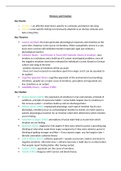
o Emotion = an affective state that is specific to a stimulus and doesn’t last long.
o Mood = a non-specific feeling not necessarily attached to an obvious stimulus and
lasts a long time.
Key Theories:
Cannon and Bard: the brain generates physiological responses and emotions at the
same time, thalamus is the source of emotions. When sympathetic nerves in a cats
brain were cut they still exhibited emotion (especially rage) just without a
physiological reaction.
Catharsis theory – Josef Brewer & Freud (AKA hydraulic theory of emotion): sees
emotion as a substance and a build-up of it causes neurological problems, once all
the negative emotions have been released the individual is cured. Based on German
culture and slang at the time
- predicts memory of emotions will be accurate
- there isn’t much research on emotions apart from anger, but it can be assumed to
be applied.
Cognitive appraisal theory: cognitive appraisals of the environment (surroundings,
intentions, people) are a major cause of emotions, perception and appraisals are
key. Emotions as an output.
Indelibility theory – LeDoux (1989):
Key Studies:
Charles Darwin (1872): the expression of emotions in man and animals, principle of
antithesis, principle of expressive habits = some habits happen due to a build-up in
the nervous system = emotions build up and are discharged later.
William James (1884): emphasised physiology, each type of emotion has its own
physiology, emotions occur as a physiological reaction to events. An event causes a
specific physiological reaction for an emotion which then determines which emotion
you’re feeling.
Schachter & Singer (1962): perceptions of social state help us to perceive which
emotion we are feeling.
Bushman (2002): angered p’s felt angrier if they were asked to punch a punching bag
thinking of who/what made them angry compared to if they were asked to punch it
thinking of getting stronger and fitter = if you express anger, you feel angrier later =
directly contradicts catharsis theory.
Lohr & Adams (2015): catharsis approach = people as pressure cookers and steam is
negative emotions. Alternate view = catharsis becomes a habit due to an observation
that people report feeling better after having vented.
Lazarus (1991): appraisals are the cause of emotions.
Arnold (1945): disagrees with Cannon and Bards theory.
Key Words:
o Emotion = an affective state that is specific to a stimulus and doesn’t last long.
o Mood = a non-specific feeling not necessarily attached to an obvious stimulus and
lasts a long time.
Key Theories:
Cannon and Bard: the brain generates physiological responses and emotions at the
same time, thalamus is the source of emotions. When sympathetic nerves in a cats
brain were cut they still exhibited emotion (especially rage) just without a
physiological reaction.
Catharsis theory – Josef Brewer & Freud (AKA hydraulic theory of emotion): sees
emotion as a substance and a build-up of it causes neurological problems, once all
the negative emotions have been released the individual is cured. Based on German
culture and slang at the time
- predicts memory of emotions will be accurate
- there isn’t much research on emotions apart from anger, but it can be assumed to
be applied.
Cognitive appraisal theory: cognitive appraisals of the environment (surroundings,
intentions, people) are a major cause of emotions, perception and appraisals are
key. Emotions as an output.
Indelibility theory – LeDoux (1989):
Key Studies:
Charles Darwin (1872): the expression of emotions in man and animals, principle of
antithesis, principle of expressive habits = some habits happen due to a build-up in
the nervous system = emotions build up and are discharged later.
William James (1884): emphasised physiology, each type of emotion has its own
physiology, emotions occur as a physiological reaction to events. An event causes a
specific physiological reaction for an emotion which then determines which emotion
you’re feeling.
Schachter & Singer (1962): perceptions of social state help us to perceive which
emotion we are feeling.
Bushman (2002): angered p’s felt angrier if they were asked to punch a punching bag
thinking of who/what made them angry compared to if they were asked to punch it
thinking of getting stronger and fitter = if you express anger, you feel angrier later =
directly contradicts catharsis theory.
Lohr & Adams (2015): catharsis approach = people as pressure cookers and steam is
negative emotions. Alternate view = catharsis becomes a habit due to an observation
that people report feeling better after having vented.
Lazarus (1991): appraisals are the cause of emotions.
Arnold (1945): disagrees with Cannon and Bards theory.