Genetics (Sinéad Morrissey)
Title
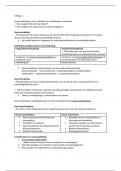
• Idea of inheritance and parentage, passing on traits through generations
• Scientific lexis – later juxtaposed with personal and religious.
Form
Villanelle form (6 stanzas: 5 tercet, final is a quatrain).
• Associated with love, life, loss, challenge and change.
• Cyclical structure = unity, continuing life cycle reflected by genetics
• 2 rhyming refrains: “palms” and “hands” in the first line later repeated
• Regularity of the structure – comfort and familiarity that her parents are united in
her body, passing on genetics through generations.
• Tercets – perhaps mimic trio of her and her parents. Last is 4 – suggests potential
for future/next generation, addressing her partner.
• Each stanza ends on ‘hands’ or ‘palms’ – image of examining her hands and
recalling her inheritance from her parents.
• Rhyme structure – use of half-rhyme rather than full rhyme suggests idea that
children inherit their parents’ traits but are not a carbon copy of them, half of
each parent in her.
Voice and context
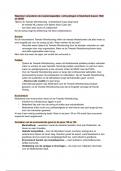
Parents are divorced, but the tone is not bitter but a heart-warming celebration of their
union and their love that once was (whilst this has not endured, lives on in the form of
herself as her identity was formed from them both).
Simple poem weighted with significance and rumination of love, marriage, passing on
genes and identity. Has an almost spiritual quality.
Possible themes
• Family, parents
• Love and marriage, unity
• Identity and how it is formed
• Transience and uncertainty vs permanence
• Religious, spiritual juxtaposed with scientific logic
Unity of her parents is within herself – comfort in this
• “My father’s in my fingers, but my mother’s in my palms” – physical characteristics
inherited from parents (common ideas about physical inheritance, but concentrate
specifically on hands – associated with love, connections) united in her body
physically. Positive reflection on how their unity makes up her identity –
Title
• Idea of inheritance and parentage, passing on traits through generations
• Scientific lexis – later juxtaposed with personal and religious.
Form
Villanelle form (6 stanzas: 5 tercet, final is a quatrain).
• Associated with love, life, loss, challenge and change.
• Cyclical structure = unity, continuing life cycle reflected by genetics
• 2 rhyming refrains: “palms” and “hands” in the first line later repeated
• Regularity of the structure – comfort and familiarity that her parents are united in
her body, passing on genetics through generations.
• Tercets – perhaps mimic trio of her and her parents. Last is 4 – suggests potential
for future/next generation, addressing her partner.
• Each stanza ends on ‘hands’ or ‘palms’ – image of examining her hands and
recalling her inheritance from her parents.
• Rhyme structure – use of half-rhyme rather than full rhyme suggests idea that
children inherit their parents’ traits but are not a carbon copy of them, half of
each parent in her.
Voice and context
Parents are divorced, but the tone is not bitter but a heart-warming celebration of their
union and their love that once was (whilst this has not endured, lives on in the form of
herself as her identity was formed from them both).
Simple poem weighted with significance and rumination of love, marriage, passing on
genes and identity. Has an almost spiritual quality.
Possible themes
• Family, parents
• Love and marriage, unity
• Identity and how it is formed
• Transience and uncertainty vs permanence
• Religious, spiritual juxtaposed with scientific logic
Unity of her parents is within herself – comfort in this
• “My father’s in my fingers, but my mother’s in my palms” – physical characteristics
inherited from parents (common ideas about physical inheritance, but concentrate
specifically on hands – associated with love, connections) united in her body
physically. Positive reflection on how their unity makes up her identity –