

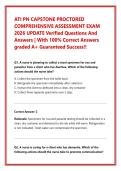
ATI PN CAPSTONE PROCTORED
COMPREHENSIVE ASSESSMENT EXAM
2026 UPDATE Verified Questions And
Answers | With 100% Correct Answers
graded A+ Guaranteed Success!!
Q1. A nurse is planning to collect a stool specimen for ova and
parasites from a client who has diarrhea. Which of the following
actions should the nurse take?
A. Collect the specimen from the toilet bowl
B. Refrigerate the specimen immediately after collection
C. Instruct the client to defecate into a clean, dry container
D. Collect three separate specimens over 5 days
Correct Answer: C
Rationale: Specimens for ova and parasite testing should be collected in a
clean, dry container and delivered to the lab while still warm. Refrigeration
is not indicated. Toilet water can contaminate the specimen.
Q2. A nurse is caring for a client who has dementia. Which of the
following actions should the nurse take to promote communication?
,A. Speak in a loud voice
B. Face the client at eye level when communicating
C. Use complex sentences
D. Approach the client from behind
Correct Answer: B
Rationale: Facing the client at eye level reduces intimidation and helps the
client focus on nonverbal cues. Loud voice and complex sentences can
increase confusion.
Q3. A nurse is preparing to administer a blood transfusion. Which of
the following actions should the nurse take first?
A. Obtain the client's vital signs
B. Verify the client's identity using two identifiers
C. Prime the tubing with normal saline
D. Check the expiration date on the blood unit
Correct Answer: B
Rationale: Client identification is the first priority to prevent transfusion
errors. Two identifiers (e.g., name and medical record number) must be
verified against the blood product label.
,Q4. A nurse is assessing a client who is receiving a blood transfusion.
Which of the following findings indicates a hemolytic transfusion
reaction?
A. Hypothermia
B. Hypertension
C. Low back pain
D. Bradycardia
Correct Answer: C
Rationale: Low back pain is a classic sign of a hemolytic transfusion
reaction caused by the destruction of RBCs. Other signs include fever, chills,
hypotension, and dark urine.
Q5. A nurse is caring for a client who has a nasogastric tube connected
to continuous suction. Which of the following findings should the
nurse report to the provider?
A. Gastric output of 300 mL in 8 hours
B. Greenish-yellow drainage
C. pH of gastric aspirate of 3
D. Blood-tinged drainage
, Correct Answer: D
Rationale: Blood-tinged drainage may indicate gastric mucosal injury and
should be reported. Normal gastric drainage is greenish-yellow with pH <4.
Q6. A nurse is providing discharge teaching to a client who has a new
prescription for warfarin. Which of the following statements by the
client indicates an understanding of the teaching?
A. "I will take ibuprofen for headaches."
B. "I will eat more leafy green vegetables."
C. "I will notify my dentist that I take this medication."
D. "I will stop taking this medication if I see bruising."
Correct Answer: C
Rationale: Clients taking warfarin should inform all healthcare providers,
including dentists, to prevent excessive bleeding during procedures.
Q7. A nurse is assessing a client who has a chest tube following a
thoracotomy. Which of the following findings requires immediate
intervention?
A. Continuous bubbling in the water seal chamber
B. Tidaling in the water seal chamber
COMPREHENSIVE ASSESSMENT EXAM
2026 UPDATE Verified Questions And
Answers | With 100% Correct Answers
graded A+ Guaranteed Success!!
Q1. A nurse is planning to collect a stool specimen for ova and
parasites from a client who has diarrhea. Which of the following
actions should the nurse take?
A. Collect the specimen from the toilet bowl
B. Refrigerate the specimen immediately after collection
C. Instruct the client to defecate into a clean, dry container
D. Collect three separate specimens over 5 days
Correct Answer: C
Rationale: Specimens for ova and parasite testing should be collected in a
clean, dry container and delivered to the lab while still warm. Refrigeration
is not indicated. Toilet water can contaminate the specimen.
Q2. A nurse is caring for a client who has dementia. Which of the
following actions should the nurse take to promote communication?
,A. Speak in a loud voice
B. Face the client at eye level when communicating
C. Use complex sentences
D. Approach the client from behind
Correct Answer: B
Rationale: Facing the client at eye level reduces intimidation and helps the
client focus on nonverbal cues. Loud voice and complex sentences can
increase confusion.
Q3. A nurse is preparing to administer a blood transfusion. Which of
the following actions should the nurse take first?
A. Obtain the client's vital signs
B. Verify the client's identity using two identifiers
C. Prime the tubing with normal saline
D. Check the expiration date on the blood unit
Correct Answer: B
Rationale: Client identification is the first priority to prevent transfusion
errors. Two identifiers (e.g., name and medical record number) must be
verified against the blood product label.
,Q4. A nurse is assessing a client who is receiving a blood transfusion.
Which of the following findings indicates a hemolytic transfusion
reaction?
A. Hypothermia
B. Hypertension
C. Low back pain
D. Bradycardia
Correct Answer: C
Rationale: Low back pain is a classic sign of a hemolytic transfusion
reaction caused by the destruction of RBCs. Other signs include fever, chills,
hypotension, and dark urine.
Q5. A nurse is caring for a client who has a nasogastric tube connected
to continuous suction. Which of the following findings should the
nurse report to the provider?
A. Gastric output of 300 mL in 8 hours
B. Greenish-yellow drainage
C. pH of gastric aspirate of 3
D. Blood-tinged drainage
, Correct Answer: D
Rationale: Blood-tinged drainage may indicate gastric mucosal injury and
should be reported. Normal gastric drainage is greenish-yellow with pH <4.
Q6. A nurse is providing discharge teaching to a client who has a new
prescription for warfarin. Which of the following statements by the
client indicates an understanding of the teaching?
A. "I will take ibuprofen for headaches."
B. "I will eat more leafy green vegetables."
C. "I will notify my dentist that I take this medication."
D. "I will stop taking this medication if I see bruising."
Correct Answer: C
Rationale: Clients taking warfarin should inform all healthcare providers,
including dentists, to prevent excessive bleeding during procedures.
Q7. A nurse is assessing a client who has a chest tube following a
thoracotomy. Which of the following findings requires immediate
intervention?
A. Continuous bubbling in the water seal chamber
B. Tidaling in the water seal chamber


