

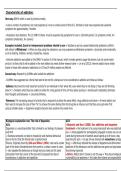
Characteristics of addiction:
One way: DSM-V which is used by America mostly
->Lists a number of symptoms, but must experience it over a certain period of time E.G. Alcoholics must have experienced sustained
symptoms for approximately 3 months
->Substance Use disorders: The 11 DSM-V Criteria- must be experiencing symptoms for over a 12month period: 2-3 symptoms (mild), 4-5
symptoms (moderate), 6+ (severe)
Examples included: Social or interpersonal problems related to use-> Substance use has caused relationship problems/ conflicts
with others & Withdrawal -> When you stop using the substance, you may experience withdrawal symptoms – physically and emotionally
such as shaking, irritation, anxiety, headaches, nausea
->Internet addiction was added on the DMS-V in section 3 of the manual, which includes general usage like phones, but not social media
yet but it is likely that it will be added in the next edition but needs further research done -> Lin et al (2012): Internet addicts have similar
brains to those with substance addictions & in China 24 million people are affected
Second way: Research by Griffiths who looked into addiction
->Griffiths has suggested six criteria that need to be met for a behaviour to be considered an addition and these as follows:
-Salience: Becomes the most important activity for an individual in their whole life, even when they’re not doing it, they are still thinking
about It -> Smokers when they are unable to smoke for a long period of time (24-hour plane journey) = smoking will completely dominate
their thoughts and behaviour + consumes thinking
-Tolerance: The increasing amount of activity that is required to achieve the same effect- drug addiction and heroin = A heroin addict and
their need to increase the size of their ‘fix’ to achieve the same feeling from the drug like an intense rush that they once got when first
using at smaller doses -> dopamine receptors become less sensitive thus need more
Biological explanation one: The role of dopamine AO3:
AO1: +Bostwick and Bucci (2008): Sex addiction and dopamine
Dopamine is a neurotransmitter that is linked to our feelings of pleasure treatment-> the treatment of a young male adult who was addicted
and thrill sex -> strong appetite for pornography (engaged in phone sex via cre
->Excessive amounts can lead to impulsivity and irrational behaviour cards during teens and in twenties would spend up to 8 hours a day
due to the fact that the frontal lobe is dysfunctional searching for porn -> at age 24 was treated with nalextrone (antago
Process: Originally found by Olds and Milner (1954): rats had a certain drug) -> effectively blocked the release of dopamine and diminished t
part of the brain stimulated when they went to a certain corner of a box - addiction of the behaviour and his addiction was gone and psychosex
> rats repeated the behaviour as though trying to seek out this same functioning improved
stimulation from that corner of the box which proposed the idea of +Ethics: Addicts don’t choose to act this way-> They have biological
maintenance in addiction and repetition vulnerability and weakness = this takes their blame and responsibility
, Our ‘pleasure Centre’-> part of the mesolimbic pathway’ from their actions (drugs) away from the addict more people come
Mesolimbic Pathway: forward as there’s no judgement ->positive social implication due to
Release of dopamine in the VTA (Ventral tegmental area) which leads reduction in ROH = Volkow says it is the disease of the brain ->will be
to a sense of pleasure in the NAc (Nucleus accumbens) which treated the same way as physical illnesses
eventually ends up in the frontal lobe in the PFC -> linked with cognitive +Scientific: Use of PET scans and brain scans to look at the brain
thinking and our rational thoughts/ logical decision making activity of addicts ->there are visual differences in their brain activity
->In response to addiction: responds to more harmful actions and compared to non-addicts -> Bolla et al: impaired performances in add
becomes maladaptive = more likely for the behaviour to be repeated in tasks that would usually involve the PFC, such as decision making
->Participation in behaviour triggers mesolimbic pathway, not the -Liberzon et al: dopamine has many other functions-> looked into PT
outcome with war veterans and their flashbacks = increase in dopamine during
Leads to: Tolerance: dopamine receptors become less sensitive and > contradicts as links to traumatic, anxious events and not addiction/
therefore we need more of the behaviour to get the same effect & pleasure = dopamine is complex so don’t be reductionist
Withdrawal: Addicts will avoid withdrawal symptoms to ensure they -Use of non-human animals: Conducted in labs so it doesn’t accou
continue to experience the pleasure sensation constantly (Neg. for cognitive and social aspects of addiction as animals (some) are no
reinforcement) & Maintenance: due to pos. reinforcement, people sociable and all animals have different cognition to humans -> E.G Ak
become initiated into addiction e.g. initial pleasure of the behaviour that et al contradicts this as non-human animals can’t replicate all types o
triggers brain addiction such as gambling ->Nutt et al criticized methodology here
-Nutt et al: looked into legislation around drugs: questioned why alco
Key study: Volkow et al (2001): gave Ritalin, which slowly increases has minimum legislation when he found it to have the highest in term
dopamine, to volunteers -> Some loved the feeling of the drug, some its cause to harm others -> not as regulated due to culture and mone
hated the way it made them feel -> conducted brain scans and found that the government will gain despite this = negative social implicatio
those who liked the rush had fewer dopamine receptors (D2) than those as alcohol addiction is most accessible and hard to stop if easily
who hated it -> concluded that some are vulnerable to the rush of available
dopamine enhancing drugs, yet others cannot handle excess stimulation -Great for maintenance but not for initiation: This is all about th
->explains why some who experiment with drugs go on to develop an reward system due to dopamine -> but we have to do the behaviour t
addiction, and others wouldn’t know this and the feeling, meaning this doesn’t explain well why we
even commit the behaviour in the first place; alternatively, Akers et a
does -> SLT and Osborne et al too
Biological explanation two: Genetics AO3:
AO1: + Supportive research by Comings et al in genes linked to addict
Genetics are what we inherit from our parents and can lead to certain Looked at the influence of DRD2 gene and link to dopamine receptors
behaviours, such as making us more inclined to addictive behaviours. An Found that the A1 allele of the DRD2 gene leads to fewer dopamine
example is seen through Mc Gue et al’s twin study on Alcohol Abuse to receptors which suggests that generally feel low sense of pleasure wh
see if there are similarities between male MZ and DZ twins in their levels makes people more inclined to develop an addiction due to the intens
of alcohol abuse in terms of their genetics. The data showed the MZ rush of pleasure felt from the drug -> Smokers: specifically found that
twins had 77% concordance rates (the level in which a pair of twins 39.3% of the control group vs 66.1% of smokers carries 11 or 22
share same level of alcohol use) in comparison to DZ twins who had genotype (type DRD1 gene) = pinpoints the exact gene that is the
54%. -> MZs more similar in their use of alcohol, suggests heredity problem here
influences alcohol use and abuse. However, heredity alone (nature) does + Implications to treatments: ADH & ALDH gene: Harada et al fo
not account for nurture influences such as family and peer groups which that the ALDH allele that codes for a nonfunctional ALDH enzyme carr
One way: DSM-V which is used by America mostly
->Lists a number of symptoms, but must experience it over a certain period of time E.G. Alcoholics must have experienced sustained
symptoms for approximately 3 months
->Substance Use disorders: The 11 DSM-V Criteria- must be experiencing symptoms for over a 12month period: 2-3 symptoms (mild), 4-5
symptoms (moderate), 6+ (severe)
Examples included: Social or interpersonal problems related to use-> Substance use has caused relationship problems/ conflicts
with others & Withdrawal -> When you stop using the substance, you may experience withdrawal symptoms – physically and emotionally
such as shaking, irritation, anxiety, headaches, nausea
->Internet addiction was added on the DMS-V in section 3 of the manual, which includes general usage like phones, but not social media
yet but it is likely that it will be added in the next edition but needs further research done -> Lin et al (2012): Internet addicts have similar
brains to those with substance addictions & in China 24 million people are affected
Second way: Research by Griffiths who looked into addiction
->Griffiths has suggested six criteria that need to be met for a behaviour to be considered an addition and these as follows:
-Salience: Becomes the most important activity for an individual in their whole life, even when they’re not doing it, they are still thinking
about It -> Smokers when they are unable to smoke for a long period of time (24-hour plane journey) = smoking will completely dominate
their thoughts and behaviour + consumes thinking
-Tolerance: The increasing amount of activity that is required to achieve the same effect- drug addiction and heroin = A heroin addict and
their need to increase the size of their ‘fix’ to achieve the same feeling from the drug like an intense rush that they once got when first
using at smaller doses -> dopamine receptors become less sensitive thus need more
Biological explanation one: The role of dopamine AO3:
AO1: +Bostwick and Bucci (2008): Sex addiction and dopamine
Dopamine is a neurotransmitter that is linked to our feelings of pleasure treatment-> the treatment of a young male adult who was addicted
and thrill sex -> strong appetite for pornography (engaged in phone sex via cre
->Excessive amounts can lead to impulsivity and irrational behaviour cards during teens and in twenties would spend up to 8 hours a day
due to the fact that the frontal lobe is dysfunctional searching for porn -> at age 24 was treated with nalextrone (antago
Process: Originally found by Olds and Milner (1954): rats had a certain drug) -> effectively blocked the release of dopamine and diminished t
part of the brain stimulated when they went to a certain corner of a box - addiction of the behaviour and his addiction was gone and psychosex
> rats repeated the behaviour as though trying to seek out this same functioning improved
stimulation from that corner of the box which proposed the idea of +Ethics: Addicts don’t choose to act this way-> They have biological
maintenance in addiction and repetition vulnerability and weakness = this takes their blame and responsibility
, Our ‘pleasure Centre’-> part of the mesolimbic pathway’ from their actions (drugs) away from the addict more people come
Mesolimbic Pathway: forward as there’s no judgement ->positive social implication due to
Release of dopamine in the VTA (Ventral tegmental area) which leads reduction in ROH = Volkow says it is the disease of the brain ->will be
to a sense of pleasure in the NAc (Nucleus accumbens) which treated the same way as physical illnesses
eventually ends up in the frontal lobe in the PFC -> linked with cognitive +Scientific: Use of PET scans and brain scans to look at the brain
thinking and our rational thoughts/ logical decision making activity of addicts ->there are visual differences in their brain activity
->In response to addiction: responds to more harmful actions and compared to non-addicts -> Bolla et al: impaired performances in add
becomes maladaptive = more likely for the behaviour to be repeated in tasks that would usually involve the PFC, such as decision making
->Participation in behaviour triggers mesolimbic pathway, not the -Liberzon et al: dopamine has many other functions-> looked into PT
outcome with war veterans and their flashbacks = increase in dopamine during
Leads to: Tolerance: dopamine receptors become less sensitive and > contradicts as links to traumatic, anxious events and not addiction/
therefore we need more of the behaviour to get the same effect & pleasure = dopamine is complex so don’t be reductionist
Withdrawal: Addicts will avoid withdrawal symptoms to ensure they -Use of non-human animals: Conducted in labs so it doesn’t accou
continue to experience the pleasure sensation constantly (Neg. for cognitive and social aspects of addiction as animals (some) are no
reinforcement) & Maintenance: due to pos. reinforcement, people sociable and all animals have different cognition to humans -> E.G Ak
become initiated into addiction e.g. initial pleasure of the behaviour that et al contradicts this as non-human animals can’t replicate all types o
triggers brain addiction such as gambling ->Nutt et al criticized methodology here
-Nutt et al: looked into legislation around drugs: questioned why alco
Key study: Volkow et al (2001): gave Ritalin, which slowly increases has minimum legislation when he found it to have the highest in term
dopamine, to volunteers -> Some loved the feeling of the drug, some its cause to harm others -> not as regulated due to culture and mone
hated the way it made them feel -> conducted brain scans and found that the government will gain despite this = negative social implicatio
those who liked the rush had fewer dopamine receptors (D2) than those as alcohol addiction is most accessible and hard to stop if easily
who hated it -> concluded that some are vulnerable to the rush of available
dopamine enhancing drugs, yet others cannot handle excess stimulation -Great for maintenance but not for initiation: This is all about th
->explains why some who experiment with drugs go on to develop an reward system due to dopamine -> but we have to do the behaviour t
addiction, and others wouldn’t know this and the feeling, meaning this doesn’t explain well why we
even commit the behaviour in the first place; alternatively, Akers et a
does -> SLT and Osborne et al too
Biological explanation two: Genetics AO3:
AO1: + Supportive research by Comings et al in genes linked to addict
Genetics are what we inherit from our parents and can lead to certain Looked at the influence of DRD2 gene and link to dopamine receptors
behaviours, such as making us more inclined to addictive behaviours. An Found that the A1 allele of the DRD2 gene leads to fewer dopamine
example is seen through Mc Gue et al’s twin study on Alcohol Abuse to receptors which suggests that generally feel low sense of pleasure wh
see if there are similarities between male MZ and DZ twins in their levels makes people more inclined to develop an addiction due to the intens
of alcohol abuse in terms of their genetics. The data showed the MZ rush of pleasure felt from the drug -> Smokers: specifically found that
twins had 77% concordance rates (the level in which a pair of twins 39.3% of the control group vs 66.1% of smokers carries 11 or 22
share same level of alcohol use) in comparison to DZ twins who had genotype (type DRD1 gene) = pinpoints the exact gene that is the
54%. -> MZs more similar in their use of alcohol, suggests heredity problem here
influences alcohol use and abuse. However, heredity alone (nature) does + Implications to treatments: ADH & ALDH gene: Harada et al fo
not account for nurture influences such as family and peer groups which that the ALDH allele that codes for a nonfunctional ALDH enzyme carr


