

Unit 8
Part C
The digestive system.
The digestive system is a system in the body that helps to break down the food and drink
that we eat. This gets broken down into molecules that the body needs to function. There
are 8 parts to the digestive system that help the food to be broken down and get out of
the body as waste products.
Mouth.
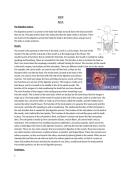
The mouth is the opening on the front of the skull, and it is a circle shape. The start of the
mouth is the lips and the end point of the mouth is at the beginning of the throat. The
mouth has lots of functions that is needed for the body. For example, the mouth is needed for eating,
speaking and breathing. These are essential for the body. The function is also to moisten the food so
that it can travel down the esophagus smoothly, without hurting the throat. The structure of the mouth
is the teeth, tongue, hard palate and the soft palate. There are different teeth’s that are in the mouth.
For example, the canine teeth, are used to tear off the food, as they are the
sharpest which can bite the food. The molar teeth, located at the back of the
mouth, are used to chew the food with the help of the digestive and salivary
enzymes. The teeth also shape the face and help pronounce words, yet these
two functions are not part of the digestive process. The tongue is made up of
hard tissue, and it is located in the middle of the of the whole mouth. The
function of the tongue is to help swallowing the food that you have chewed.
The main function of the tongue is the tasting process when something is put
into the mouth. This is done by the taste buds, which are located on the hard tissue that the tongue is
made up of. The hard palate of the mouth is located at the roof of the mouth, which is at the front. The
hard palate has a structure which us made up of two bones called the maxilla, and the Palatine bone,
covered by softer mouth tissues. The function of the hard palate is to separate the nasal cavity and the
oral cavity, and help with speaking as well as swallowing. The swallowing function of the hard palate is
the only function that is needed for the digestive process. The location of the soft palate is in the back of
the mouth, and is behind the hard palate. This function of this palate is to hold the gums and the teeth
in place. The structure of the soft palate is flesh, and doesn’t contain any bones like the hard palate
does. The soft palate is made up from connective tissues, muscle fibers, all covered with a mucus
membrane. This membrane has stratified squamous epithelium, and salivary glands, which secret the
saliva to help digest the food via the digestive enzymes, and help the food be swallowed down, into the
stomach. There are two main enzymes that are involved in digestion in the mouth. These two enzymes
are called amylase, (also known as alpha-amylase, or ptyalin), and lingual lipase. These two enzymes are
salivary enzymes, as they are found in the saliva, secreted by salivary glands in the mouth. When we are
chewing the food that we eat with our teeth, the salivary glands secrete saliva, so that it is easier to
chew and swallow the food, and that the enzymes in our saliva, would break down the food particles
into smaller particles, for the rest of digestion process.
Esophagus.
1
,The esophagus is located right on the middle of the chest area. This is mediastinum. It is also
located in front of the spinal cord, and behind the windpipe. The structure of the esophagus is
that it is a muscular, hollow tube that is made of four layers of tissues, and it is also made up
of a skeleton that makes up the shape and structure. The four layers are: mucosa and sub
mucosa, muscularis propria, and the serosa or the adventitia. However, none of these
structures are part of the digestive system. The function of the esophagus is to allow the food
that has been chewed and the drink to go into the stomach, and getting rid of the food that
should be in your body by vomiting it up. There are no digestive enzymes that are produced in the
esophagus. The saliva and the food particles and swallowed, but there are no enzymes that digest any of
the food particles when it goes into the stomach.
Liver.
The liver is located underneath the bodies diaphragm, and on top of the bodies stomach,
intestines, and the kidneys. The liver is also located on the upper right side of the body. The
structure of the liver is that it has 2 main lobes, that are made up of 8 segments of 1000
lobules. These are connected to tubes that link with the large tubes, forming the hepatic tube.
The function of the liver is to secrete and make bile, purify and process blood that comes as
nutrients that comes from the small intestine. The bile aids digestion as it digests the fat from what we
eat and decide if it should be used by the body or put as storage. The stored nutrients from the liver is
supplied with cells, only when needed. The liver also filters the toxic substances that has come down
from what has been eaten, and changes them into substances that are not harmful. Thus however, is
released as a waste product from the body. There are three main enzymes that are secreted by the liver.
These are ALP (alkaline phosphatase), ALT (alanine transaminase), and AST (aspartate transaminase).
However, these are not part of the digestion process. There are no enzymes that are secreted from the
liver that are used for digestion. Yet there is bile, secreted by the liver, that helps break down the food
and aid digestion in the small intestine.
Stomach.
The stomach is located on the upper abdomen, positioned on the left-hand side of the
body. The stomach is also positioned, underneath the esophagus and next to the intestines.
The stomach is also said to be located in the abdominal cavity area, part of the abdomen.
Like the esophagus, the stomach also has four layers. This is the stomach wall, which
constitutes of the serosa layer, muscularis externa, submucosa, and the inter layer called
the mucosa. The mucosa, spines the inside of the stomach walls, and has epithelial tissues. These tissues
have gastric glands, which produce the gastric juice, which protects the stomach. When the food that
we eat goes into our stomach, the muscles contracts, relaxes, and starts to produce stomach acid, which
helps the body to break down the food particles. The acid contains digestive enzymes, which break
down these molecules. When the molecules have been broken down, then it gets passed on to the small
intestines in a liquid or paste like form. There are three digestive enzymes that are found in the
stomach. These are called pepsin amylase and lipase. Amylase is the enzyme which breakdown complex
sugars like starch into simpler smaller sugars. The amylase enzymes are secreted by the salivary glands
and make their way into the stomach via the esophagus, when swallowed. The second enzyme called
pepsin; digests proteins that are found in the undigested food that reaches the stomach. Pepsin is
secreted by the stomach, and other parts of your body as well. Protease is the main enzyme that breaks
2
, down protein in the body, but for the stomach, pepsin is the main enzyme that breaks down the
proteins. The third enzyme called lipase, is also secreted by the stomach, and these enzymes digest the
food that is in the food particles that enter the stomach.
Pancreas.
The pancreas is located at the back of the stomach. The pancreas is split between the left
and right side of your body. For example, the head of the pancreas is on the right side, and
the end of the pancreas is located slightly towards the left side of the body. The head of
the pancreas is the largest part of that organ, which is located in the curve part of the
small intestine, called the duodenum. The structure of the pancreas also consists of four
parts. The pancreas has a head, neck, body, and a tail part. The head is next to the mesenteric vein, the
neck and body is near the left of the mesenteric vein and the left of the aorta. The tail of the pancreas is
near the aorta, and the helium structure of the spleen. The whole of the pancreas is about 6 to 10 inches
long, covering the left and right side of the body. When digestion is taking place, the pancreas creates
pancreatic juice, which are enzymes. These digestive enzymes help to decompose the food that we eat,
like starch, the fats and sugars that are consumed. The pancreas also has a second function, which is to
produce the hormones that aid digestion. There are three enzymes that help with digestion in the
pancreas. These are lipase, amylase and protease. The pancreas also has pancreatic juice, which helps
digestion, but this isn't an enzyme. The enzyme lipase helps to break down fat that is in the food
particles we eat. Lipase enzymes are secreted by the pancreas but are mainly located in the pancreatic
juice. The enzyme amylase is used to break down the starch components that are in the food. Amylase is
secreted by the pancreas and is also found in pancreatic juice. The third enzyme called protease, breaks
down protein molecules into smaller molecules. Protease is found in the pancreatic juice and is secreted
by the pancreas.
Gallbladder.
The gallbladder is located underneath the liver, in the upper right proportion of the
abdomen. The gallbladder is roughly three inches long, and one inch in width. The organ
itself is muscular. This organ has three layers. The first lay et is the mucosa, which has
epithelial cells, the second layer is the tunica muscularis, which is made up of smooth
muscles, and the last layer is the serosa, which is just the outer connective tissues.
Because this organ has lots of tissues, it makes the overall tissue structure very muscular.
The function of the gallbladder is to store bile. This is a thick paste / liquid, produced and
secreted by the liver, that helps the body and the gallbladder to decompose that fat that is in the body,
from what we eat. The gallbladder also regulates and responds to the hormones, that helps the
gallbladder to empty and fill with bile. The gallbladder also helps the bile that is produced, to enter the
small intestine through the main duct. Too much or too little bile can cause problems for a person, so
the gallbladder regulates the flow of bile into the intestine. The gallbladder doesn’t produce any
enzymes for digestive purposes. This is because the purpose of the gallbladder is to secrete and store
bile for the body.
Small intestines.
The location of the small intestine is in the lower part of the abdomen, underneath the stomach. The
small intestine is coiled, but is surrounded by the large intestine. The small intestine consists of three
3
Part C
The digestive system.
The digestive system is a system in the body that helps to break down the food and drink
that we eat. This gets broken down into molecules that the body needs to function. There
are 8 parts to the digestive system that help the food to be broken down and get out of
the body as waste products.
Mouth.
The mouth is the opening on the front of the skull, and it is a circle shape. The start of the
mouth is the lips and the end point of the mouth is at the beginning of the throat. The
mouth has lots of functions that is needed for the body. For example, the mouth is needed for eating,
speaking and breathing. These are essential for the body. The function is also to moisten the food so
that it can travel down the esophagus smoothly, without hurting the throat. The structure of the mouth
is the teeth, tongue, hard palate and the soft palate. There are different teeth’s that are in the mouth.
For example, the canine teeth, are used to tear off the food, as they are the
sharpest which can bite the food. The molar teeth, located at the back of the
mouth, are used to chew the food with the help of the digestive and salivary
enzymes. The teeth also shape the face and help pronounce words, yet these
two functions are not part of the digestive process. The tongue is made up of
hard tissue, and it is located in the middle of the of the whole mouth. The
function of the tongue is to help swallowing the food that you have chewed.
The main function of the tongue is the tasting process when something is put
into the mouth. This is done by the taste buds, which are located on the hard tissue that the tongue is
made up of. The hard palate of the mouth is located at the roof of the mouth, which is at the front. The
hard palate has a structure which us made up of two bones called the maxilla, and the Palatine bone,
covered by softer mouth tissues. The function of the hard palate is to separate the nasal cavity and the
oral cavity, and help with speaking as well as swallowing. The swallowing function of the hard palate is
the only function that is needed for the digestive process. The location of the soft palate is in the back of
the mouth, and is behind the hard palate. This function of this palate is to hold the gums and the teeth
in place. The structure of the soft palate is flesh, and doesn’t contain any bones like the hard palate
does. The soft palate is made up from connective tissues, muscle fibers, all covered with a mucus
membrane. This membrane has stratified squamous epithelium, and salivary glands, which secret the
saliva to help digest the food via the digestive enzymes, and help the food be swallowed down, into the
stomach. There are two main enzymes that are involved in digestion in the mouth. These two enzymes
are called amylase, (also known as alpha-amylase, or ptyalin), and lingual lipase. These two enzymes are
salivary enzymes, as they are found in the saliva, secreted by salivary glands in the mouth. When we are
chewing the food that we eat with our teeth, the salivary glands secrete saliva, so that it is easier to
chew and swallow the food, and that the enzymes in our saliva, would break down the food particles
into smaller particles, for the rest of digestion process.
Esophagus.
1
,The esophagus is located right on the middle of the chest area. This is mediastinum. It is also
located in front of the spinal cord, and behind the windpipe. The structure of the esophagus is
that it is a muscular, hollow tube that is made of four layers of tissues, and it is also made up
of a skeleton that makes up the shape and structure. The four layers are: mucosa and sub
mucosa, muscularis propria, and the serosa or the adventitia. However, none of these
structures are part of the digestive system. The function of the esophagus is to allow the food
that has been chewed and the drink to go into the stomach, and getting rid of the food that
should be in your body by vomiting it up. There are no digestive enzymes that are produced in the
esophagus. The saliva and the food particles and swallowed, but there are no enzymes that digest any of
the food particles when it goes into the stomach.
Liver.
The liver is located underneath the bodies diaphragm, and on top of the bodies stomach,
intestines, and the kidneys. The liver is also located on the upper right side of the body. The
structure of the liver is that it has 2 main lobes, that are made up of 8 segments of 1000
lobules. These are connected to tubes that link with the large tubes, forming the hepatic tube.
The function of the liver is to secrete and make bile, purify and process blood that comes as
nutrients that comes from the small intestine. The bile aids digestion as it digests the fat from what we
eat and decide if it should be used by the body or put as storage. The stored nutrients from the liver is
supplied with cells, only when needed. The liver also filters the toxic substances that has come down
from what has been eaten, and changes them into substances that are not harmful. Thus however, is
released as a waste product from the body. There are three main enzymes that are secreted by the liver.
These are ALP (alkaline phosphatase), ALT (alanine transaminase), and AST (aspartate transaminase).
However, these are not part of the digestion process. There are no enzymes that are secreted from the
liver that are used for digestion. Yet there is bile, secreted by the liver, that helps break down the food
and aid digestion in the small intestine.
Stomach.
The stomach is located on the upper abdomen, positioned on the left-hand side of the
body. The stomach is also positioned, underneath the esophagus and next to the intestines.
The stomach is also said to be located in the abdominal cavity area, part of the abdomen.
Like the esophagus, the stomach also has four layers. This is the stomach wall, which
constitutes of the serosa layer, muscularis externa, submucosa, and the inter layer called
the mucosa. The mucosa, spines the inside of the stomach walls, and has epithelial tissues. These tissues
have gastric glands, which produce the gastric juice, which protects the stomach. When the food that
we eat goes into our stomach, the muscles contracts, relaxes, and starts to produce stomach acid, which
helps the body to break down the food particles. The acid contains digestive enzymes, which break
down these molecules. When the molecules have been broken down, then it gets passed on to the small
intestines in a liquid or paste like form. There are three digestive enzymes that are found in the
stomach. These are called pepsin amylase and lipase. Amylase is the enzyme which breakdown complex
sugars like starch into simpler smaller sugars. The amylase enzymes are secreted by the salivary glands
and make their way into the stomach via the esophagus, when swallowed. The second enzyme called
pepsin; digests proteins that are found in the undigested food that reaches the stomach. Pepsin is
secreted by the stomach, and other parts of your body as well. Protease is the main enzyme that breaks
2
, down protein in the body, but for the stomach, pepsin is the main enzyme that breaks down the
proteins. The third enzyme called lipase, is also secreted by the stomach, and these enzymes digest the
food that is in the food particles that enter the stomach.
Pancreas.
The pancreas is located at the back of the stomach. The pancreas is split between the left
and right side of your body. For example, the head of the pancreas is on the right side, and
the end of the pancreas is located slightly towards the left side of the body. The head of
the pancreas is the largest part of that organ, which is located in the curve part of the
small intestine, called the duodenum. The structure of the pancreas also consists of four
parts. The pancreas has a head, neck, body, and a tail part. The head is next to the mesenteric vein, the
neck and body is near the left of the mesenteric vein and the left of the aorta. The tail of the pancreas is
near the aorta, and the helium structure of the spleen. The whole of the pancreas is about 6 to 10 inches
long, covering the left and right side of the body. When digestion is taking place, the pancreas creates
pancreatic juice, which are enzymes. These digestive enzymes help to decompose the food that we eat,
like starch, the fats and sugars that are consumed. The pancreas also has a second function, which is to
produce the hormones that aid digestion. There are three enzymes that help with digestion in the
pancreas. These are lipase, amylase and protease. The pancreas also has pancreatic juice, which helps
digestion, but this isn't an enzyme. The enzyme lipase helps to break down fat that is in the food
particles we eat. Lipase enzymes are secreted by the pancreas but are mainly located in the pancreatic
juice. The enzyme amylase is used to break down the starch components that are in the food. Amylase is
secreted by the pancreas and is also found in pancreatic juice. The third enzyme called protease, breaks
down protein molecules into smaller molecules. Protease is found in the pancreatic juice and is secreted
by the pancreas.
Gallbladder.
The gallbladder is located underneath the liver, in the upper right proportion of the
abdomen. The gallbladder is roughly three inches long, and one inch in width. The organ
itself is muscular. This organ has three layers. The first lay et is the mucosa, which has
epithelial cells, the second layer is the tunica muscularis, which is made up of smooth
muscles, and the last layer is the serosa, which is just the outer connective tissues.
Because this organ has lots of tissues, it makes the overall tissue structure very muscular.
The function of the gallbladder is to store bile. This is a thick paste / liquid, produced and
secreted by the liver, that helps the body and the gallbladder to decompose that fat that is in the body,
from what we eat. The gallbladder also regulates and responds to the hormones, that helps the
gallbladder to empty and fill with bile. The gallbladder also helps the bile that is produced, to enter the
small intestine through the main duct. Too much or too little bile can cause problems for a person, so
the gallbladder regulates the flow of bile into the intestine. The gallbladder doesn’t produce any
enzymes for digestive purposes. This is because the purpose of the gallbladder is to secrete and store
bile for the body.
Small intestines.
The location of the small intestine is in the lower part of the abdomen, underneath the stomach. The
small intestine is coiled, but is surrounded by the large intestine. The small intestine consists of three
3


