

L1 Intro
Physiology and anatomy
Dr Greg Knock
Be able to define anatomy and physiology:
Anatomy: study of structure of living organisms.
Histology: structure of cells and tissues
Topographical anatomy: structure of organisms and their relation to each other in the body.
Physiology: study of how living organisms function. Describing functions of bodily systems and their
organs and tissues. Understanding how that function is controlled and maintained and to what
purpose. Abnormal function: patho- physiological.
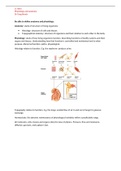
Histology relates to function. E.g. the nephrons- produce urine.
Topography relates to function. E.g. the lungs- enable flow of air in and out of lungs for gaseous
exchange.
Homeostasis: the dynamic maintenance of physiological variables within a predictable range.
All molecules, cells, tissues and organs obey the laws of physics. Pressure, flow and resistance,
diffusion, gas laws, and Laplace’s law.
Physiology and anatomy
Dr Greg Knock
Be able to define anatomy and physiology:
Anatomy: study of structure of living organisms.
Histology: structure of cells and tissues
Topographical anatomy: structure of organisms and their relation to each other in the body.
Physiology: study of how living organisms function. Describing functions of bodily systems and their
organs and tissues. Understanding how that function is controlled and maintained and to what
purpose. Abnormal function: patho- physiological.
Histology relates to function. E.g. the nephrons- produce urine.
Topography relates to function. E.g. the lungs- enable flow of air in and out of lungs for gaseous
exchange.
Homeostasis: the dynamic maintenance of physiological variables within a predictable range.
All molecules, cells, tissues and organs obey the laws of physics. Pressure, flow and resistance,
diffusion, gas laws, and Laplace’s law.


