Unit 12 diseases and infections.
Part D.
Non-specific defences.
Non-specific defences are defence mechanisms within the body that help to protect itself against
incoming pathogens. These defences mechanisms are the first defence line that the pathogen that
enters the body would encounter. Non-specific defences fight off all types of pathogens and they do
not have specific pathogens that they fight. Non-specific defences can be split into two categories.
They are:
1. Chemical barriers
2. Physical barriers
Chemical barriers.
Chemical barriers are one of the types of non-specific barriers that are in the body. These barriers
are the frontal defence of the body. These defence mechanisms protect the body from incoming
pathogens. Chemical barriers are composed of lots of proteins and enzymes that are part of the
immunomodulatory peptide/ protein family. These enzymes and proteins breakdown pathogens
causing them to be killed. This stops pathogens from causing diseases in the body. Chemical barriers
are usually in the form of a liquid substance like stomach acid and tears, or they can be a thick liquid
like substance, like mucus.
Mucus.
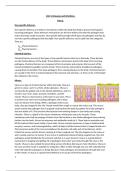
Mucus is a type of chemical barrier within the body. Mucus is
green in colour, and it is a thick, sticky substance. Mucus is
secreted by the goblet cells in the ciliated epithelium, and it is
found in your nose, lungs, stomach, intestines, and the
mouth. Mucus is also found as a thin layer in your eyes. This is
to protect your eyes from invading pathogens and to keep
your eye tissues from drying. When a pathogen enters your
body, they get trapped in the cilia. People would then cough or sneeze the mucus out. This mucus
would contain the pathogen that is trapped meaning that the body has gotten rid of the pathogens
that was inside of it. This prevents the bacteria from entering deeper in your body and causing
infection. There is a gland in the mucus membrane, which gives mucus its viscosity. These
membranes also stop the passage of toxins from the bacteria or the whole pathogens from entering
further into the body. Mucus has enzymes and antibodies inside of it. These help to neutralize and
kill the bacteria that comes inside of your body. Mucus contains lysosomes (a type of antimicrobial
enzyme), mucous, and immunoglobulins, which all help to kill the bacteria that is trapped inside of it.
The lysosomes inside of the mucus breakdown the bacteria cell walls and cell membrane, which
irritate the mucus and the throat, meaning it is then coughed out. This also happens in the noise as
well, causing a person to sneeze. If any mucus is swallowed instead of being coughed out, then the
pathogens would be killed by the stomach acid that is in your stomach. Mucus is a good defence
mechanism in trapping and getting rid of pathogens that enter your body through the nose or the
mouth. Mucus is also suitable for preventing serious infections like lung or chest infections. Mucus in
the nose and the mouth is suitable for acting like a filter to filter through any non-self-materials that
enter the body like pathogens or things like dust. Most pathogens are breathed in through the nose
or the mouth, so mucus is a good frontal defence to try to get rid of those pathogens.
1
, Stomach acid.
Stomach acid is another type of chemical barrier in the body, and it is in the form
of a liquid substance. Stomach acid is hydrochloric acid (HCl) and is only found in
the stomach and secreted by the stomach cells. Hydrochloric acid is strong,
meaning that it can instantly kill the pathogens that have been ingested via
drinking or eating food. The low acidic PH of the stomach acid would diffuse into
the bacteria via the cell membrane and would start to degrade the bacteria cells.
This means that the motor of the bacterial cells would stop working, leading to
the bacteria cells getting killed. The acid in the stomach would also convert to
various forms of nitrogen meaning that it can kill the pathogens that are harder to remove from the
stomach. The hydrochloric acid would also damage the bacterial cell's DNA which stops them from
replicating. There are parietal cells in the stomach which secrets the stomach acid. Stomach acid also
contains gastric juice or gastric acid. These also help to kill pathogens that enter the stomach.
Histamine secretes gastric acid which is used to kill the bacteria that comes into the stomach. This
also has high acidity which means that the pathogens would be easily killed, as they can't survive in
such acidic conditions. Stomach acid is suitable for defending the body from pathogens as when they
directly enter the stomach from eating or drinking, they can easily be killed. Stomach acid has
suitable conditions for killing pathogens. This is because pathogens cannot be in acidic conditions
otherwise, they would die. This means that the pathogens would directly be damaged before any
symptoms occur or before any serious damage is caused to a person.
Tear duct secretions.
Tears are secreted by the tear ducts that are inside of a person's eyes. Tears are a
clear liquid substance, and they contain secretory proteins/ enzymes that are called
lysozymes. These enzymes allow tears to prevent the growth of bacteria and get rid
of harmful non-self-materials that encounter the eyes. The lysosomes break down
the cell walls of the bacteria and slowly degrades it. This leads to the whole of the
bacteria cells getting killed. Tears also contain antibodies inside of it, which attach
themselves to the gram-positive pathogen’s antigens. This forms an antigen- antibody complex
which gets rid of the pathogens so that they do not enter your eyes and cause infections. Tear duct
secretions are suitable for clearing out the eyes and good for defending the body by making sure
that no pathogens are left in the eyes or around the eyes. Some hidden pathogens could be in or
near the eyes. The tears that are secreted by the tear ducts are suitable in getting rid of them. This is
due to the lysosomes that are in the bacteria.
Sweat.
Sweat is caused by exercise or when your body is trying to cool down. Sweat is a liquid
substance, and it can also kill pathogens that are on the skin barrier. Sweat contains
dermcidin peptides that is secreted via the sweat glands. These peptides resemble
antibodies which kill the bacteria that is on the skins surface. These peptides also limit
the growth of the bacteria meaning that they cannot multiply, and they would not
spread on and into the body. Sweat also boosts the immune system which means that more
antibodies would be produced to be able to fight off infections. Sweat is suitable for defending the
body from pathogens as it can get rid of bacteria that is on the skin. This is due to how slightly acidic
away can be meaning that it can kill the bacteria. Pathogens can survive in acidic conditions as the
cell wall lysis would occur, meaning that the bacteria would be degraded and killed.
2
Part D.
Non-specific defences.
Non-specific defences are defence mechanisms within the body that help to protect itself against
incoming pathogens. These defences mechanisms are the first defence line that the pathogen that
enters the body would encounter. Non-specific defences fight off all types of pathogens and they do
not have specific pathogens that they fight. Non-specific defences can be split into two categories.
They are:
1. Chemical barriers
2. Physical barriers
Chemical barriers.
Chemical barriers are one of the types of non-specific barriers that are in the body. These barriers
are the frontal defence of the body. These defence mechanisms protect the body from incoming
pathogens. Chemical barriers are composed of lots of proteins and enzymes that are part of the
immunomodulatory peptide/ protein family. These enzymes and proteins breakdown pathogens
causing them to be killed. This stops pathogens from causing diseases in the body. Chemical barriers
are usually in the form of a liquid substance like stomach acid and tears, or they can be a thick liquid
like substance, like mucus.
Mucus.
Mucus is a type of chemical barrier within the body. Mucus is
green in colour, and it is a thick, sticky substance. Mucus is
secreted by the goblet cells in the ciliated epithelium, and it is
found in your nose, lungs, stomach, intestines, and the
mouth. Mucus is also found as a thin layer in your eyes. This is
to protect your eyes from invading pathogens and to keep
your eye tissues from drying. When a pathogen enters your
body, they get trapped in the cilia. People would then cough or sneeze the mucus out. This mucus
would contain the pathogen that is trapped meaning that the body has gotten rid of the pathogens
that was inside of it. This prevents the bacteria from entering deeper in your body and causing
infection. There is a gland in the mucus membrane, which gives mucus its viscosity. These
membranes also stop the passage of toxins from the bacteria or the whole pathogens from entering
further into the body. Mucus has enzymes and antibodies inside of it. These help to neutralize and
kill the bacteria that comes inside of your body. Mucus contains lysosomes (a type of antimicrobial
enzyme), mucous, and immunoglobulins, which all help to kill the bacteria that is trapped inside of it.
The lysosomes inside of the mucus breakdown the bacteria cell walls and cell membrane, which
irritate the mucus and the throat, meaning it is then coughed out. This also happens in the noise as
well, causing a person to sneeze. If any mucus is swallowed instead of being coughed out, then the
pathogens would be killed by the stomach acid that is in your stomach. Mucus is a good defence
mechanism in trapping and getting rid of pathogens that enter your body through the nose or the
mouth. Mucus is also suitable for preventing serious infections like lung or chest infections. Mucus in
the nose and the mouth is suitable for acting like a filter to filter through any non-self-materials that
enter the body like pathogens or things like dust. Most pathogens are breathed in through the nose
or the mouth, so mucus is a good frontal defence to try to get rid of those pathogens.
1
, Stomach acid.
Stomach acid is another type of chemical barrier in the body, and it is in the form
of a liquid substance. Stomach acid is hydrochloric acid (HCl) and is only found in
the stomach and secreted by the stomach cells. Hydrochloric acid is strong,
meaning that it can instantly kill the pathogens that have been ingested via
drinking or eating food. The low acidic PH of the stomach acid would diffuse into
the bacteria via the cell membrane and would start to degrade the bacteria cells.
This means that the motor of the bacterial cells would stop working, leading to
the bacteria cells getting killed. The acid in the stomach would also convert to
various forms of nitrogen meaning that it can kill the pathogens that are harder to remove from the
stomach. The hydrochloric acid would also damage the bacterial cell's DNA which stops them from
replicating. There are parietal cells in the stomach which secrets the stomach acid. Stomach acid also
contains gastric juice or gastric acid. These also help to kill pathogens that enter the stomach.
Histamine secretes gastric acid which is used to kill the bacteria that comes into the stomach. This
also has high acidity which means that the pathogens would be easily killed, as they can't survive in
such acidic conditions. Stomach acid is suitable for defending the body from pathogens as when they
directly enter the stomach from eating or drinking, they can easily be killed. Stomach acid has
suitable conditions for killing pathogens. This is because pathogens cannot be in acidic conditions
otherwise, they would die. This means that the pathogens would directly be damaged before any
symptoms occur or before any serious damage is caused to a person.
Tear duct secretions.
Tears are secreted by the tear ducts that are inside of a person's eyes. Tears are a
clear liquid substance, and they contain secretory proteins/ enzymes that are called
lysozymes. These enzymes allow tears to prevent the growth of bacteria and get rid
of harmful non-self-materials that encounter the eyes. The lysosomes break down
the cell walls of the bacteria and slowly degrades it. This leads to the whole of the
bacteria cells getting killed. Tears also contain antibodies inside of it, which attach
themselves to the gram-positive pathogen’s antigens. This forms an antigen- antibody complex
which gets rid of the pathogens so that they do not enter your eyes and cause infections. Tear duct
secretions are suitable for clearing out the eyes and good for defending the body by making sure
that no pathogens are left in the eyes or around the eyes. Some hidden pathogens could be in or
near the eyes. The tears that are secreted by the tear ducts are suitable in getting rid of them. This is
due to the lysosomes that are in the bacteria.
Sweat.
Sweat is caused by exercise or when your body is trying to cool down. Sweat is a liquid
substance, and it can also kill pathogens that are on the skin barrier. Sweat contains
dermcidin peptides that is secreted via the sweat glands. These peptides resemble
antibodies which kill the bacteria that is on the skins surface. These peptides also limit
the growth of the bacteria meaning that they cannot multiply, and they would not
spread on and into the body. Sweat also boosts the immune system which means that more
antibodies would be produced to be able to fight off infections. Sweat is suitable for defending the
body from pathogens as it can get rid of bacteria that is on the skin. This is due to how slightly acidic
away can be meaning that it can kill the bacteria. Pathogens can survive in acidic conditions as the
cell wall lysis would occur, meaning that the bacteria would be degraded and killed.
2