

PHYSICS CLASS 10 - CHAPTER 1
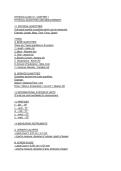
PHYSICAL QUANTITIES AND MEASUREMENT
1.1 PHYSICAL QUANTITIES
A physical quantity is anything which can be measured.
Example: Length, Mass, Time, Force, Speed
TYPES:
A. BASE QUANTITIES
There are 7 base quantities in SI system:
1. Length - meter (m)
2. Mass - kilogram (kg)
3. Time - second (s)
4. Electric Current - Ampere (A)
5. Temperature - Kelvin (K)
6. Amount of Substance - Mole (mol)
7. Luminous Intensity - Candela (cd)
B. DERIVED QUANTITIES
Quantities derived from base quantities.
Example:
Speed = Distance/Time = m/s
Force = Mass x Acceleration = kg m/s² = Newton (N)
1.2 INTERNATIONAL SYSTEM OF UNITS
SI units are used worldwide for measurement.
1.3 PREFIXES
k - kilo - 10³
c - centi - 10⁻²
m - milli - 10⁻³
μ - micro - 10⁻⁶
n - nano - 10⁻⁹
1.4 MEASURING INSTRUMENTS
A. VERNIER CALIPERS
- Least Count = 0.01 cm = 0.1 mm
- Used to measure: diameter of cylinder, depth of beaker
B. SCREW GAUGE
- Least Count = 0.001 cm = 0.01 mm
- Used to measure: diameter of wire, thickness of paper
PHYSICAL QUANTITIES AND MEASUREMENT
1.1 PHYSICAL QUANTITIES
A physical quantity is anything which can be measured.
Example: Length, Mass, Time, Force, Speed
TYPES:
A. BASE QUANTITIES
There are 7 base quantities in SI system:
1. Length - meter (m)
2. Mass - kilogram (kg)
3. Time - second (s)
4. Electric Current - Ampere (A)
5. Temperature - Kelvin (K)
6. Amount of Substance - Mole (mol)
7. Luminous Intensity - Candela (cd)
B. DERIVED QUANTITIES
Quantities derived from base quantities.
Example:
Speed = Distance/Time = m/s
Force = Mass x Acceleration = kg m/s² = Newton (N)
1.2 INTERNATIONAL SYSTEM OF UNITS
SI units are used worldwide for measurement.
1.3 PREFIXES
k - kilo - 10³
c - centi - 10⁻²
m - milli - 10⁻³
μ - micro - 10⁻⁶
n - nano - 10⁻⁹
1.4 MEASURING INSTRUMENTS
A. VERNIER CALIPERS
- Least Count = 0.01 cm = 0.1 mm
- Used to measure: diameter of cylinder, depth of beaker
B. SCREW GAUGE
- Least Count = 0.001 cm = 0.01 mm
- Used to measure: diameter of wire, thickness of paper


