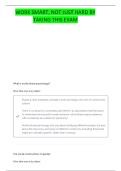
What is multicultural psychology?
Give this one a try later!
Places a clear emphasis, perhaps it even privileges, the role of context and
culture.
There is no quest for universality and there is an assumption that the quest
to understand and predict human behavior will as likely require patience
with complexity as a desire for parsimony.
Multicultural psychology isn't only about studying different people, but also
about the discovery and study of different constructs, including those that
might be culturally specific, rather than universal
The social construction of gender
Give this one a try later!
, An alternative to essentialism
Social constructionism:
Gender results from "particular historical and cultural understandings rather
than being universal and immutable categories of human experience" (p.
xvi, Bohan, 1996)
Gender is not inherent trait/quality of individuals; rather it represents
meaning assigned to experiences and behaviors within a particular social,
historical, and cultural context
Acknowledges temporal and contextual influences on
definitions/categories of gender
Gender has been, is, and will be defined differently in varied socio-
historical contexts.
overall it is saying that there is gender change over time. This illustrates the
social construction of gender
we learn to "do gender" through socialization
gender socialization occurs from birth; children are ware of gender from
early age
In our society, socially constructed gender ascribes social status;
our gendered ideology sets up and reinforces a stratification system in
which men are dominant
Social Class in Psychology Research cont...
Give this one a try later!
Subjective Measures:
May help understand people's experiences of class, including classism,
which research finds is related to a multitude of outcomes (e.g., physical
health)
In addition, to classism, researchers might also think about:
, Prejudice lower social class people have against higher social class people
Internalized classism
Proxemics
Give this one a try later!
Perception and use of personal and interpersonal space
distance in therapy... Americans would prefer being more distant in
proximity than would Latin Americans
Comfort Zones, Learning Edges, Danger Zones
Give this one a try later!
Comfort Zone: We all have comfort zones. While remaining in our comfort
zones, we are not being challenged (and not learning). Moving beyond
comfort zones requires bravery, constructively embracing conflict.
However, if we move too far outside of our comfort zone, we begin to
resist new information and withdraw.
Conflict of understanding is normal and can be beneficial as we engage in
dialogue with each other. It pushes us outside of our comfort zone.
Learning edges are where we can expand our knowledge. Being on the
edge of what we know requires courageousness. It means that we may feel
annoyed, angry, anxious, surprised, confused, defensive, or uncomfortable.
The challenge is to recognize when we are on the learning edge and to
bravely stay there with the discomfort so that we can experience and learn.
History of Psychology and Sexual Orientation Cont ...
, Give this one a try later!
Again, questionable science -- samples drawn from prisoners/patients in
psychotherapy.
Research by Evelyn Hooker (1957) began to dismantle belief
"homosexuality" was mental illness
Compared heterosexual men with well-functioning gay men (not
prisoners/those with known mental health issues). Found no differences in
adjustment of two samples.
homosexuality was listed as a mental illness in DSM until 1973
Both APAs (and many other medical and professional organizations) state
that lesbian, gay, or bisexual identities do not represent mental illness; do
not support "treatment" of these identities (i.e., "sexual orientation change
efforts")
Bohan, J. S. (1996). Psychology and sexual orientation: Coming to terms.
New York: Rutledge
- a recommended reference on psychology and sexual orientation
Discussion
Give this one a try later!
In discussion, we present ideas and seek answers and solutions
conventional discussion leads to conventional debate ***
- conventional discussion process is supported and reinforced by
institutions and ways engage with one another ... its so pervasive that it
often gets unrecognized
- one right answer
- "what is wrong with this picture"
Give this one a try later!
Places a clear emphasis, perhaps it even privileges, the role of context and
culture.
There is no quest for universality and there is an assumption that the quest
to understand and predict human behavior will as likely require patience
with complexity as a desire for parsimony.
Multicultural psychology isn't only about studying different people, but also
about the discovery and study of different constructs, including those that
might be culturally specific, rather than universal
The social construction of gender
Give this one a try later!
, An alternative to essentialism
Social constructionism:
Gender results from "particular historical and cultural understandings rather
than being universal and immutable categories of human experience" (p.
xvi, Bohan, 1996)
Gender is not inherent trait/quality of individuals; rather it represents
meaning assigned to experiences and behaviors within a particular social,
historical, and cultural context
Acknowledges temporal and contextual influences on
definitions/categories of gender
Gender has been, is, and will be defined differently in varied socio-
historical contexts.
overall it is saying that there is gender change over time. This illustrates the
social construction of gender
we learn to "do gender" through socialization
gender socialization occurs from birth; children are ware of gender from
early age
In our society, socially constructed gender ascribes social status;
our gendered ideology sets up and reinforces a stratification system in
which men are dominant
Social Class in Psychology Research cont...
Give this one a try later!
Subjective Measures:
May help understand people's experiences of class, including classism,
which research finds is related to a multitude of outcomes (e.g., physical
health)
In addition, to classism, researchers might also think about:
, Prejudice lower social class people have against higher social class people
Internalized classism
Proxemics
Give this one a try later!
Perception and use of personal and interpersonal space
distance in therapy... Americans would prefer being more distant in
proximity than would Latin Americans
Comfort Zones, Learning Edges, Danger Zones
Give this one a try later!
Comfort Zone: We all have comfort zones. While remaining in our comfort
zones, we are not being challenged (and not learning). Moving beyond
comfort zones requires bravery, constructively embracing conflict.
However, if we move too far outside of our comfort zone, we begin to
resist new information and withdraw.
Conflict of understanding is normal and can be beneficial as we engage in
dialogue with each other. It pushes us outside of our comfort zone.
Learning edges are where we can expand our knowledge. Being on the
edge of what we know requires courageousness. It means that we may feel
annoyed, angry, anxious, surprised, confused, defensive, or uncomfortable.
The challenge is to recognize when we are on the learning edge and to
bravely stay there with the discomfort so that we can experience and learn.
History of Psychology and Sexual Orientation Cont ...
, Give this one a try later!
Again, questionable science -- samples drawn from prisoners/patients in
psychotherapy.
Research by Evelyn Hooker (1957) began to dismantle belief
"homosexuality" was mental illness
Compared heterosexual men with well-functioning gay men (not
prisoners/those with known mental health issues). Found no differences in
adjustment of two samples.
homosexuality was listed as a mental illness in DSM until 1973
Both APAs (and many other medical and professional organizations) state
that lesbian, gay, or bisexual identities do not represent mental illness; do
not support "treatment" of these identities (i.e., "sexual orientation change
efforts")
Bohan, J. S. (1996). Psychology and sexual orientation: Coming to terms.
New York: Rutledge
- a recommended reference on psychology and sexual orientation
Discussion
Give this one a try later!
In discussion, we present ideas and seek answers and solutions
conventional discussion leads to conventional debate ***
- conventional discussion process is supported and reinforced by
institutions and ways engage with one another ... its so pervasive that it
often gets unrecognized
- one right answer
- "what is wrong with this picture"