Why did the British intervene in Egypt in 1882?
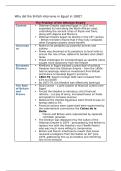
The Problem of the Ottoman Empire
Context Ottoman Empire captured Egypt in 1517 and
expanded its hold along the North African coast,
controlling the ancient cities of Tripoli and Tunis,
along with Algeria and Morocco
Ottoman Empire began its decline in the 19th century
– British ministers feared that if they fully collapsed,
other European powers would benefit
Governan Ruled on its periphery by powerful princes and
ce sultans
Power was devolved at its periphery to local lords to
ensure the rule of law, defend its borders and collect
taxes
Posed challenges for Constantinople as satellite rulers
sought more autonomy from the Empire
European Khedives in Egypt enjoyed a great deal of political
Finance freedom from the Ottoman Empire – from the 1850s
had increasingly relied on investment from Britain
and France to develop Egypt’s economy
1863-70: Egypt’s foreign debt had increased from
£3m to £100m
By 1875-76, the Khedive was effectively bankrupt
The Role Dual Control – a joint system of financial control over
of Britain Egypt
and Forced the khedive to introduce strict financial
France reforms – cut pay of army, increased taxes on foods
and goods to increase revenue
Reduced the interest Egyptians were forced to pay on
foreign debt to 5%
Financial actions were supervised were supervised by
the international commission the Caisse de la
Dette
- France and Britain were represented by separate
controller generals
The khedive was deposed of by the sultan of the
Ottoman Empire in 1879 – persuaded by the British to
replace him with the khedive’s son (Tewfik Pasha)
who was much more willing to compromise
British and French interference meant that Ismail
received a telegram from the Sultan on 26th June
1879, addressing him as ex-khedive and informing
him of his removal
, Arabi Pasha and the Development of Egyptian Nationalism
Arabi Arabi Pasha was a nationalist officer in the Egyptian
Pasha army who led a group of army officers in protest
against Tewfik and Anglo-French interference in the
country
Dissatisfaction with the Dual Control’s financial
measures existed among all of the Egyptian
bourgeoisie
Arabi’s initial focus of the protests from 1876 was the
issue of the army pay
Began to spoke of ‘Egypt for the Egyptians’
1879: formed the Egyptian Nationalist Party
Had considerable support from the army and the
Egyptian peasants
Nationali 1879: Arabi led a coup following the attempt to
st Action dismiss 2,500 officers from the army and halve the
salaries of those who remained
Forced Khedive Tewfik to appoint a nationalist
ministry, including himself
New nationalist cabinet reversed the army policies
and borrowed another £400,000 from Rothschilds to
avoid the disputed cuts
British and French feared that Arabi would force
Tewfik to refuse the loans and ignore the financial
measures of the Dual Control
The Problem of the Ottoman Empire
Context Ottoman Empire captured Egypt in 1517 and
expanded its hold along the North African coast,
controlling the ancient cities of Tripoli and Tunis,
along with Algeria and Morocco
Ottoman Empire began its decline in the 19th century
– British ministers feared that if they fully collapsed,
other European powers would benefit
Governan Ruled on its periphery by powerful princes and
ce sultans
Power was devolved at its periphery to local lords to
ensure the rule of law, defend its borders and collect
taxes
Posed challenges for Constantinople as satellite rulers
sought more autonomy from the Empire
European Khedives in Egypt enjoyed a great deal of political
Finance freedom from the Ottoman Empire – from the 1850s
had increasingly relied on investment from Britain
and France to develop Egypt’s economy
1863-70: Egypt’s foreign debt had increased from
£3m to £100m
By 1875-76, the Khedive was effectively bankrupt
The Role Dual Control – a joint system of financial control over
of Britain Egypt
and Forced the khedive to introduce strict financial
France reforms – cut pay of army, increased taxes on foods
and goods to increase revenue
Reduced the interest Egyptians were forced to pay on
foreign debt to 5%
Financial actions were supervised were supervised by
the international commission the Caisse de la
Dette
- France and Britain were represented by separate
controller generals
The khedive was deposed of by the sultan of the
Ottoman Empire in 1879 – persuaded by the British to
replace him with the khedive’s son (Tewfik Pasha)
who was much more willing to compromise
British and French interference meant that Ismail
received a telegram from the Sultan on 26th June
1879, addressing him as ex-khedive and informing
him of his removal
, Arabi Pasha and the Development of Egyptian Nationalism
Arabi Arabi Pasha was a nationalist officer in the Egyptian
Pasha army who led a group of army officers in protest
against Tewfik and Anglo-French interference in the
country
Dissatisfaction with the Dual Control’s financial
measures existed among all of the Egyptian
bourgeoisie
Arabi’s initial focus of the protests from 1876 was the
issue of the army pay
Began to spoke of ‘Egypt for the Egyptians’
1879: formed the Egyptian Nationalist Party
Had considerable support from the army and the
Egyptian peasants
Nationali 1879: Arabi led a coup following the attempt to
st Action dismiss 2,500 officers from the army and halve the
salaries of those who remained
Forced Khedive Tewfik to appoint a nationalist
ministry, including himself
New nationalist cabinet reversed the army policies
and borrowed another £400,000 from Rothschilds to
avoid the disputed cuts
British and French feared that Arabi would force
Tewfik to refuse the loans and ignore the financial
measures of the Dual Control