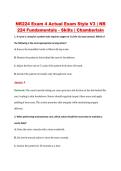
NR224 Exam 4 Actual Exam Style V3 | NR
224 Fundamentals - Skills | Chamberlain
1. A nurse is caring for a patient who requires oxygen at 2 L/min via nasal cannula. Which of
the following is the most appropriate nursing action?
A. Ensure the humidifier bottle is filled with tap water.
B. Monitor the patient’s skin behind the ears for breakdown.
C. Adjust the flow rate to 5 L/min if the patient feels short of breath.
D. Instruct the patient to breathe only through their nose.
Answer: B
Rationale: The nasal cannula tubing can cause pressure and friction on the skin behind the
ears, leading to skin breakdown. Nurses should regularly inspect these areas and apply
padding if necessary. This action promotes skin integrity while maintaining oxygen
delivery.
2. When performing tracheostomy care, which action should the nurse take to maintain a
sterile field?
A. Clean the outer cannula with a clean washcloth.
B. Use sterile normal saline to rinse the inner cannula.
C. Suction the patient for 30 seconds at a time.
,D. Remove the old ties before securing the new ones.
Answer: B
Rationale: Sterile normal saline is used to rinse the inner cannula to maintain surgical
asepsis during the procedure. Cleaning the inner cannula prevents the buildup of
secretions that could occlude the airway. Using sterile technique is critical to prevent
healthcare-associated infections like pneumonia.
3. A nurse is preparing to administer a cleansing enema to a patient. In which position should
the nurse place the patient?
A. Orthopneic position
B. Right side-lying with head elevated
C. Left lateral Sims’ position
D. Prone position
Answer: C
Rationale: The left lateral Sims’ position allows the enema solution to flow downward by
gravity into the sigmoid colon and rectum. This position follows the natural anatomical
curve of the colon, making the procedure more effective. It also helps the patient retain the
fluid for the required amount of time.
4. Which of the following is a characteristic of a Stage 2 pressure injury?
A. Non-blanchable erythema of intact skin
, B. Obscured full-thickness skin loss by slough or eschar
C. Full-thickness skin loss with visible adipose tissue
D. Partial-thickness loss of skin with exposed dermis
Answer: D
Rationale: A Stage 2 pressure injury involves partial-thickness loss of the dermis and
presents as a shallow, open ulcer. The wound bed is typically viable, pink or red, and moist,
and may also present as an intact or ruptured serum-filled blister. This stage does not
involve visible fat or deeper tissues.
5. A nurse is collecting a midstream (clean-catch) urine specimen from a female patient.
Which instruction is correct?
A. Collect the very first stream of urine in the cup.
B. Cleanse the labia from back to front before voiding.
C. Void a small amount into the toilet, then collect the sample.
D. Stop the stream of urine immediately after the cup is full.
Answer: C
Rationale: The initial stream of urine flushes out bacteria residing in the urethral meatus,
so it should not be collected. The midstream portion is the most representative of the urine
actually in the bladder. This technique reduces the risk of specimen contamination from
external skin flora.
224 Fundamentals - Skills | Chamberlain
1. A nurse is caring for a patient who requires oxygen at 2 L/min via nasal cannula. Which of
the following is the most appropriate nursing action?
A. Ensure the humidifier bottle is filled with tap water.
B. Monitor the patient’s skin behind the ears for breakdown.
C. Adjust the flow rate to 5 L/min if the patient feels short of breath.
D. Instruct the patient to breathe only through their nose.
Answer: B
Rationale: The nasal cannula tubing can cause pressure and friction on the skin behind the
ears, leading to skin breakdown. Nurses should regularly inspect these areas and apply
padding if necessary. This action promotes skin integrity while maintaining oxygen
delivery.
2. When performing tracheostomy care, which action should the nurse take to maintain a
sterile field?
A. Clean the outer cannula with a clean washcloth.
B. Use sterile normal saline to rinse the inner cannula.
C. Suction the patient for 30 seconds at a time.
,D. Remove the old ties before securing the new ones.
Answer: B
Rationale: Sterile normal saline is used to rinse the inner cannula to maintain surgical
asepsis during the procedure. Cleaning the inner cannula prevents the buildup of
secretions that could occlude the airway. Using sterile technique is critical to prevent
healthcare-associated infections like pneumonia.
3. A nurse is preparing to administer a cleansing enema to a patient. In which position should
the nurse place the patient?
A. Orthopneic position
B. Right side-lying with head elevated
C. Left lateral Sims’ position
D. Prone position
Answer: C
Rationale: The left lateral Sims’ position allows the enema solution to flow downward by
gravity into the sigmoid colon and rectum. This position follows the natural anatomical
curve of the colon, making the procedure more effective. It also helps the patient retain the
fluid for the required amount of time.
4. Which of the following is a characteristic of a Stage 2 pressure injury?
A. Non-blanchable erythema of intact skin
, B. Obscured full-thickness skin loss by slough or eschar
C. Full-thickness skin loss with visible adipose tissue
D. Partial-thickness loss of skin with exposed dermis
Answer: D
Rationale: A Stage 2 pressure injury involves partial-thickness loss of the dermis and
presents as a shallow, open ulcer. The wound bed is typically viable, pink or red, and moist,
and may also present as an intact or ruptured serum-filled blister. This stage does not
involve visible fat or deeper tissues.
5. A nurse is collecting a midstream (clean-catch) urine specimen from a female patient.
Which instruction is correct?
A. Collect the very first stream of urine in the cup.
B. Cleanse the labia from back to front before voiding.
C. Void a small amount into the toilet, then collect the sample.
D. Stop the stream of urine immediately after the cup is full.
Answer: C
Rationale: The initial stream of urine flushes out bacteria residing in the urethral meatus,
so it should not be collected. The midstream portion is the most representative of the urine
actually in the bladder. This technique reduces the risk of specimen contamination from
external skin flora.