Drug Summaries – Humza Ibrahim
Chapter 11 3 DRY EYE CONDITIONS
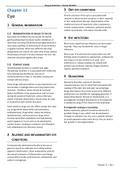
Eye Chronic soreness of the eyes is associated with
reduced or abnormal tear secretion, it often responds
to tear replacement therapy. Hypromellose is the
traditional choice of treatment; other preparations
1 GENERAL INFORMATION include acetylcysteine, carbomers, polyvinyl alcohol,
sodium hyaluronate, and sodium chloride 0.9%.
1.1 ADMINISTRATION OF DRUGS TO THE EYE
Eye drops are instilled into the pocket formed by
gently pulling down the lower eyelid. Instillation of
4 EYE INFECTIONS
more than one drop should be discouraged because it Most acute superficial eye infections can be treated
may cause overflow. A small amount of eye ointment topically. They may be bacterial, viral, or fungal
is applied similarly. When two different eye-drop infections.
preparations are used at the same time of day, patient
should leave at least 5 minutes between the two. Eye Most cases of acute bacterial conjunctivitis are self-
ointment should be applied after drops. limiting; where treatment is appropriate, antibacterial
eye drops or an eye ointment are used. Viral
infections (i.e. herpes simplex) are treated with
1.2 CONTACT LENSES aciclocir eye ointment, whereas fungal infections
Acanthamoeba keratitis is a painful and sight- require specialist treatment.
threatening condition. It is associated with ineffective
lens cleaning and disinfection, the use of
contaminated lens cases, or tap water coming into 5 GLAUCOMA
contact with the lenses.
Glaucoma describes a group of disorders
Some drugs and preservatives in eye preparations can characterised by a loss of visual field associated with
accumulate in hydrogel lenses and may induce toxic cupping of the optic disc and optic nerve damage.
reactions. Therefore, lenses should be removed Drugs that reduce intra-ocular pressure by different
before instillation of eye preparations and not worn mechanisms are available for managing glaucoma. A
during the period of treatment, unless otherwise topical beta-blocker (timolol or levobunolol), or a
stated. Ointment preparations should never be used prostaglandin analogue (latanoprost or bimatoprost)
in conjunction with contact lens wear. is usually the drug of first choice for the treatment.
Some systemic drugs can also affect contact lens wear Prostaglandin analogues counselling
e.g. drugs which reduce blink rate (anxiolytics, Before treatment, patients should be warned of a
antihistamines), drugs which reduce lacrimation possible change in eye, which may be permanent.
(antihistamines, antimuscarinics), drugs which Changes in eyelashes can also occur; patients advised
increase lacrimation (ephedrine and hydralazine), to avoid repeated contact with skin as this can lead to
aspirin (appears in tears and can be absorbed by hair growth or skin pigmentation.
contact lenses—leading to irritation), and rifampicin
and sulfasalazine (can discolour lenses).
2 ALLERGIC AND INFLAMMATORY EYE
CONDITIONS
Corticosteroids administered locally to the eye or
given by mouth are effective for treating anterior
segment inflammation. Other preparations used for
the topical treatment of inflammation and allergic
conjunctivitis include antihistamines, lodoxamide, and
sodium cromoglicate.
Chapter 11 – Pg 1
Compiled using the British National Formulary
Chapter 11 3 DRY EYE CONDITIONS
Eye Chronic soreness of the eyes is associated with
reduced or abnormal tear secretion, it often responds
to tear replacement therapy. Hypromellose is the
traditional choice of treatment; other preparations
1 GENERAL INFORMATION include acetylcysteine, carbomers, polyvinyl alcohol,
sodium hyaluronate, and sodium chloride 0.9%.
1.1 ADMINISTRATION OF DRUGS TO THE EYE
Eye drops are instilled into the pocket formed by
gently pulling down the lower eyelid. Instillation of
4 EYE INFECTIONS
more than one drop should be discouraged because it Most acute superficial eye infections can be treated
may cause overflow. A small amount of eye ointment topically. They may be bacterial, viral, or fungal
is applied similarly. When two different eye-drop infections.
preparations are used at the same time of day, patient
should leave at least 5 minutes between the two. Eye Most cases of acute bacterial conjunctivitis are self-
ointment should be applied after drops. limiting; where treatment is appropriate, antibacterial
eye drops or an eye ointment are used. Viral
infections (i.e. herpes simplex) are treated with
1.2 CONTACT LENSES aciclocir eye ointment, whereas fungal infections
Acanthamoeba keratitis is a painful and sight- require specialist treatment.
threatening condition. It is associated with ineffective
lens cleaning and disinfection, the use of
contaminated lens cases, or tap water coming into 5 GLAUCOMA
contact with the lenses.
Glaucoma describes a group of disorders
Some drugs and preservatives in eye preparations can characterised by a loss of visual field associated with
accumulate in hydrogel lenses and may induce toxic cupping of the optic disc and optic nerve damage.
reactions. Therefore, lenses should be removed Drugs that reduce intra-ocular pressure by different
before instillation of eye preparations and not worn mechanisms are available for managing glaucoma. A
during the period of treatment, unless otherwise topical beta-blocker (timolol or levobunolol), or a
stated. Ointment preparations should never be used prostaglandin analogue (latanoprost or bimatoprost)
in conjunction with contact lens wear. is usually the drug of first choice for the treatment.
Some systemic drugs can also affect contact lens wear Prostaglandin analogues counselling
e.g. drugs which reduce blink rate (anxiolytics, Before treatment, patients should be warned of a
antihistamines), drugs which reduce lacrimation possible change in eye, which may be permanent.
(antihistamines, antimuscarinics), drugs which Changes in eyelashes can also occur; patients advised
increase lacrimation (ephedrine and hydralazine), to avoid repeated contact with skin as this can lead to
aspirin (appears in tears and can be absorbed by hair growth or skin pigmentation.
contact lenses—leading to irritation), and rifampicin
and sulfasalazine (can discolour lenses).
2 ALLERGIC AND INFLAMMATORY EYE
CONDITIONS
Corticosteroids administered locally to the eye or
given by mouth are effective for treating anterior
segment inflammation. Other preparations used for
the topical treatment of inflammation and allergic
conjunctivitis include antihistamines, lodoxamide, and
sodium cromoglicate.
Chapter 11 – Pg 1
Compiled using the British National Formulary