Land Law Glossary
• Part 1 taught me what skills I currently possess, which skills I need
to work on and what activities I can do in order to improve these skills. It
allowed me to reflect on myself and propose changes, for example it
showed me that self-promotion/networking is my weakest point and
written communication is my strongest point. This has allowed me to
prioritise certain skills and develop them.
• Part 2 taught me step-by-step how I am going to improve my
weakest skills. It allowed me to think of specific activities, methods of how
to keep on track, and set times to improve my weaknesses. This meant
that I was able to put in place how I am going to improve my weaknesses
and set myself a timeframe to do this.
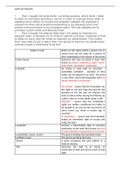
Estate in Land Refers to the rights which a person has to
control and use the land for a period of
time, depending on the nature of the estate
Estate Owner Someone who has an estate in land. Also
known as owner, proprietor, paper owner,
land owner, freeholder, leaseholder
Freehold An estate in land with an uncertain –
potentially unlimited – duration of time
which can be passed on to heirs. The term
is now often used interchangeably with fee
simple absolute in possession
Fee Simple – means that the freeholder has
the right to use and enjoy the land for the
duration of her life and can transfer the
land to others either during her lifetime (as
a gift or sale) or on her death under a will.
Absolute – means that the freeholder’s
rights are neither conditional nor liable to
be bought to an end on the occurrence of
some event e.g. when a certain age is
reached
In possession – means that the freeholder
enjoys an immediate right to occupy and
enjoy the land
Leasehold Involves a time-limited right to exclusive
possession of the land. Also known as term
of years absolute in possession or the lease
Leaseholder, lessee, tenant The person holding the leasehold estate
Landlord, lessor The person granting the lease
Tenant A party occupying the land subject to a
lease or tenancy
Title Describes the right to an estate, to
ownership of land and serves proof of that
right
• Part 1 taught me what skills I currently possess, which skills I need
to work on and what activities I can do in order to improve these skills. It
allowed me to reflect on myself and propose changes, for example it
showed me that self-promotion/networking is my weakest point and
written communication is my strongest point. This has allowed me to
prioritise certain skills and develop them.
• Part 2 taught me step-by-step how I am going to improve my
weakest skills. It allowed me to think of specific activities, methods of how
to keep on track, and set times to improve my weaknesses. This meant
that I was able to put in place how I am going to improve my weaknesses
and set myself a timeframe to do this.
Estate in Land Refers to the rights which a person has to
control and use the land for a period of
time, depending on the nature of the estate
Estate Owner Someone who has an estate in land. Also
known as owner, proprietor, paper owner,
land owner, freeholder, leaseholder
Freehold An estate in land with an uncertain –
potentially unlimited – duration of time
which can be passed on to heirs. The term
is now often used interchangeably with fee
simple absolute in possession
Fee Simple – means that the freeholder has
the right to use and enjoy the land for the
duration of her life and can transfer the
land to others either during her lifetime (as
a gift or sale) or on her death under a will.
Absolute – means that the freeholder’s
rights are neither conditional nor liable to
be bought to an end on the occurrence of
some event e.g. when a certain age is
reached
In possession – means that the freeholder
enjoys an immediate right to occupy and
enjoy the land
Leasehold Involves a time-limited right to exclusive
possession of the land. Also known as term
of years absolute in possession or the lease
Leaseholder, lessee, tenant The person holding the leasehold estate
Landlord, lessor The person granting the lease
Tenant A party occupying the land subject to a
lease or tenancy
Title Describes the right to an estate, to
ownership of land and serves proof of that
right