Eduqas A Level Biology
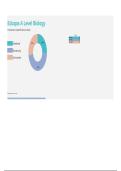
Component 2 specification tracker
Topics
Mastered 23
Reviewing 42
25.6% Not started 25
Mastered 27.8%
Reviewing
Not started
46.7%
Download your own copy...
https://docs.google.com/spreadsheets/d/1CskeT5PpxS9OJZ9-g3Vfk97qGx-bkmdNPxLZW5RHz98/edit?usp=sharing
,2.1 Classification and biodive2.2 Genetic information and2.3 Sexual reproduction in h 2.4 Sexual reproduction in p2.5 Inheritance 2.6 Variation and evolution 2.7 Applications of reproductions and genetics
Candidates should be able
to recognise and label a Candidates should give
diagram of a half flower of the meanings of the
a typical following; gene, locus,
regular dicotyledonous alleles (different forms of
All organisms can be insect-pollinated flower the same gene), dominant,
placed into a hierarchical (e.g. Primula) to include: recessive, codominant, 1. Genomics is the study of
system of classification The components of a receptacle, calyx, sepal, phenotype, genotype, the structure, function,
that includes discrete taxa nucleotide are pentose Candidates should be able corolla, petal, stamen, homozygous, 1. Genetic and evolution and mapping of
– kingdom, phylum, class, sugar, phosphate plus to label drawings of male filament, anther, carpel, heterozygous, F1, F2, environmental factors genomes as exemplified
order, family, genus, and organic base which and female reproductive ovary, ovule, style and autosomes, and sex produce variation by the Human Genome
species. contains nitrogen. systems. stigma. chromosomes between individuals and 100K Projects.
2. The Human Genome
Project has determined
the order of bases in the
human genome as well as
the identification of some
genes, their sequencing
Candidates should know and mapping. This
The need for classification the functions of: information enables
and its tentative nature. - scrotum, testes, 2. Most characters are scientists to scan a
Closely related species are Nucleotide bases are epididymis, vas deferens, controlled by a number of patient’s DNA sample for
recognised by their similar purines or pyrimidines, seminal vesicle, prostate genes and any character mutated sequences and
morphology, but linked by condensation gland, urethra, penis; Candidates should know Genetics is the study of within a population which also to compare the
classification may change reactions to form - ovary, fallopian tubes the differences in mechanisms by which an shows a gradation from sequence of DNA bases in
as additional information polymers, RNA and DNA, (oviduct), uterus, structure of a wind organism inherits one extreme to another, a patient’s gene to a
becomes available e.g. which can be represented endometrium, cervix, pollinated flower, e.g. characteristics from its shows continuous normal version of the
DNA base sequences in symbolic form. vagina, and urethra. ryegrass. parents. variation. gene.
Organisms are more
closely related with
progression from
kingdom to species. DNA consists of two chains Spermatogenesis occurs in Candidates should 3. The Human Genome
Taxonomy is dynamic and linked via the base pairs, the seminiferous tubules compare wind and insect Project used ‘Sanger
there are differences of by hydrogen bonds, to of the testes and is a pollinated flowers and the Candidates should Sequencing’ which
opinion about whether form a double helix. The sequence of events differences in flower parts appreciate the importance 3. When characters are sequences relatively small
morphology or genetics base pairs are C-G and A –T involving mitosis and and adaptations for their of meiosis and fertilisation clear-cut and controlled sections of DNA at a time
are more central for a but in RNA thymine is meiosis to form male different methods of in sexual reproduction by a single gene it is called (usually <1,000 bps) so took
basis of classification. replaced by uracil. gametes or spermatozoa. pollination. giving rise to variation. discontinuous variation. a long time.
, Candidates should be able
to give an account of the
development in the
anther, by mitosis and
meiosis, of pollen grains
with a haploid nucleus:
mitosis produces large
numbers of pollen mother
Candidates should
cells, which divide byunderstand how Mendel
meiosis to produce a used the results of
tetrad of four haploid cells;
experimental genetic
crosses to derive his laws
Candidates should know the role of the tapetum in of inheritance and be able
the types and stages of cell pollen grain development; to apply these laws when 4. Next Generation
Recent biochemical division that produce solving genetic problems: Sequencers (NGS) can
evidence has shown that In DNA, the two mature spermatozoa development and Mendel’s experiments on sequence an entire
the kingdom prokaryotic polynucleotide strands are including: germinal structure of a mature monohybrid inheritance genome in just a few
should be split into two antiparallel (“run” in epithelium, pollen grain, including e.g. tall pea plants crossed hours. NGS is enabling
separate groups based on opposite directions, one spermatogonia, primary subsequent mitotic with short pea plants, in scientists to study variation
some fundamental from the 5 prime end to and secondary divisions of the nucleus; diagrammatic form using 4. Candidates should be within the human genome
biochemical differences. the 3 prime end, the other spermatocytes, suitable symbols, to able to distinguish amongst 100 000 people
All other organisms have from the 3 prime end to 5 spermatids, and dehiscence and pollen include F1 and F2 between heritable and in the U.K. ( the 100K
eukaryotic cells. the prime end.) spermatozoa dispersal. generations. non-heritable variation. genome project)
This has led to the
development of a scheme
of classification which
suggests all organisms
evolved along three
distinct lineages, these are
called domains.
The organisms of each
domain share a distinctive,
unique pattern of
ribosomal RNA (rRNA),
which establishes their
close evolutionary
relationship.
The three domains of life 5. The 100K Genome
are: Project’s purpose is to
Bacteria (or Eubacteria) improve knowledge and
which are the true understanding of genetic
bacteria. Candidates should be able disorders, and improve
Candidates should relate to recognise structures in enable healthcare to be
The Archaea (or spermatogenesis to cells a mature ovule within a improved by:
Archaeabacteria) are the visible in a T.S of a single carpel and label the 5. For many characteristics more accurate diagnosis
extremophile prokaryotes. seminiferous tubule, and following structures: showing continuous
recognise the different funicle, integuments, variation, it is both better prediction of the
Eukarya/ Eukaryota which DNA has two major stages in the production of micropyle, embryo sac, heredity and the effect of drugs and
include all eukaryotic functions: replication, in mature spermatozoa, female gamete, two environment which improved design of drugs;
organisms i.e. animals, dividing cells, and carrying including interstitial synergids, two polar Candidates should know influences the phenotypic
plants, fungi and the information for protein (Leydig) cells and Sertoli nuclei, and three how and why test crosses appearance of the new and improved
protoctista. synthesis in all cells. cells antipodal cells may be carried out characteristic. treatments for disease.
Component 2 specification tracker
Topics
Mastered 23
Reviewing 42
25.6% Not started 25
Mastered 27.8%
Reviewing
Not started
46.7%
Download your own copy...
https://docs.google.com/spreadsheets/d/1CskeT5PpxS9OJZ9-g3Vfk97qGx-bkmdNPxLZW5RHz98/edit?usp=sharing
,2.1 Classification and biodive2.2 Genetic information and2.3 Sexual reproduction in h 2.4 Sexual reproduction in p2.5 Inheritance 2.6 Variation and evolution 2.7 Applications of reproductions and genetics
Candidates should be able
to recognise and label a Candidates should give
diagram of a half flower of the meanings of the
a typical following; gene, locus,
regular dicotyledonous alleles (different forms of
All organisms can be insect-pollinated flower the same gene), dominant,
placed into a hierarchical (e.g. Primula) to include: recessive, codominant, 1. Genomics is the study of
system of classification The components of a receptacle, calyx, sepal, phenotype, genotype, the structure, function,
that includes discrete taxa nucleotide are pentose Candidates should be able corolla, petal, stamen, homozygous, 1. Genetic and evolution and mapping of
– kingdom, phylum, class, sugar, phosphate plus to label drawings of male filament, anther, carpel, heterozygous, F1, F2, environmental factors genomes as exemplified
order, family, genus, and organic base which and female reproductive ovary, ovule, style and autosomes, and sex produce variation by the Human Genome
species. contains nitrogen. systems. stigma. chromosomes between individuals and 100K Projects.
2. The Human Genome
Project has determined
the order of bases in the
human genome as well as
the identification of some
genes, their sequencing
Candidates should know and mapping. This
The need for classification the functions of: information enables
and its tentative nature. - scrotum, testes, 2. Most characters are scientists to scan a
Closely related species are Nucleotide bases are epididymis, vas deferens, controlled by a number of patient’s DNA sample for
recognised by their similar purines or pyrimidines, seminal vesicle, prostate genes and any character mutated sequences and
morphology, but linked by condensation gland, urethra, penis; Candidates should know Genetics is the study of within a population which also to compare the
classification may change reactions to form - ovary, fallopian tubes the differences in mechanisms by which an shows a gradation from sequence of DNA bases in
as additional information polymers, RNA and DNA, (oviduct), uterus, structure of a wind organism inherits one extreme to another, a patient’s gene to a
becomes available e.g. which can be represented endometrium, cervix, pollinated flower, e.g. characteristics from its shows continuous normal version of the
DNA base sequences in symbolic form. vagina, and urethra. ryegrass. parents. variation. gene.
Organisms are more
closely related with
progression from
kingdom to species. DNA consists of two chains Spermatogenesis occurs in Candidates should 3. The Human Genome
Taxonomy is dynamic and linked via the base pairs, the seminiferous tubules compare wind and insect Project used ‘Sanger
there are differences of by hydrogen bonds, to of the testes and is a pollinated flowers and the Candidates should Sequencing’ which
opinion about whether form a double helix. The sequence of events differences in flower parts appreciate the importance 3. When characters are sequences relatively small
morphology or genetics base pairs are C-G and A –T involving mitosis and and adaptations for their of meiosis and fertilisation clear-cut and controlled sections of DNA at a time
are more central for a but in RNA thymine is meiosis to form male different methods of in sexual reproduction by a single gene it is called (usually <1,000 bps) so took
basis of classification. replaced by uracil. gametes or spermatozoa. pollination. giving rise to variation. discontinuous variation. a long time.
, Candidates should be able
to give an account of the
development in the
anther, by mitosis and
meiosis, of pollen grains
with a haploid nucleus:
mitosis produces large
numbers of pollen mother
Candidates should
cells, which divide byunderstand how Mendel
meiosis to produce a used the results of
tetrad of four haploid cells;
experimental genetic
crosses to derive his laws
Candidates should know the role of the tapetum in of inheritance and be able
the types and stages of cell pollen grain development; to apply these laws when 4. Next Generation
Recent biochemical division that produce solving genetic problems: Sequencers (NGS) can
evidence has shown that In DNA, the two mature spermatozoa development and Mendel’s experiments on sequence an entire
the kingdom prokaryotic polynucleotide strands are including: germinal structure of a mature monohybrid inheritance genome in just a few
should be split into two antiparallel (“run” in epithelium, pollen grain, including e.g. tall pea plants crossed hours. NGS is enabling
separate groups based on opposite directions, one spermatogonia, primary subsequent mitotic with short pea plants, in scientists to study variation
some fundamental from the 5 prime end to and secondary divisions of the nucleus; diagrammatic form using 4. Candidates should be within the human genome
biochemical differences. the 3 prime end, the other spermatocytes, suitable symbols, to able to distinguish amongst 100 000 people
All other organisms have from the 3 prime end to 5 spermatids, and dehiscence and pollen include F1 and F2 between heritable and in the U.K. ( the 100K
eukaryotic cells. the prime end.) spermatozoa dispersal. generations. non-heritable variation. genome project)
This has led to the
development of a scheme
of classification which
suggests all organisms
evolved along three
distinct lineages, these are
called domains.
The organisms of each
domain share a distinctive,
unique pattern of
ribosomal RNA (rRNA),
which establishes their
close evolutionary
relationship.
The three domains of life 5. The 100K Genome
are: Project’s purpose is to
Bacteria (or Eubacteria) improve knowledge and
which are the true understanding of genetic
bacteria. Candidates should be able disorders, and improve
Candidates should relate to recognise structures in enable healthcare to be
The Archaea (or spermatogenesis to cells a mature ovule within a improved by:
Archaeabacteria) are the visible in a T.S of a single carpel and label the 5. For many characteristics more accurate diagnosis
extremophile prokaryotes. seminiferous tubule, and following structures: showing continuous
recognise the different funicle, integuments, variation, it is both better prediction of the
Eukarya/ Eukaryota which DNA has two major stages in the production of micropyle, embryo sac, heredity and the effect of drugs and
include all eukaryotic functions: replication, in mature spermatozoa, female gamete, two environment which improved design of drugs;
organisms i.e. animals, dividing cells, and carrying including interstitial synergids, two polar Candidates should know influences the phenotypic
plants, fungi and the information for protein (Leydig) cells and Sertoli nuclei, and three how and why test crosses appearance of the new and improved
protoctista. synthesis in all cells. cells antipodal cells may be carried out characteristic. treatments for disease.