H/W 6th October 2016
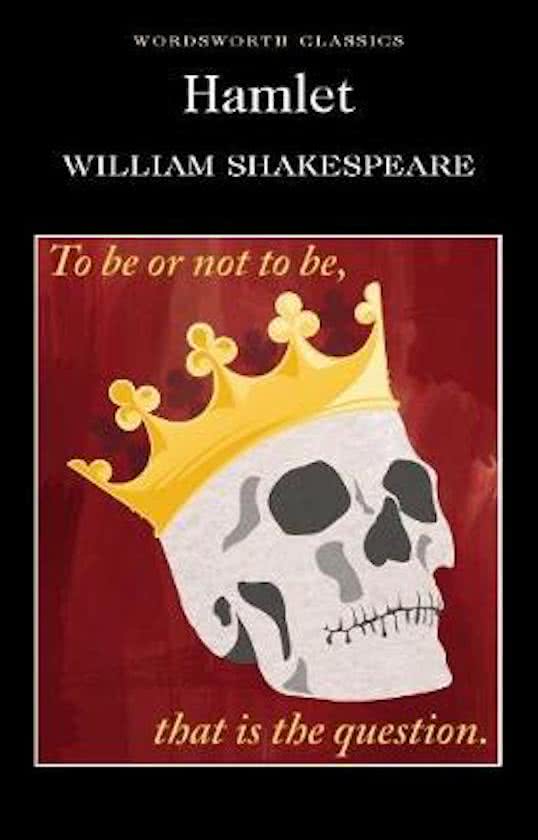
The Key Scene – Hamlet’s ‘To be or not to be’ soliloquy
This speech is Hamlet’s first appearance after his decision to unmask Claudius using the
‘Inner Play’. The first line, ‘To be or not to be’ refers to the question that has seemingly
haunted Hamlet throughout the play so far: should he kill himself or should he continue
living; he describes life as a lack of power, and how when alive, people are exposed to the
‘arrows of outrageous fortune’ (3.1. 58), and how this brings up the question of whether or
not it’s better to suffer in life, or fight back by ending one’s life. Hamlet then goes on to
portray death as sleep, except that instead of waking up to the pain, ‘we end the heart-
ache, and the thousand natural shocks that flesh is heir to’. The language Hamlet uses
suggests that his feelings towards life is rather dull, and depressing – his use of the word
‘suffer’ implies that he believes life to only be filled with sadness, and his emotion behind
the words ‘outrageous fortune’ suggests that he might think life will only force his fate in a
terrible direction, more so than it has done already. In contrast to this, however, Hamlet
makes death out to be something of a sweet release: he mentions how ‘to die, to sleep’ is a
‘consummation devoutly to be wished’ (3.1. 60-4) – this is said it in a way that implies
Hamlet is seriously contemplating ending his life, as he compares death to sleep, except you
don’t wake up to the pain: a perfect closure.
This is then contrasted by how Hamlet goes on to say that the reason why people put up
with the pain of life is due to ‘the respect that makes calamity of so long life’ (3.1.68-70) –
people are scared of the unknown, therefore we tolerate the pain in life; the other option
that seems to be the perfect end could just be forever having nightmares, or ending up like
the Ghost. He then goes saying that many would rather suffer with pain such as unrequited
love or the ‘whips and scorns of time’ rather than go to the ‘undiscovered country from
whose bourn no traveller returns’ (3.1. 79-80).
Hamlet comes to two conclusions: ‘conscience does make cowards of us all’ (3.1. 83) and
‘the native hue of resolution is sicklied o’er with the pale cast of thought’ (3.1. 84-5). The
first suggests that religion is involved, as it’s a sin to commit suicide, therefore adding
another dimension of fear to the unknown country of death; it also relates to Hamlet’s
decision of whether he should avenge his father – he wants to Kill Claudius however murder
is also a sin, meaning hamlet has an inner conflict on whether he should do right by
everyone else, or right by himself and his father. The second conclusion implies that this has
created a dilemma that has Hamlet overthinking, and that by thinking too much a person’s
natural boldness weakens.
In this soliloquy, the keynote is the mood of despair and frustration as Hamlet struggles
between apparently insoluble contradictions. The product of conscience and though
(inaction) makes us cowards, however the product of blood and instinct (action) makes us
less than human – this is the paradox that Hamlet feels trapped in. There is a connection
between the three speeches (2.2 553-612; 3.1. 56-89; 1.2 129-158), and what links them is
how Hamlet is always wanting for a better world, and is fighting realism – such as death, and
The Key Scene – Hamlet’s ‘To be or not to be’ soliloquy
This speech is Hamlet’s first appearance after his decision to unmask Claudius using the
‘Inner Play’. The first line, ‘To be or not to be’ refers to the question that has seemingly
haunted Hamlet throughout the play so far: should he kill himself or should he continue
living; he describes life as a lack of power, and how when alive, people are exposed to the
‘arrows of outrageous fortune’ (3.1. 58), and how this brings up the question of whether or
not it’s better to suffer in life, or fight back by ending one’s life. Hamlet then goes on to
portray death as sleep, except that instead of waking up to the pain, ‘we end the heart-
ache, and the thousand natural shocks that flesh is heir to’. The language Hamlet uses
suggests that his feelings towards life is rather dull, and depressing – his use of the word
‘suffer’ implies that he believes life to only be filled with sadness, and his emotion behind
the words ‘outrageous fortune’ suggests that he might think life will only force his fate in a
terrible direction, more so than it has done already. In contrast to this, however, Hamlet
makes death out to be something of a sweet release: he mentions how ‘to die, to sleep’ is a
‘consummation devoutly to be wished’ (3.1. 60-4) – this is said it in a way that implies
Hamlet is seriously contemplating ending his life, as he compares death to sleep, except you
don’t wake up to the pain: a perfect closure.
This is then contrasted by how Hamlet goes on to say that the reason why people put up
with the pain of life is due to ‘the respect that makes calamity of so long life’ (3.1.68-70) –
people are scared of the unknown, therefore we tolerate the pain in life; the other option
that seems to be the perfect end could just be forever having nightmares, or ending up like
the Ghost. He then goes saying that many would rather suffer with pain such as unrequited
love or the ‘whips and scorns of time’ rather than go to the ‘undiscovered country from
whose bourn no traveller returns’ (3.1. 79-80).
Hamlet comes to two conclusions: ‘conscience does make cowards of us all’ (3.1. 83) and
‘the native hue of resolution is sicklied o’er with the pale cast of thought’ (3.1. 84-5). The
first suggests that religion is involved, as it’s a sin to commit suicide, therefore adding
another dimension of fear to the unknown country of death; it also relates to Hamlet’s
decision of whether he should avenge his father – he wants to Kill Claudius however murder
is also a sin, meaning hamlet has an inner conflict on whether he should do right by
everyone else, or right by himself and his father. The second conclusion implies that this has
created a dilemma that has Hamlet overthinking, and that by thinking too much a person’s
natural boldness weakens.
In this soliloquy, the keynote is the mood of despair and frustration as Hamlet struggles
between apparently insoluble contradictions. The product of conscience and though
(inaction) makes us cowards, however the product of blood and instinct (action) makes us
less than human – this is the paradox that Hamlet feels trapped in. There is a connection
between the three speeches (2.2 553-612; 3.1. 56-89; 1.2 129-158), and what links them is
how Hamlet is always wanting for a better world, and is fighting realism – such as death, and