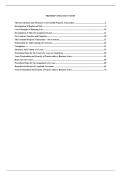
PROPERTY PRACTICE NOTES
The Key Elements and Structure of a Freehold Property Transaction ............................................................2
Investigation of Registered Title ...........................................................................................................................6
Core Principles of Planning Law ........................................................................................................................10
Investigation of Title of Unregistered Land .......................................................................................................14
Pre-Contract Searches and Enquiries ................................................................................................................18
The Freehold Property Transaction – The Contract ........................................................................................23
Preparation for and Exchange of Contracts ......................................................................................................26
Completion ............................................................................................................................................................32
Structure and Content of a Lease .......................................................................................................................39
Procedural Steps for the Grant of a Lease or Underlease ................................................................................50
Lease Termination and Security of Tenure under a Business Lease ...............................................................55
Rent and rent review ............................................................................................................................................58
Procedural Steps for the Assignment of a Lease ...............................................................................................60
Remedies for Breach of Leasehold Covenants ..................................................................................................65
Lease Termination and Security of Tenure under a Business Lease ...............................................................70
,The Key Elements and Structure of a Freehold Property Transaction
• Conveyancing: process of transferring property ownership
Key elements and structure of freehold property transactions
• A conveyancing transaction has two main milestones
• Exchange of contracts: not compulsory but is useful as it fixes the completion date and contractually binds
the parties to the transaction
• Completion: the buyer pays the bulk of the purchase money and the seller completes the transfer deed to
legally transfer the property to the buyer
• Principle of ‘caveat emptor’ (let the buyer beware) places the responsibility on the buyer to investigate the
property thoroughly before committing to the purchase at exchange
o Seller is not obligated to disclose information, other than on limited title matters, but cannot give
misleading answers to enquiries
• The pre-contract stage
o With both solicitors taking instructions from their clients to establish what has been agreed and
identify potential issues, then steps are driven by the caveat emptor principle
o The seller’s solicitor prepares and sends a pre-contract package to the buyer's solicitor, which
includes a draft contract and evidence of the seller's title
o The buyer’s solicitor carefully checks the title documents to confirm the seller can sell the property
and to identify any burdens, such as restrictive covenants, that might affect the buyer's intended
use
§ The contract usually prevents the buyer from raising further queries on the title after
exchange.
o The buyer's solicitor also conducts pre-contract searches with various public and private bodies
and makes enquiries of the seller on topics like boundaries, access, and disputes
§ While the seller is not obliged to answer, doing so facilitates the sale; incorrect replies
could lead to an action for misrepresentation
o Once searches are complete and the contract is agreed, exchange of contracts can occur
o At this point, the buyer typically pays a deposit, which is often 10% of the purchase price.
• The post-contract stage
o Finalising administrative matters
o The seller’s solicitor ensures any mortgage on the property is paid off and removed from the title
§ Often having given an undertaking to do so
o The buyer’s solicitor must ensure any Stamp Duty Land Tax (SDLT) in England or Land
Transaction Tax (LTT) in Wales is paid
o Finally, the buyer’s solicitor registers their client as the new owner and registers any new mortgage
with the Land Registry.
• The Law Society Conveyancing Protocol
o The Protocol is a set of instructions designed to standardise the process for residential
conveyancing only.
o Firms seeking membership of The Law Society’s Conveyancing Quality Scheme (CQS) must
comply with the Protocol. CQS membership is essential for firms wishing to act for mortgage
lenders.
Professional conduct issues in a property transaction
• On receiving instructions, solicitors always consider SRA professional conduct regulations
o Particularly, para 6 of The Code of Conduct, which deals with conflicts of interest and
confidentiality
• Acting for seller and buyer
o Generally – cannot act for both if there is a conflict of interest or a significant risk of one.
o There is a high risk of conflict when a property is being transferred for value
o The Law Society, the ‘substantially common interest’ exception in paragraph 6.2(a) of The Code of
Conduct does not apply to a property purchase
§ The parties have different interests despite the common goal of completing the sale
• Acting for joint buyers
o Usually acceptable, as long as comply with para 6.2 of CoC
o May be necessary to advise them separately on how they wish to hold the equitable interest in the
property
• Acting for borrower and lender
, o It is common for a solicitor to act for both the borrower and the lender in the same transaction
o Unless there is a conflict of interest or a significant risk of one
o Residential transactions, this is frequently possible if the mortgage is a standard mortgage and the
solicitor uses the approved certificate of title
o Exemption from conflict of interest in para 6.2(a) CoC can apply if substantially common interest
and safeguards are in place:
§ Informed written consent
§ Effective safeguards in place to protect client confidential information
§ Solicitor satisfied it is reasonable to act for both clients
o If solicitor decides it is no longer reasonable to act for both, will stop acting for one – all perceived
benefits of one acting for two parties are lost
o Large commercial transactions, the lender usually instructs its own solicitors because the mortgage
documents are often heavily negotiated and not on standard terms
o Be mindful of the potential conflict between the duty of confidentiality to one client and the duty
of disclosure to the other
• Acting for joint borrowers
o While usually acceptable, a conflict can arise
§ Particularly in cases of potential undue influence
o Can occur when a matrimonial home is mortgaged to secure a business loan for one spouse
o House of Lords established detailed guidance, known as ‘the Etridge guidelines’ for solicitors to
ensure the transaction is not challengeable on the basis of undue influence
o The guidelines require:
§ To meet the spouse in the absence of the borrower
§ Explain the risks in non-technical language
§ Confirm that the spouse has a choice about whether to proceed
o A single solicitor can advise both parties, provided the Etridge guidelines are followed
o Principles apply to any situation where a property is charged for a loan not made to all the property
owners
• Contract races
o Seller sends a pre-contract package to multiple prospective buyers who compete to be the first to
exchange contracts
o Para 1.4 CoC, seller's solicitor must not mislead buyers – requires them to inform all prospective
buyers that they are in a contract race
o The seller client refuses to allow this disclosure; the solicitor cannot inform the buyers due to the
duty of confidentiality (paragraph 6.3) and must immediately stop acting in the matter
• Undertakings
o A binding statement by a solicitor or firm that they will do (or not do) something
o Para 1.3 CoC, solicitors must perform all undertakings given
o Failure to honour an undertaking is professional misconduct, and the solicitor can be held
personally liable
o A solicitor should never give an undertaking for something that is outside their control
Sources of finance for a property transaction
• Solicitor must provide client with clear information about the likely overall cost of a transaction, including:
o Legal fees
o Land Registry fees
o Search fees
o Those below
• Most property purchases are financed by borrowing
• Sources of finance include banks, building societies, insurance companies, employers, and family members,
Government-backed schemes may also be available.
• Lenders will secure the loan against the property, most commonly via a mortgage.
• Restrictions on solicitors providing financial advice under the Financial Services and Markets Act 2000
(FSMA 2000)
o BUT advising on a specific mortgage product is a "regulated activity".
• Most law firms are not authorised by the Financial Conduct Authority (FCA)
o An rely on an exemption (s 327 FSMA 2000) to carry out such activities if they are incidental to
their professional legal services
o They cannot recommend a specific mortgage product
o Unless endorsing advice from an already authorised person
, Types of mortgage
• Repayment mortgage
o Borrower's monthly payments consist of both a portion of the capital borrowed and the interest
o End of the mortgage term, the entire loan is paid off
o Interest rates can be variable, fixed for a set period, or a 'tracker' rate linked to the Bank of England
base rate
• Interest-only mortgages
o Monthly payments only cover the interest on the loan
o Lower monthly payments, but the original capital amount is still owed at the end of the term
o The borrower must have a separate plan to repay the capital
§ E.g., an investment policy
• Other types of mortgage
o Sharia-compliant finance schemes are available for clients who cannot enter into mortgages that
charge interest…?
Property taxation
• Depend on whether the client is a buyer or seller and whether the property is residential or commercial
• Stamp Duty Land Tax (‘SDLT’) in England and Land Transaction Tax (‘LTT’) in Wales
o Taxes on property transactions, payable by the buyer
o Amount depends on the property type and value – tax charged on different portions of the price
o Residential SDLT (England): There is relief for first-time buyers on purchases up to £500,000
§ For other buyers, the rates start at 0% for the first £125,000 and increase in bands
o Residential LTT (Wales): There is no first-time buyer relief.
§ The rates start at 0% for the first £225,000.
o Non-Residential Property: The rates and thresholds for commercial or mixed-use property are
different
§ VAT is charged on the purchase, SDLT/LTT is calculated on the VAT-inclusive price
o Payment:
§ SDLT must be paid to HMRC within 14 days of completion
§ LTT must be paid to the Welsh Revenue Authority within 30 days of completion
§ Failure to pay on time prevents registration of the title at the Land Registry and incurs
penalties.
• CGT and private residence relief
o Capital Gains Tax (CGT) is charged on the gain made when a 'chargeable asset', such as property,
is sold or gifted
o Gain is calculated by deducting the purchase price and certain allowable costs from the sale price
o Seller may claim Private Residence Relief (PRR), which exempts the gain from CGT if the
property was the seller's only or main residence throughout their period of ownership
o The relief may be restricted if the garden is larger than 0.5 hectares or if part of the house was used
exclusively for business
• VAT
o Value Added Tax (VAT) is a tax on goods and services ("taxable supplies") provided by a taxable
person (turnover above £85,000)
o Residential Property: Most residential transactions do not involve VAT. The sale of a new-build
house is zero-rated, and the sale of a used house by a private individual is not in the course of a
business
o Commercial Property:
§ Sale of a ‘new’ commercial building (less than three years old) is standard-rated for VAT
(currently 20%)
§ Sale of an 'old' commercial building is exempt from VAT
§ Exemption is different from a zero-rated supply – subject to tax but at 0%
§ The seller of an old building has an 'option to tax', which turns the exempt supply into a
taxable one
• A seller may do this to recover input VAT they have paid on costs like
refurbishment.
§ Opting to tax can be a disadvantage if the buyer cannot recover the VAT (e.g., an
insurance company or bank), as it effectively increases the purchase price.
• Also increases the SDLT/LTT payable.
The Key Elements and Structure of a Freehold Property Transaction ............................................................2
Investigation of Registered Title ...........................................................................................................................6
Core Principles of Planning Law ........................................................................................................................10
Investigation of Title of Unregistered Land .......................................................................................................14
Pre-Contract Searches and Enquiries ................................................................................................................18
The Freehold Property Transaction – The Contract ........................................................................................23
Preparation for and Exchange of Contracts ......................................................................................................26
Completion ............................................................................................................................................................32
Structure and Content of a Lease .......................................................................................................................39
Procedural Steps for the Grant of a Lease or Underlease ................................................................................50
Lease Termination and Security of Tenure under a Business Lease ...............................................................55
Rent and rent review ............................................................................................................................................58
Procedural Steps for the Assignment of a Lease ...............................................................................................60
Remedies for Breach of Leasehold Covenants ..................................................................................................65
Lease Termination and Security of Tenure under a Business Lease ...............................................................70
,The Key Elements and Structure of a Freehold Property Transaction
• Conveyancing: process of transferring property ownership
Key elements and structure of freehold property transactions
• A conveyancing transaction has two main milestones
• Exchange of contracts: not compulsory but is useful as it fixes the completion date and contractually binds
the parties to the transaction
• Completion: the buyer pays the bulk of the purchase money and the seller completes the transfer deed to
legally transfer the property to the buyer
• Principle of ‘caveat emptor’ (let the buyer beware) places the responsibility on the buyer to investigate the
property thoroughly before committing to the purchase at exchange
o Seller is not obligated to disclose information, other than on limited title matters, but cannot give
misleading answers to enquiries
• The pre-contract stage
o With both solicitors taking instructions from their clients to establish what has been agreed and
identify potential issues, then steps are driven by the caveat emptor principle
o The seller’s solicitor prepares and sends a pre-contract package to the buyer's solicitor, which
includes a draft contract and evidence of the seller's title
o The buyer’s solicitor carefully checks the title documents to confirm the seller can sell the property
and to identify any burdens, such as restrictive covenants, that might affect the buyer's intended
use
§ The contract usually prevents the buyer from raising further queries on the title after
exchange.
o The buyer's solicitor also conducts pre-contract searches with various public and private bodies
and makes enquiries of the seller on topics like boundaries, access, and disputes
§ While the seller is not obliged to answer, doing so facilitates the sale; incorrect replies
could lead to an action for misrepresentation
o Once searches are complete and the contract is agreed, exchange of contracts can occur
o At this point, the buyer typically pays a deposit, which is often 10% of the purchase price.
• The post-contract stage
o Finalising administrative matters
o The seller’s solicitor ensures any mortgage on the property is paid off and removed from the title
§ Often having given an undertaking to do so
o The buyer’s solicitor must ensure any Stamp Duty Land Tax (SDLT) in England or Land
Transaction Tax (LTT) in Wales is paid
o Finally, the buyer’s solicitor registers their client as the new owner and registers any new mortgage
with the Land Registry.
• The Law Society Conveyancing Protocol
o The Protocol is a set of instructions designed to standardise the process for residential
conveyancing only.
o Firms seeking membership of The Law Society’s Conveyancing Quality Scheme (CQS) must
comply with the Protocol. CQS membership is essential for firms wishing to act for mortgage
lenders.
Professional conduct issues in a property transaction
• On receiving instructions, solicitors always consider SRA professional conduct regulations
o Particularly, para 6 of The Code of Conduct, which deals with conflicts of interest and
confidentiality
• Acting for seller and buyer
o Generally – cannot act for both if there is a conflict of interest or a significant risk of one.
o There is a high risk of conflict when a property is being transferred for value
o The Law Society, the ‘substantially common interest’ exception in paragraph 6.2(a) of The Code of
Conduct does not apply to a property purchase
§ The parties have different interests despite the common goal of completing the sale
• Acting for joint buyers
o Usually acceptable, as long as comply with para 6.2 of CoC
o May be necessary to advise them separately on how they wish to hold the equitable interest in the
property
• Acting for borrower and lender
, o It is common for a solicitor to act for both the borrower and the lender in the same transaction
o Unless there is a conflict of interest or a significant risk of one
o Residential transactions, this is frequently possible if the mortgage is a standard mortgage and the
solicitor uses the approved certificate of title
o Exemption from conflict of interest in para 6.2(a) CoC can apply if substantially common interest
and safeguards are in place:
§ Informed written consent
§ Effective safeguards in place to protect client confidential information
§ Solicitor satisfied it is reasonable to act for both clients
o If solicitor decides it is no longer reasonable to act for both, will stop acting for one – all perceived
benefits of one acting for two parties are lost
o Large commercial transactions, the lender usually instructs its own solicitors because the mortgage
documents are often heavily negotiated and not on standard terms
o Be mindful of the potential conflict between the duty of confidentiality to one client and the duty
of disclosure to the other
• Acting for joint borrowers
o While usually acceptable, a conflict can arise
§ Particularly in cases of potential undue influence
o Can occur when a matrimonial home is mortgaged to secure a business loan for one spouse
o House of Lords established detailed guidance, known as ‘the Etridge guidelines’ for solicitors to
ensure the transaction is not challengeable on the basis of undue influence
o The guidelines require:
§ To meet the spouse in the absence of the borrower
§ Explain the risks in non-technical language
§ Confirm that the spouse has a choice about whether to proceed
o A single solicitor can advise both parties, provided the Etridge guidelines are followed
o Principles apply to any situation where a property is charged for a loan not made to all the property
owners
• Contract races
o Seller sends a pre-contract package to multiple prospective buyers who compete to be the first to
exchange contracts
o Para 1.4 CoC, seller's solicitor must not mislead buyers – requires them to inform all prospective
buyers that they are in a contract race
o The seller client refuses to allow this disclosure; the solicitor cannot inform the buyers due to the
duty of confidentiality (paragraph 6.3) and must immediately stop acting in the matter
• Undertakings
o A binding statement by a solicitor or firm that they will do (or not do) something
o Para 1.3 CoC, solicitors must perform all undertakings given
o Failure to honour an undertaking is professional misconduct, and the solicitor can be held
personally liable
o A solicitor should never give an undertaking for something that is outside their control
Sources of finance for a property transaction
• Solicitor must provide client with clear information about the likely overall cost of a transaction, including:
o Legal fees
o Land Registry fees
o Search fees
o Those below
• Most property purchases are financed by borrowing
• Sources of finance include banks, building societies, insurance companies, employers, and family members,
Government-backed schemes may also be available.
• Lenders will secure the loan against the property, most commonly via a mortgage.
• Restrictions on solicitors providing financial advice under the Financial Services and Markets Act 2000
(FSMA 2000)
o BUT advising on a specific mortgage product is a "regulated activity".
• Most law firms are not authorised by the Financial Conduct Authority (FCA)
o An rely on an exemption (s 327 FSMA 2000) to carry out such activities if they are incidental to
their professional legal services
o They cannot recommend a specific mortgage product
o Unless endorsing advice from an already authorised person
, Types of mortgage
• Repayment mortgage
o Borrower's monthly payments consist of both a portion of the capital borrowed and the interest
o End of the mortgage term, the entire loan is paid off
o Interest rates can be variable, fixed for a set period, or a 'tracker' rate linked to the Bank of England
base rate
• Interest-only mortgages
o Monthly payments only cover the interest on the loan
o Lower monthly payments, but the original capital amount is still owed at the end of the term
o The borrower must have a separate plan to repay the capital
§ E.g., an investment policy
• Other types of mortgage
o Sharia-compliant finance schemes are available for clients who cannot enter into mortgages that
charge interest…?
Property taxation
• Depend on whether the client is a buyer or seller and whether the property is residential or commercial
• Stamp Duty Land Tax (‘SDLT’) in England and Land Transaction Tax (‘LTT’) in Wales
o Taxes on property transactions, payable by the buyer
o Amount depends on the property type and value – tax charged on different portions of the price
o Residential SDLT (England): There is relief for first-time buyers on purchases up to £500,000
§ For other buyers, the rates start at 0% for the first £125,000 and increase in bands
o Residential LTT (Wales): There is no first-time buyer relief.
§ The rates start at 0% for the first £225,000.
o Non-Residential Property: The rates and thresholds for commercial or mixed-use property are
different
§ VAT is charged on the purchase, SDLT/LTT is calculated on the VAT-inclusive price
o Payment:
§ SDLT must be paid to HMRC within 14 days of completion
§ LTT must be paid to the Welsh Revenue Authority within 30 days of completion
§ Failure to pay on time prevents registration of the title at the Land Registry and incurs
penalties.
• CGT and private residence relief
o Capital Gains Tax (CGT) is charged on the gain made when a 'chargeable asset', such as property,
is sold or gifted
o Gain is calculated by deducting the purchase price and certain allowable costs from the sale price
o Seller may claim Private Residence Relief (PRR), which exempts the gain from CGT if the
property was the seller's only or main residence throughout their period of ownership
o The relief may be restricted if the garden is larger than 0.5 hectares or if part of the house was used
exclusively for business
• VAT
o Value Added Tax (VAT) is a tax on goods and services ("taxable supplies") provided by a taxable
person (turnover above £85,000)
o Residential Property: Most residential transactions do not involve VAT. The sale of a new-build
house is zero-rated, and the sale of a used house by a private individual is not in the course of a
business
o Commercial Property:
§ Sale of a ‘new’ commercial building (less than three years old) is standard-rated for VAT
(currently 20%)
§ Sale of an 'old' commercial building is exempt from VAT
§ Exemption is different from a zero-rated supply – subject to tax but at 0%
§ The seller of an old building has an 'option to tax', which turns the exempt supply into a
taxable one
• A seller may do this to recover input VAT they have paid on costs like
refurbishment.
§ Opting to tax can be a disadvantage if the buyer cannot recover the VAT (e.g., an
insurance company or bank), as it effectively increases the purchase price.
• Also increases the SDLT/LTT payable.