
Vertebrate Limb Development
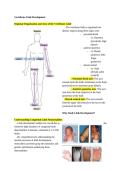
Regional Organization and Axes of the Vertebrate Limb
- The vertebrate limb is organized into
distinct regions along three major axes:
- proximal-distal
- ex. Humerus
(proximal), digit
(distal)
- anterior-posterior
- ex.Thumb
(anterior), little
finger
(posterior)
- dorsal-ventral
- ex. Nails
(dorsal), palm
(ventral)
- Proximal-distal axis: This axis
extends from the limb's attachment to the body
(proximal) to its outermost point (distal).
- Anterior-posterior axis: This axis
runs from the front (anterior) to the back
(posterior) of the limb.
- Dorsal-ventral axis: This axis extends
from the upper side (dorsal) to the lower side
(ventral) of the limb.
Why Study Limb Development?
Understanding Congenital Limb Abnormalities
- Limb development studies are crucial due to the
relatively high incidence of congenital limb
abnormalities in humans, estimated at 1 in 500
births.
- By comprehensively understanding the
normal processes of limb development,
researchers can better grasp the molecular and
genetic mechanisms underlying these
abnormalities.
, - Insights gained from such studies aid in diagnosing, treating, and potentially preventing
congenital limb anomalies, thus improving the quality of life for affected individuals.
Insights into Evolutionary Biology
- Limb development provides valuable
insights into evolutionary biology, as the
vertebrate limb structure has undergone
significant diversification across species.
- Comparative studies of limb
development between different vertebrate
groups shed light on the evolutionary changes
that have occurred in limb morphology and
function.
- Understanding the genetic and
developmental basis of limb diversity enhances
our understanding of evolutionary processes and the mechanisms driving morphological
adaptations.
Advancing Regenerative Medicine and Tissue Engineering
- Insights gained from studying limb development can inform regenerative medicine and
tissue engineering efforts aimed at restoring or replacing damaged or lost limbs.
- Understanding the molecular cues and signaling pathways involved in limb
regeneration in certain species, such as amphibians, may provide clues for enhancing
regenerative capacity in humans.
- Additionally, knowledge of limb development can guide the design of tissue-
engineered constructs for limb repair and regeneration.
Unraveling Fundamental Developmental Processes
- Limb development serves as a model system for studying fundamental developmental
processes, including cell differentiation, pattern formation, and morphogenesis.
- Investigating the intricate interactions between signaling pathways, gene regulatory
networks, and cellular behaviors during limb development provides insights into broader
principles of embryonic development.
- Discoveries made in the context of limb development often have implications beyond
limb biology, contributing to our understanding of development in other organ systems and
tissues.
Organization of the Limb Bud
Regional Organization and Axes of the Vertebrate Limb
- The vertebrate limb is organized into
distinct regions along three major axes:
- proximal-distal
- ex. Humerus
(proximal), digit
(distal)
- anterior-posterior
- ex.Thumb
(anterior), little
finger
(posterior)
- dorsal-ventral
- ex. Nails
(dorsal), palm
(ventral)
- Proximal-distal axis: This axis
extends from the limb's attachment to the body
(proximal) to its outermost point (distal).
- Anterior-posterior axis: This axis
runs from the front (anterior) to the back
(posterior) of the limb.
- Dorsal-ventral axis: This axis extends
from the upper side (dorsal) to the lower side
(ventral) of the limb.
Why Study Limb Development?
Understanding Congenital Limb Abnormalities
- Limb development studies are crucial due to the
relatively high incidence of congenital limb
abnormalities in humans, estimated at 1 in 500
births.
- By comprehensively understanding the
normal processes of limb development,
researchers can better grasp the molecular and
genetic mechanisms underlying these
abnormalities.
, - Insights gained from such studies aid in diagnosing, treating, and potentially preventing
congenital limb anomalies, thus improving the quality of life for affected individuals.
Insights into Evolutionary Biology
- Limb development provides valuable
insights into evolutionary biology, as the
vertebrate limb structure has undergone
significant diversification across species.
- Comparative studies of limb
development between different vertebrate
groups shed light on the evolutionary changes
that have occurred in limb morphology and
function.
- Understanding the genetic and
developmental basis of limb diversity enhances
our understanding of evolutionary processes and the mechanisms driving morphological
adaptations.
Advancing Regenerative Medicine and Tissue Engineering
- Insights gained from studying limb development can inform regenerative medicine and
tissue engineering efforts aimed at restoring or replacing damaged or lost limbs.
- Understanding the molecular cues and signaling pathways involved in limb
regeneration in certain species, such as amphibians, may provide clues for enhancing
regenerative capacity in humans.
- Additionally, knowledge of limb development can guide the design of tissue-
engineered constructs for limb repair and regeneration.
Unraveling Fundamental Developmental Processes
- Limb development serves as a model system for studying fundamental developmental
processes, including cell differentiation, pattern formation, and morphogenesis.
- Investigating the intricate interactions between signaling pathways, gene regulatory
networks, and cellular behaviors during limb development provides insights into broader
principles of embryonic development.
- Discoveries made in the context of limb development often have implications beyond
limb biology, contributing to our understanding of development in other organ systems and
tissues.
Organization of the Limb Bud


