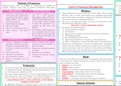
Methods of Production
Production occurs when raw materials or components are changed into Inve
products. Production occurs when the factors of production (land, labour, Topic 2.4 Resource Management Inve
capital, and enterprise) are bought together.
JOB PRODUCTION BATCH PRODUCTION Efficiency goo
Production of single unique units. As production increases, a firm Making the best use of all the resources of a firm. When a firm is running can
This could be personalised for the may use a batch approach. efficiently, there is minimal wate (waste can be considered anything that
customer and will require a highly Standardised components can be does not add value to a product). Average costs (unit costs) will also be at
skilled workforce, e.g. a custom- made in relatively large quantities, their lowest when a firm is operating efficiently.
built house extension. but the system can be modified The unit cost (average costs) takes into account the total costs of a firm
Highly flexible and bespoke to adjust the specification e.g. and divides this by the level of output
High profit margins changing the size, colour, and UNIT COST = TOTAL COSTS/TOTAL OUTPUT
High unit costs (premium price) features. The benefits of improved efficiency:
Labour intensive – high labour The benefits of batch production Labour productivity increases
costs lie in its flexibility while still being Unit costs fall
able to deliver some economies Resources such as labour, expertise and time can be reallocated.
of scale through automation and Profit margins increase. The
standardisation. Improved flexibility across the firm.
FLOW PRODUCTION CELL PRODUCTION Opportunity to explore new ventures e.g. a new product line.
Involves a dedicated and highly Teams of workers work together Ability to charge lower prices and therefore improve competitiveness.
Efficiency can be influenced by the level of employee skills, management
automated production process. to produce an entire product or
Production is standardisation and part of a product. decision-making and effective systems for production and communication.
continuous to achieve economies Workers are motivated operating Greater productivity means the workforce is more efficient and efficiency
of scale. as a team. across the firm allows more resources to be devoted to production. Where
Very low unit costs. Production is more flexible. efficiency falls, wastage and unit costs tend to rise.
High levels of productivity Movement of resources (waste)
Low motivation of workers is minimised. Waste Wa
Breaks in production can be Waste can be considered anything that does not add value to the product. Waste
expensive is a key factor that influences the efficiency of a firm. The are seven types of
waste a business can reduce:
Productivity Inventory – too much stock.
The amount of output that can be produced with a given input of resources Defects – faulty products.
in a specified time period. Maximising productivity means getting the most Waiting – for processes to finish before others can begin.
out of the resources available to the firm. Overprocessing – adding features that do not add value.
One way of measuring productivity is through calculating labour productivity. Overproduction – making products that cannot be sold easily.
This measures the output per employee in a certain time period, e.g. an Motion – unnecessary movement of people.
hour or a week, and is a measure of how productive the workforce is. Transport – unnecessary movement of the product or materials.
LABOUR PRODUCTIVITY = TOTAL OUTPUT (IN A TIME PERIOD)/
NUMBER OF EMPLOYEES Invo
By effectively managing the following factors a firm can improve its
Capacity Utilisation The
Production occurs when raw materials or components are changed into Inve
products. Production occurs when the factors of production (land, labour, Topic 2.4 Resource Management Inve
capital, and enterprise) are bought together.
JOB PRODUCTION BATCH PRODUCTION Efficiency goo
Production of single unique units. As production increases, a firm Making the best use of all the resources of a firm. When a firm is running can
This could be personalised for the may use a batch approach. efficiently, there is minimal wate (waste can be considered anything that
customer and will require a highly Standardised components can be does not add value to a product). Average costs (unit costs) will also be at
skilled workforce, e.g. a custom- made in relatively large quantities, their lowest when a firm is operating efficiently.
built house extension. but the system can be modified The unit cost (average costs) takes into account the total costs of a firm
Highly flexible and bespoke to adjust the specification e.g. and divides this by the level of output
High profit margins changing the size, colour, and UNIT COST = TOTAL COSTS/TOTAL OUTPUT
High unit costs (premium price) features. The benefits of improved efficiency:
Labour intensive – high labour The benefits of batch production Labour productivity increases
costs lie in its flexibility while still being Unit costs fall
able to deliver some economies Resources such as labour, expertise and time can be reallocated.
of scale through automation and Profit margins increase. The
standardisation. Improved flexibility across the firm.
FLOW PRODUCTION CELL PRODUCTION Opportunity to explore new ventures e.g. a new product line.
Involves a dedicated and highly Teams of workers work together Ability to charge lower prices and therefore improve competitiveness.
Efficiency can be influenced by the level of employee skills, management
automated production process. to produce an entire product or
Production is standardisation and part of a product. decision-making and effective systems for production and communication.
continuous to achieve economies Workers are motivated operating Greater productivity means the workforce is more efficient and efficiency
of scale. as a team. across the firm allows more resources to be devoted to production. Where
Very low unit costs. Production is more flexible. efficiency falls, wastage and unit costs tend to rise.
High levels of productivity Movement of resources (waste)
Low motivation of workers is minimised. Waste Wa
Breaks in production can be Waste can be considered anything that does not add value to the product. Waste
expensive is a key factor that influences the efficiency of a firm. The are seven types of
waste a business can reduce:
Productivity Inventory – too much stock.
The amount of output that can be produced with a given input of resources Defects – faulty products.
in a specified time period. Maximising productivity means getting the most Waiting – for processes to finish before others can begin.
out of the resources available to the firm. Overprocessing – adding features that do not add value.
One way of measuring productivity is through calculating labour productivity. Overproduction – making products that cannot be sold easily.
This measures the output per employee in a certain time period, e.g. an Motion – unnecessary movement of people.
hour or a week, and is a measure of how productive the workforce is. Transport – unnecessary movement of the product or materials.
LABOUR PRODUCTIVITY = TOTAL OUTPUT (IN A TIME PERIOD)/
NUMBER OF EMPLOYEES Invo
By effectively managing the following factors a firm can improve its
Capacity Utilisation The