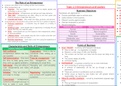
The Role of an Entrepreneur
A person who takes a risk in setting up their own business. There
What entrepreneurs do: Topic 1.5 Entrepreneurs and Leaders coord
Organise – they pull together resources such as capital, people, and
technology to set up a firm. Business Objectives Ad
Make decisions – entrepreneurs are decisive and make decisions Businesses set objectives to: rec
Take risks – entrepreneurs are often willing to risk their career and Provide quantifiable steps to achieve aims Ma
financial security to make their idea work. Clarify direction of the business
Innovate and invent – they create new ideas, products, and services. Pr
Measure success against targets ma
An entrepreneur may decide to set up their own firm for a number of reasons:
Motivate employees to achieve
Personal experience – a business may be based on a hobby or Ma
interest. Reward employees.
FINANCIAL OBJECTIVES NON-FINANCIAL OBJECTIVES lea
Spotting a gap – some people see an opportunity in everyday life and
decide that they can meet this need. Survival Personal satisfaction Pu
Skills – some people set up a firm based on their interpersonal, artistic, Profitability Brand recognition Fin
or technical abilities. Growth Sustainability pro
Lifestyle choice – some people may set a firm in order to be their own Market share Customer satisfaction
boss and work on their own terms. Shareholder value Employee welfare
Business experience – some start a new firm using the experience of
their current job or profession.
Sales Maximisation Social objectives As
fo
Characteristics and Skills of Entrepreneurs Forms of Business of
CHARACTERISTICS SKILLS SOLE TRADER – owned by self-employed individuals de
Easy to start up – no registration is needed.
Self-confidence – Organisation – there is lots to Requires a wide range of skills and flexibility.
entrepreneurs believe that they coordinate when setting up a The owners can be their own boss but the hours are likely to be
can succeed. firm alone. long. En
Self-determination – they have Financial management – cash The owners keeps all profits. ro
the drive to keep going when flow management can be Unlimited liability.
they come up against problems. challenging for small firms. PARTNERSHIP – a business owned by two or more individuals
Self-starter – they are willing to Managing and communicating Joint ownership of running a business.
work independently and make with people. A contract of relationship will be set up through a deed of
decisions. partnership.
Initiative – they are proactive Negotiating – negotiating deals These are common in professions such as solicitors.
and adapt to change. and contracts with suppliers and Similar issues as faced by sole traders but with greater shared En
customers. responsibility, risk, and reward. ch
Commitment – entrepreneurs PRIVATE LIMITED COMPANY – owned by shareholders separate legal
entity
commit to the project and put in Must go through the process of incorporation.
time to make it work, often Limited liability
A person who takes a risk in setting up their own business. There
What entrepreneurs do: Topic 1.5 Entrepreneurs and Leaders coord
Organise – they pull together resources such as capital, people, and
technology to set up a firm. Business Objectives Ad
Make decisions – entrepreneurs are decisive and make decisions Businesses set objectives to: rec
Take risks – entrepreneurs are often willing to risk their career and Provide quantifiable steps to achieve aims Ma
financial security to make their idea work. Clarify direction of the business
Innovate and invent – they create new ideas, products, and services. Pr
Measure success against targets ma
An entrepreneur may decide to set up their own firm for a number of reasons:
Motivate employees to achieve
Personal experience – a business may be based on a hobby or Ma
interest. Reward employees.
FINANCIAL OBJECTIVES NON-FINANCIAL OBJECTIVES lea
Spotting a gap – some people see an opportunity in everyday life and
decide that they can meet this need. Survival Personal satisfaction Pu
Skills – some people set up a firm based on their interpersonal, artistic, Profitability Brand recognition Fin
or technical abilities. Growth Sustainability pro
Lifestyle choice – some people may set a firm in order to be their own Market share Customer satisfaction
boss and work on their own terms. Shareholder value Employee welfare
Business experience – some start a new firm using the experience of
their current job or profession.
Sales Maximisation Social objectives As
fo
Characteristics and Skills of Entrepreneurs Forms of Business of
CHARACTERISTICS SKILLS SOLE TRADER – owned by self-employed individuals de
Easy to start up – no registration is needed.
Self-confidence – Organisation – there is lots to Requires a wide range of skills and flexibility.
entrepreneurs believe that they coordinate when setting up a The owners can be their own boss but the hours are likely to be
can succeed. firm alone. long. En
Self-determination – they have Financial management – cash The owners keeps all profits. ro
the drive to keep going when flow management can be Unlimited liability.
they come up against problems. challenging for small firms. PARTNERSHIP – a business owned by two or more individuals
Self-starter – they are willing to Managing and communicating Joint ownership of running a business.
work independently and make with people. A contract of relationship will be set up through a deed of
decisions. partnership.
Initiative – they are proactive Negotiating – negotiating deals These are common in professions such as solicitors.
and adapt to change. and contracts with suppliers and Similar issues as faced by sole traders but with greater shared En
customers. responsibility, risk, and reward. ch
Commitment – entrepreneurs PRIVATE LIMITED COMPANY – owned by shareholders separate legal
entity
commit to the project and put in Must go through the process of incorporation.
time to make it work, often Limited liability