1 of 8
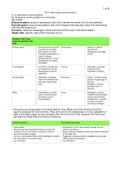
B14- Hormonal communication
5.1.4 Hormonal communication
(a) Endocrine communication by hormones.
Key words:
Endocrine gland- group of specialised cells which secrete hormones into the bloodstream.
Exocrine gland- group of specialised cells which release chemicals they make into ducts along
with the chemicals move.
Hormone- chemical messengers which travel around the body in the blood stream.
Target cells- specific cells which hormones act on.
Position of the major
endocrine glands in the
body
Pituitary gland • Growth hormone- growth Pineal gland • Melatonin- affects
of bones and muscles. reproductive
• Anti-diuretic hormone- development and daily
increases reabsorption of cycles.
water in kidneys.
• Gonadotrophins- control
development of ovaries
and testes.
Thyroid gland • Thyroxine- controls rate Thymus • Thymidine- promotes
of metabolism and rate production and
that glucose is used in maturation of WBCs.
respiration.
Adrenal gland • Adrenaline- increases Pancreas • Insulin- converts excess
heart and breathing rate glucose into glycogen in
and raises blood sugar the liver.
level. • Glucagon- converts
glycogen back to
glucose.
Testis • Testosterone- controls Ovary • Oestrogen- controls
sperm production and ovulation and secondary
secondary sexual sexual characteristics.
characteristics. • Progesterone- prepares
the uterus lining for
receiving an embryo.
• Hormones are transported in the blood plasma, they diffuse out of the blood and bind to
specific receptors for that hormone. They are found on the membranes or in the cytoplasm of
cells in the target organ- known as target cells. Once bound to their receptors the hormones
stimulate the target cells to produce a response.
Steroid hormones Non-steroid hormones
• Lipid soluble. • Hydrophilic so can’t pass directly through the cell
• Pass through the phospholipid bilayer and bind to surface membrane.
receptors on the cell surface membrane to form a • Bind to specific receptors on the cell surface membrane
hormone receptor complex. of the target cell.
• Acts as a transcription factor which facilitates or inhibits • Triggering a cascade reaction mediated by chemicals
the transcription of a specific gene. called second messengers.
• E.g. oestrogen • E.g. adrenaline
, 2 of 8
Hormonal system Nervous system
• Communication is by chemicals called hormones • Communication is by nerve impulses
• Transmission is by the blood stream • Transmission is by neurones
• Transmission is usually relatively slow • Transmission is very rapid
• Hormones travel to all parts of the body, but only target • Nerve impulses travel to specific parts of the body
organs respond • Response is localised
• Response is widespread • Response is rapid
• Response is slow • Response is short-lived
• Response if often long-lasting • Effect is temporary and reversible
• Effect may be permanent and irreversible
(b) The structure and functions of the adrenal glands.
• Adrenal glands, an example of endocrine glands.
• Located on top of each kidney.
Type of Example Controlled by Role
hormone
Cortex Cortisol Glucocorticoids Production • Regulate metabolism by controlling how the
(outer Aldosterone Mineralocorticoids controlled by body converts fats, proteins and
region) Androgens hormones carbohydrates to energy.
released from the • Corticosterone works with cortisol to
pituitary gland regulate immune response and suppress
inflammatory reactions.
• Control blood pressure by maintaining the
balance between salt and water
concentration.
• Small amounts of male and female sex
hormones released.
Medulla Adrenaline Adrenaline Released when • Increase the heart rate sending blood
(inner Noradrenaline the sympathetic quickly to the muscles and brain.
region) nervous system is • Rapidly raises BGC levels by converting
stimulated glycogen to glucose in the liver.
• Works with adrenaline in response to stress.
(c) (i) The histology of the pancreas.
Key words:
Glandular organ- its role is to produce and secrete hormones and digestive enzymes.
Duodenum- the top part of the small intestine.
Islets of Langerhans- specialised cells within the pancreas responsible for producing insulin and
glucagon.
• Pancreas is found in the upper abdomen, behind the stomach.
• Plays a major role in controlling blood glucose concentration and in digestion.
• It is a glandular organ.
Function of the pancreas
Two main functions as an:
• Exocrine gland- to produce enzymes and release them via a duct into the duodenum.
• Endocrine gland- to produce hormones and release them into the blood.
Role as an exocrine gland
• Most of the pancreas is made up of exocrine glandular tissue, which is responsible for
producing digestive enzymes and an alkaline fluid known as pancreatic juice.
• Enzymes and juice are secreted into ducts which eventually lead to the pancreatic duct, where
they are released into the duodenum.
Pancreas produces three important types of digestive enzymes:
• Amylase- break down starch into simple sugars.
B14- Hormonal communication
5.1.4 Hormonal communication
(a) Endocrine communication by hormones.
Key words:
Endocrine gland- group of specialised cells which secrete hormones into the bloodstream.
Exocrine gland- group of specialised cells which release chemicals they make into ducts along
with the chemicals move.
Hormone- chemical messengers which travel around the body in the blood stream.
Target cells- specific cells which hormones act on.
Position of the major
endocrine glands in the
body
Pituitary gland • Growth hormone- growth Pineal gland • Melatonin- affects
of bones and muscles. reproductive
• Anti-diuretic hormone- development and daily
increases reabsorption of cycles.
water in kidneys.
• Gonadotrophins- control
development of ovaries
and testes.
Thyroid gland • Thyroxine- controls rate Thymus • Thymidine- promotes
of metabolism and rate production and
that glucose is used in maturation of WBCs.
respiration.
Adrenal gland • Adrenaline- increases Pancreas • Insulin- converts excess
heart and breathing rate glucose into glycogen in
and raises blood sugar the liver.
level. • Glucagon- converts
glycogen back to
glucose.
Testis • Testosterone- controls Ovary • Oestrogen- controls
sperm production and ovulation and secondary
secondary sexual sexual characteristics.
characteristics. • Progesterone- prepares
the uterus lining for
receiving an embryo.
• Hormones are transported in the blood plasma, they diffuse out of the blood and bind to
specific receptors for that hormone. They are found on the membranes or in the cytoplasm of
cells in the target organ- known as target cells. Once bound to their receptors the hormones
stimulate the target cells to produce a response.
Steroid hormones Non-steroid hormones
• Lipid soluble. • Hydrophilic so can’t pass directly through the cell
• Pass through the phospholipid bilayer and bind to surface membrane.
receptors on the cell surface membrane to form a • Bind to specific receptors on the cell surface membrane
hormone receptor complex. of the target cell.
• Acts as a transcription factor which facilitates or inhibits • Triggering a cascade reaction mediated by chemicals
the transcription of a specific gene. called second messengers.
• E.g. oestrogen • E.g. adrenaline
, 2 of 8
Hormonal system Nervous system
• Communication is by chemicals called hormones • Communication is by nerve impulses
• Transmission is by the blood stream • Transmission is by neurones
• Transmission is usually relatively slow • Transmission is very rapid
• Hormones travel to all parts of the body, but only target • Nerve impulses travel to specific parts of the body
organs respond • Response is localised
• Response is widespread • Response is rapid
• Response is slow • Response is short-lived
• Response if often long-lasting • Effect is temporary and reversible
• Effect may be permanent and irreversible
(b) The structure and functions of the adrenal glands.
• Adrenal glands, an example of endocrine glands.
• Located on top of each kidney.
Type of Example Controlled by Role
hormone
Cortex Cortisol Glucocorticoids Production • Regulate metabolism by controlling how the
(outer Aldosterone Mineralocorticoids controlled by body converts fats, proteins and
region) Androgens hormones carbohydrates to energy.
released from the • Corticosterone works with cortisol to
pituitary gland regulate immune response and suppress
inflammatory reactions.
• Control blood pressure by maintaining the
balance between salt and water
concentration.
• Small amounts of male and female sex
hormones released.
Medulla Adrenaline Adrenaline Released when • Increase the heart rate sending blood
(inner Noradrenaline the sympathetic quickly to the muscles and brain.
region) nervous system is • Rapidly raises BGC levels by converting
stimulated glycogen to glucose in the liver.
• Works with adrenaline in response to stress.
(c) (i) The histology of the pancreas.
Key words:
Glandular organ- its role is to produce and secrete hormones and digestive enzymes.
Duodenum- the top part of the small intestine.
Islets of Langerhans- specialised cells within the pancreas responsible for producing insulin and
glucagon.
• Pancreas is found in the upper abdomen, behind the stomach.
• Plays a major role in controlling blood glucose concentration and in digestion.
• It is a glandular organ.
Function of the pancreas
Two main functions as an:
• Exocrine gland- to produce enzymes and release them via a duct into the duodenum.
• Endocrine gland- to produce hormones and release them into the blood.
Role as an exocrine gland
• Most of the pancreas is made up of exocrine glandular tissue, which is responsible for
producing digestive enzymes and an alkaline fluid known as pancreatic juice.
• Enzymes and juice are secreted into ducts which eventually lead to the pancreatic duct, where
they are released into the duodenum.
Pancreas produces three important types of digestive enzymes:
• Amylase- break down starch into simple sugars.