Unit 14: Applications of organic chemistry
Learning aim B: Understand the reactions and properties of aromatic compounds
Selin Guler
Assignment Title: Aromatic ring chemistry for designer chemicals
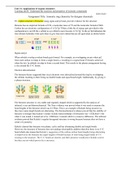
P2: explain structure of benzene using sigma and pi bond, provide evidence for the structure
Benzene has an empirical formula of CH, a molecular mass of 78 and the molecular formula C6H6.
Carbon has an electronic configuration of 1s22s22p2. When a little bit of energy gets provided to this
configuration it can lift the s orbital to a p orbital to now become 1s 22s12p3. In the sp3 hybridisation the
four orbitals hybridise with each other to give four new orbital that are all equivalent as shown below.
Sigma and pi:
When orbitals overlap covalent bonds gets formed. For example, an overlapping occurs when sp2
from each carbon overlaps to form a single bond c-c resulting in a sigma bond. Pi bond is achieved
when the two 2p orbitals overlap to form a second bond. This results to the planar arrangement having
a rise around the C=C bonds.
Electron delocalisation:
The benzene theory suggested that six pi electrons were delocalised around the ring by overlapping
the orbitals resulting in there being no double bonds and equal bond length. Additionally, by giving it
a planar structure.
The benzene structure is very stable and regularly shaped which is supported by the analysis of
infrared, x-ray and thermochemical. The Xray evidence was proved when it was used to measure the
bond lengths of the benzene which was 0.139nm. This is an example of Kekule being incorrect as
they have same length bonds not alternating. The thermochemical evidence proved that the stability of
benzene is stronger than kekule’s model. Kekule stated enthalpy of formation was +252KJmol-1 but
when it was tested, it turned out to be +82KJmol-1 instead which is a massive difference. The infrared
evidence proved that Kekule’s regular hexagonal structure is wrong because benzene does not have a
centre of symmetry.
Kekule claimed that benzene was planar, cyclic and has alternating double and single bonds.
However, the structure of benzene does not undergo electrophilic addition therefore there is no C=C
bond which also means that Kekule’s suggestion of the carbon-carbon bond lengths being alternating
is disproved as the benzene has equal lengths of bonds because of only being single bonds of C-C
existing in the structure. The C=C bonds are shorter, and their presence would prove Kekule correct
but they are not which proves he is incorrect.
, Unit 14: Applications of organic chemistry
Learning aim B: Understand the reactions and properties of aromatic compounds
Selin Guler
P3: explain chemical properties of industrially important benzene monosubstituted benzene
compounds
Chemical properties:
Benzene
Benzene has a boiling point of 80°C and a melting point of 5.5°C and is made of 6 carbon atoms and
6 hydrogen atoms (C6H6). It tends to undergo substitution mechanism reactions. Benzene is seen as a
crude oil’s natural element. It is very toxic and highly flammable and can be produced in industries
with the use of coal and oil. Benzene helps in industrial uses in the production of rubbers, dyes,
plastics etc. Due to it being toxic it does not have much non-industrial uses. Benzene is important in
industrial reactions because they can be used to prepare phenol and is beneficial in industry for
example to produce detergents and dyes. Benzene additionally helps metals by degreasing the activity
of them. As well as being used to produce detergents it is also very helpful in the manufacture of
nylon fibres.
Key chemical reactions of benzene:
In the sulfonation of benzene reaction the benzene gets heated with fuming sulphuric acid.
In the halogenation of benzene, the benzene reacts with halogens.
In the alkylation reaction benzene reacts with alkyl halide when a Lewis acid is present.
In the acylation reaction benzene gets treated with an acyl halide when, like alkylation, a
Lewis acid is present.
Phenol
Phenols can also be known as carbolic acids and has the molecular formula of C6H5OH. Phenols are
like alcohols, but they differentiate due to the hydroxyl group in them. The boiling point of phenols
are high because of the bonding between hydrogen and hydroxyl groups. As the carbon number
increases so does the boiling point. The solubility of phenol depends on the hydroxyl group as it is
involved to form hydrogen bonds. Phenols are acidic compared to alcohols as the negative charge in
benzene ring means that the phenoxide ions (phenol) are more stable than alkoxide ions (alcohol).
Phenols are important in industrial reactions as it can be used to make creams, sunscreen and hair dye
products. As well as these, phenols are also involved in the use of vehicles and electrical switches due
to it being able to resist high temperatures and power. Phenol is widely used in the manufacture of
plastic which is a very common packaging in many products making it a very important part in
industrial uses.
Key chemical reactions of phenol:
Learning aim B: Understand the reactions and properties of aromatic compounds
Selin Guler
Assignment Title: Aromatic ring chemistry for designer chemicals
P2: explain structure of benzene using sigma and pi bond, provide evidence for the structure
Benzene has an empirical formula of CH, a molecular mass of 78 and the molecular formula C6H6.
Carbon has an electronic configuration of 1s22s22p2. When a little bit of energy gets provided to this
configuration it can lift the s orbital to a p orbital to now become 1s 22s12p3. In the sp3 hybridisation the
four orbitals hybridise with each other to give four new orbital that are all equivalent as shown below.
Sigma and pi:
When orbitals overlap covalent bonds gets formed. For example, an overlapping occurs when sp2
from each carbon overlaps to form a single bond c-c resulting in a sigma bond. Pi bond is achieved
when the two 2p orbitals overlap to form a second bond. This results to the planar arrangement having
a rise around the C=C bonds.
Electron delocalisation:
The benzene theory suggested that six pi electrons were delocalised around the ring by overlapping
the orbitals resulting in there being no double bonds and equal bond length. Additionally, by giving it
a planar structure.
The benzene structure is very stable and regularly shaped which is supported by the analysis of
infrared, x-ray and thermochemical. The Xray evidence was proved when it was used to measure the
bond lengths of the benzene which was 0.139nm. This is an example of Kekule being incorrect as
they have same length bonds not alternating. The thermochemical evidence proved that the stability of
benzene is stronger than kekule’s model. Kekule stated enthalpy of formation was +252KJmol-1 but
when it was tested, it turned out to be +82KJmol-1 instead which is a massive difference. The infrared
evidence proved that Kekule’s regular hexagonal structure is wrong because benzene does not have a
centre of symmetry.
Kekule claimed that benzene was planar, cyclic and has alternating double and single bonds.
However, the structure of benzene does not undergo electrophilic addition therefore there is no C=C
bond which also means that Kekule’s suggestion of the carbon-carbon bond lengths being alternating
is disproved as the benzene has equal lengths of bonds because of only being single bonds of C-C
existing in the structure. The C=C bonds are shorter, and their presence would prove Kekule correct
but they are not which proves he is incorrect.
, Unit 14: Applications of organic chemistry
Learning aim B: Understand the reactions and properties of aromatic compounds
Selin Guler
P3: explain chemical properties of industrially important benzene monosubstituted benzene
compounds
Chemical properties:
Benzene
Benzene has a boiling point of 80°C and a melting point of 5.5°C and is made of 6 carbon atoms and
6 hydrogen atoms (C6H6). It tends to undergo substitution mechanism reactions. Benzene is seen as a
crude oil’s natural element. It is very toxic and highly flammable and can be produced in industries
with the use of coal and oil. Benzene helps in industrial uses in the production of rubbers, dyes,
plastics etc. Due to it being toxic it does not have much non-industrial uses. Benzene is important in
industrial reactions because they can be used to prepare phenol and is beneficial in industry for
example to produce detergents and dyes. Benzene additionally helps metals by degreasing the activity
of them. As well as being used to produce detergents it is also very helpful in the manufacture of
nylon fibres.
Key chemical reactions of benzene:
In the sulfonation of benzene reaction the benzene gets heated with fuming sulphuric acid.
In the halogenation of benzene, the benzene reacts with halogens.
In the alkylation reaction benzene reacts with alkyl halide when a Lewis acid is present.
In the acylation reaction benzene gets treated with an acyl halide when, like alkylation, a
Lewis acid is present.
Phenol
Phenols can also be known as carbolic acids and has the molecular formula of C6H5OH. Phenols are
like alcohols, but they differentiate due to the hydroxyl group in them. The boiling point of phenols
are high because of the bonding between hydrogen and hydroxyl groups. As the carbon number
increases so does the boiling point. The solubility of phenol depends on the hydroxyl group as it is
involved to form hydrogen bonds. Phenols are acidic compared to alcohols as the negative charge in
benzene ring means that the phenoxide ions (phenol) are more stable than alkoxide ions (alcohol).
Phenols are important in industrial reactions as it can be used to make creams, sunscreen and hair dye
products. As well as these, phenols are also involved in the use of vehicles and electrical switches due
to it being able to resist high temperatures and power. Phenol is widely used in the manufacture of
plastic which is a very common packaging in many products making it a very important part in
industrial uses.
Key chemical reactions of phenol: