Neonatology
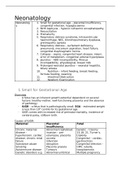
Neonatolog 1. Small for gestational age – placental insufficiency,
y congenital infection, hypoglycaemia
2. Birth Asphyxia – hypoxic ischaemic encephalopathy,
3. Resuscitation
4. Prematurity
5. Respiratory distress syndrome, Intraventricular
haemorrhage, NEC, bronchopulmonary dysplasia,
pretinopathy apnoea
6. Respiratory distress – surfactant deficiency,
pneumonia, meconium aspiration, heart failure,
congenital diaphragmatic hernia
7. Collapse – sepsis, congenital heart disease, inborn
error of metabolism, congenital adrenal hyperplasia
8. Jaundice – ABO incompatibility, Rhesus
incompatibility, physiological, breast milk
9. Prolonged neonatal jaundice – neonatal hepatitis,
biliary atresia
10. Nutrition – infant feeding, breast feeding,
formula feeding, weaning
11. Intestinal Obstruction
12. Newborn Examination
1. Small for Gestational Age
Overview
- A fetus has an inherent growth potential dependent on several
factors: healthy mother, well-functioning placenta and the absence
of pathology.
- IUGR – a fetus that is pathologically small. SGA – estimated weight
is less than 10th centile for its gestational age.
- IUGR comes with increased risk of perinatal mortality, incidence of
cerebral palsy, stillborn birth.
Causes of IUGR:
Maternal Placental Fetal
Insufficiency
Chronic maternal Abnormal trophoblast Genetic – trisomy
disease – invasion – pre- 13,18, 21, Turner’s,
hypertension, cardiac eclampsia, placenta triploidy
disease, chronic renal accreta Congenital – cardiac,
failure Infarction gastroschisis
Substance abuse Abruption Congenital infection –
Smoking Placenta praevia CMV, rubella,
Autoimmune disease Tumours toxoplasmosis
Genetic disorders e.g. Abnormal umbilical Multiple pregnancy
,phenylketonuria cord or cord insertion
Poor nutrition
Low SES
Management
- Continue the pregnancy safely for as long as possible
- Deliver the fetus before it becomes excessively compromised.
Neonatal Hypoglycaemia
Overview
- Defined as plasma glucose <1.65 mmol/L in the first 24 hours of life
and less than 2.5mmol/L thereafter.
- It is the most common metabolic problem in new-borns.
- Fetus not really at risk of hyperglycaemia
Long-term sequelae:
- Neurological damage – mental retardation, recurrent seizure
activity, developmental delay, personality disorders
- Impaired cardiovascular function
Causes:
- Maternal diabetes mellitus
- Prematurity
- IUGR
- Hypothermia
- Neonatal sepsis
- Inborn errors of metabolism
- Nesidioblastosis
- Beckwith-Wiedemann syndrome
- Labetalol use
Presentation
Symptoms
- Hypotonia
- Lethargy, apathy
- Jittery
- Poor feeding
- Seizures
- Congestive heart failure
- Cyanosis
- Apnoea
- Hypothermia
- ANS activation – anxiety, tremulousness, diaphoresis, tachycardia,
pallor, hunger, nausea, vomiting
- Hypoglycorrhachia/neuroglycopenia – headache, mental confusion,
staring, behavioural change, visual disturbance, dysarthria,
seizures, ataxia, coma, stroke
,Investigations
- Serum/plasma glucose
- Serum insulin
- Urine – first void
- Screening for metabolic errors
Management
- Treat quickly – 5% or 10% dextrose drip for those unable to drink
- Early feeding encouraged
Transient Hypoglycaemia
- Transient hypoglycaemia in the first hours after birth is common
- For the babies of diabetic mothers, they will be commenced on a
hypoglycaemia protocol, which can be stopped once they have at
least 3 blood glucose values >2.5 mmol/L and are feeding
appropriately.
Congenital Infections
Rubella - Infection <8 weeks causes deafness, congenital
heart disease and cataracts
- Beyond 18 weeks, risk to fetus is minimal.
- Ix:
Seroconversion/serology in mother
Amniocentesis/CVS (PCR) in fetus
Placenta microscopy PCR
- Mx: rare now MMR
Cytomegalovir - Most common congenital infection
us - Infant may become infected following an episode
of recurrent infection in the mother
- 5% infants will develop hepatosplenomegaly and
petechiae, most of whom will have
neurodevelopmental disabilities e.g.
sensorineural hearing loss, cerebral palsy,
epilepsy and cognitive impairment
- 5% develop problems later in life e.g.
sensorineural hearing loss
- Mx: antiviral therapy for infected infants with
ganciclovir under investigation
Toxoplasmosis - Infection with toxoplasmsa gondii – from
consumption of raw or uncooked meat or contact
with faeces of infected cats.
- Fetal infection – retinopathy, cerebral
calcification, hydrocephalus, seizures,
hepatosplenomegaly, thrombocytopenia
- Long-term neurological sequelae.
Varicella zoster - Fetal varicella syndrome: <20 weeks – 2%
risk of fetus developing severe scarring of the
skin and ocular and neurological damage as well
, as digital dysplasia
- Neonatal varicella: 5 days before – 2 days
post-delivery – 25% develop vesicular rash. High
mortality
- Mx: exposed mothers treated with VZIG and
acyclovir (>20w and within 24h of rash). High-
risk infants given zoster immune globulin and
prophylactic acyclovir.
Syphilis - Congenital syphilis rare in UK
- Px: blunted upper incisor teeth (Hutchinson’s
teeth), ‘mulberry’ molars, rhagades (linear scars
at the angle of mouth), keratitis, saber shins,
saddle nose, deafness
- If mother identified and treated by 1 month
before delivery, excellent prognosis.
2. Hypoxic-Ischaemic Encephalopathy
Overview
- During perinatal asphyxia, gas exchange (either placental or
pulmonary) is compromised/ceases altogether cardiorespiratory
depression.
- Pathophysiology:
o Hypoxia, hypercarbia and metabolic acidosis follow
o Compromised cardiac output diminishes tissue perfusion
leading to hypoxic-ischaemic injury to the brain and other
organs.
- Neonatal condition is HIE, resulting in brain damage, disability or
death.
Neonatolog 1. Small for gestational age – placental insufficiency,
y congenital infection, hypoglycaemia
2. Birth Asphyxia – hypoxic ischaemic encephalopathy,
3. Resuscitation
4. Prematurity
5. Respiratory distress syndrome, Intraventricular
haemorrhage, NEC, bronchopulmonary dysplasia,
pretinopathy apnoea
6. Respiratory distress – surfactant deficiency,
pneumonia, meconium aspiration, heart failure,
congenital diaphragmatic hernia
7. Collapse – sepsis, congenital heart disease, inborn
error of metabolism, congenital adrenal hyperplasia
8. Jaundice – ABO incompatibility, Rhesus
incompatibility, physiological, breast milk
9. Prolonged neonatal jaundice – neonatal hepatitis,
biliary atresia
10. Nutrition – infant feeding, breast feeding,
formula feeding, weaning
11. Intestinal Obstruction
12. Newborn Examination
1. Small for Gestational Age
Overview
- A fetus has an inherent growth potential dependent on several
factors: healthy mother, well-functioning placenta and the absence
of pathology.
- IUGR – a fetus that is pathologically small. SGA – estimated weight
is less than 10th centile for its gestational age.
- IUGR comes with increased risk of perinatal mortality, incidence of
cerebral palsy, stillborn birth.
Causes of IUGR:
Maternal Placental Fetal
Insufficiency
Chronic maternal Abnormal trophoblast Genetic – trisomy
disease – invasion – pre- 13,18, 21, Turner’s,
hypertension, cardiac eclampsia, placenta triploidy
disease, chronic renal accreta Congenital – cardiac,
failure Infarction gastroschisis
Substance abuse Abruption Congenital infection –
Smoking Placenta praevia CMV, rubella,
Autoimmune disease Tumours toxoplasmosis
Genetic disorders e.g. Abnormal umbilical Multiple pregnancy
,phenylketonuria cord or cord insertion
Poor nutrition
Low SES
Management
- Continue the pregnancy safely for as long as possible
- Deliver the fetus before it becomes excessively compromised.
Neonatal Hypoglycaemia
Overview
- Defined as plasma glucose <1.65 mmol/L in the first 24 hours of life
and less than 2.5mmol/L thereafter.
- It is the most common metabolic problem in new-borns.
- Fetus not really at risk of hyperglycaemia
Long-term sequelae:
- Neurological damage – mental retardation, recurrent seizure
activity, developmental delay, personality disorders
- Impaired cardiovascular function
Causes:
- Maternal diabetes mellitus
- Prematurity
- IUGR
- Hypothermia
- Neonatal sepsis
- Inborn errors of metabolism
- Nesidioblastosis
- Beckwith-Wiedemann syndrome
- Labetalol use
Presentation
Symptoms
- Hypotonia
- Lethargy, apathy
- Jittery
- Poor feeding
- Seizures
- Congestive heart failure
- Cyanosis
- Apnoea
- Hypothermia
- ANS activation – anxiety, tremulousness, diaphoresis, tachycardia,
pallor, hunger, nausea, vomiting
- Hypoglycorrhachia/neuroglycopenia – headache, mental confusion,
staring, behavioural change, visual disturbance, dysarthria,
seizures, ataxia, coma, stroke
,Investigations
- Serum/plasma glucose
- Serum insulin
- Urine – first void
- Screening for metabolic errors
Management
- Treat quickly – 5% or 10% dextrose drip for those unable to drink
- Early feeding encouraged
Transient Hypoglycaemia
- Transient hypoglycaemia in the first hours after birth is common
- For the babies of diabetic mothers, they will be commenced on a
hypoglycaemia protocol, which can be stopped once they have at
least 3 blood glucose values >2.5 mmol/L and are feeding
appropriately.
Congenital Infections
Rubella - Infection <8 weeks causes deafness, congenital
heart disease and cataracts
- Beyond 18 weeks, risk to fetus is minimal.
- Ix:
Seroconversion/serology in mother
Amniocentesis/CVS (PCR) in fetus
Placenta microscopy PCR
- Mx: rare now MMR
Cytomegalovir - Most common congenital infection
us - Infant may become infected following an episode
of recurrent infection in the mother
- 5% infants will develop hepatosplenomegaly and
petechiae, most of whom will have
neurodevelopmental disabilities e.g.
sensorineural hearing loss, cerebral palsy,
epilepsy and cognitive impairment
- 5% develop problems later in life e.g.
sensorineural hearing loss
- Mx: antiviral therapy for infected infants with
ganciclovir under investigation
Toxoplasmosis - Infection with toxoplasmsa gondii – from
consumption of raw or uncooked meat or contact
with faeces of infected cats.
- Fetal infection – retinopathy, cerebral
calcification, hydrocephalus, seizures,
hepatosplenomegaly, thrombocytopenia
- Long-term neurological sequelae.
Varicella zoster - Fetal varicella syndrome: <20 weeks – 2%
risk of fetus developing severe scarring of the
skin and ocular and neurological damage as well
, as digital dysplasia
- Neonatal varicella: 5 days before – 2 days
post-delivery – 25% develop vesicular rash. High
mortality
- Mx: exposed mothers treated with VZIG and
acyclovir (>20w and within 24h of rash). High-
risk infants given zoster immune globulin and
prophylactic acyclovir.
Syphilis - Congenital syphilis rare in UK
- Px: blunted upper incisor teeth (Hutchinson’s
teeth), ‘mulberry’ molars, rhagades (linear scars
at the angle of mouth), keratitis, saber shins,
saddle nose, deafness
- If mother identified and treated by 1 month
before delivery, excellent prognosis.
2. Hypoxic-Ischaemic Encephalopathy
Overview
- During perinatal asphyxia, gas exchange (either placental or
pulmonary) is compromised/ceases altogether cardiorespiratory
depression.
- Pathophysiology:
o Hypoxia, hypercarbia and metabolic acidosis follow
o Compromised cardiac output diminishes tissue perfusion
leading to hypoxic-ischaemic injury to the brain and other
organs.
- Neonatal condition is HIE, resulting in brain damage, disability or
death.