Equity & Trusts
Tutorial 6
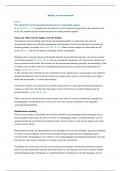
Constructive trusts
Essential reading
Webb & Akkouh: extract on Learning Central
AG for Hong Kong v Reid [1994] 1 AC 324 (PC)
Sinclair v Versailles [2011] EWCA Civ 347 (CA) [72]-[92]
FHR European Ventures v Cedar Capital Partners LLC [2014] UKSC 45
Boardman v Phipps [1967] 2 AC 46
P Millett, ‘Bribes and secret commissions again’ (2012) 71 CLJ 583-614
Extended reading
D Hayton, ‘Proprietary liability for secret profits’ (2011) 127 LQR 487-493
R Goode, ‘Proprietary liability for secret profits – a reply (2011) 127 LQR 493-495
Bryan, ‘Boardman v Phipps’, in Landmark Cases in Equity ed. Mitchell and Mitchell
(Oxford: Hart, 2012)
----------------------------------------------------------------------------------------------------------------
This tutorial has been restructured to incorporate requests from students for further guidance
on writing essays for Equity & Trusts. To benefit from this additional feedback, you must
fully prepare for this tutorial and bring your preparation to class.
Prepare an essay plan for each of these essay questions.
1. Was the Supreme Court’s decision in FHR European Ventures v Cedar Capital
Partners LLC a good decision:
i. in terms of authority
ii. as a matter of policy?
1
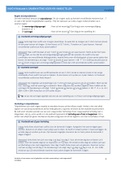
, Authority? LOOK AT THE PREVIOUS CASE LAW.
Constructive trust or no constructive trust over property received by fiduciary that would
never otherwise have been received by principal?
Lister v Stubbs: no constructive trust (creditor/debtor relationship)
AG Hong Kong v Reid: constructive trust, BUT has been criticised and is a PC
decision.
Does a CT arise when a secret commission or bribe is received? Unresolved until
FHR.
Lister v Stubbs – no CT
AG Hong Kong v Reid – CT
Sinclair Investments v Versailles – no CT
FHR Court of Appeal – no CT
FHR Supreme Court - CT
Is FHR consistent or inconsistent with other authority (relevant history)?
- It is inconsistent, except from the anomaly that is Reid, which is a Privy Council
case that does not have as much authority as that of a Supreme Court case.
Which approach provides more certainty: Sinclair or FHR?
Key question: Property received by fiduciary which would never otherwise have been
received by P – what remedy should be available to the claimant?
IN SINCLAIR >>> Neuberger MR identified a ‘fundamental distinction’ between:
1. A fiduciary enriching himself by depriving a claimant of an asset.
2. A fiduciary enriching himself by doing a wrong to the client.
FHR provides more certainty because it gives a new ‘blanket rule’.
‘a claimant cannot claim proprietary ownership of an asset purchased by the
defaulting fiduciary with funds which, although they could not have been obtained if
he had not enjoyed his fiduciary status, were not beneficially owned by the claimant
or derived from opportunities beneficially owned by the claimant’.
Even Neuberger changed his mind from Sinclair –
Lord Neuberger in ‘The Remedial Trust: Fact or Fiction’
‘… any judge worth her salt should be prepared to change her mind on an issue on
which she has expressed a view … Indeed, it may be thought that I had just such a
damascene conversion very recently in the case of FHR European Ventures LLP v
Cedar Capital Partners’.
2
Tutorial 6
Constructive trusts
Essential reading
Webb & Akkouh: extract on Learning Central
AG for Hong Kong v Reid [1994] 1 AC 324 (PC)
Sinclair v Versailles [2011] EWCA Civ 347 (CA) [72]-[92]
FHR European Ventures v Cedar Capital Partners LLC [2014] UKSC 45
Boardman v Phipps [1967] 2 AC 46
P Millett, ‘Bribes and secret commissions again’ (2012) 71 CLJ 583-614
Extended reading
D Hayton, ‘Proprietary liability for secret profits’ (2011) 127 LQR 487-493
R Goode, ‘Proprietary liability for secret profits – a reply (2011) 127 LQR 493-495
Bryan, ‘Boardman v Phipps’, in Landmark Cases in Equity ed. Mitchell and Mitchell
(Oxford: Hart, 2012)
----------------------------------------------------------------------------------------------------------------
This tutorial has been restructured to incorporate requests from students for further guidance
on writing essays for Equity & Trusts. To benefit from this additional feedback, you must
fully prepare for this tutorial and bring your preparation to class.
Prepare an essay plan for each of these essay questions.
1. Was the Supreme Court’s decision in FHR European Ventures v Cedar Capital
Partners LLC a good decision:
i. in terms of authority
ii. as a matter of policy?
1
, Authority? LOOK AT THE PREVIOUS CASE LAW.
Constructive trust or no constructive trust over property received by fiduciary that would
never otherwise have been received by principal?
Lister v Stubbs: no constructive trust (creditor/debtor relationship)
AG Hong Kong v Reid: constructive trust, BUT has been criticised and is a PC
decision.
Does a CT arise when a secret commission or bribe is received? Unresolved until
FHR.
Lister v Stubbs – no CT
AG Hong Kong v Reid – CT
Sinclair Investments v Versailles – no CT
FHR Court of Appeal – no CT
FHR Supreme Court - CT
Is FHR consistent or inconsistent with other authority (relevant history)?
- It is inconsistent, except from the anomaly that is Reid, which is a Privy Council
case that does not have as much authority as that of a Supreme Court case.
Which approach provides more certainty: Sinclair or FHR?
Key question: Property received by fiduciary which would never otherwise have been
received by P – what remedy should be available to the claimant?
IN SINCLAIR >>> Neuberger MR identified a ‘fundamental distinction’ between:
1. A fiduciary enriching himself by depriving a claimant of an asset.
2. A fiduciary enriching himself by doing a wrong to the client.
FHR provides more certainty because it gives a new ‘blanket rule’.
‘a claimant cannot claim proprietary ownership of an asset purchased by the
defaulting fiduciary with funds which, although they could not have been obtained if
he had not enjoyed his fiduciary status, were not beneficially owned by the claimant
or derived from opportunities beneficially owned by the claimant’.
Even Neuberger changed his mind from Sinclair –
Lord Neuberger in ‘The Remedial Trust: Fact or Fiction’
‘… any judge worth her salt should be prepared to change her mind on an issue on
which she has expressed a view … Indeed, it may be thought that I had just such a
damascene conversion very recently in the case of FHR European Ventures LLP v
Cedar Capital Partners’.
2