REPRODUCTION IN PLANTS
Sexual and Asexual reproduction
Feature of the process Sexual reproduction Asexual reproduction
Gametes produced ✔️ ✖️
Fertilization takes place ✔️ ✖️
Genetic variation in offspring ✔️ ✖️
Has survival value in: Changing environment Stable environment
Asexual reproduction in plants
- There are many different methods of asexual reproduction in plants.
- Most involve some part of the plant growing, and then breaking away from the parent plant before developing into a new plant.
i.e.
- Another type of
asexual reproduction is to grow plants from cuttings: A piece of a plant’s stem, with a few leaves attached, is cut from a healthy plant. Then planted in
damp soil or compost, where it will grow roots and develop into a new plant.
As each method of asexual reproduction involves some part of the plant growing, new cells must be produced by mitosis and so are all genetically identical.
This means that all the offspring formed by asexual reproduction will also be genetically identical
Sexual reproduction in plants
- Plants produce specialised, haploid gametes in their flowers.
- The male gametes are contained within the pollen grains; The female gametes are egg cells or ova.
- The male gametes must be transferred to the female gametes done by pollination.
- This is carried out either by wind or insects.
- Fertilisation then takes place.
- The zygote formed develops into a seed, which then becomes enclosed in a fruit.
Structures of wind-pollinated and insect-pollinated plants
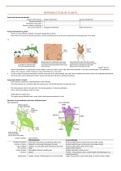
Wind-pollinated Insect-pollinated
Feature of flower Type of flower
Wind-pollinated Insect-pollinated
Position of stamens Exposed so that wind can easily blow pollen away Enclosed within flower so that insect must make contact
Position of stigma Exposed to catch pollen blowing in the wind Enclosed within flower so that insect must make contact
Type of stigma Feathery, to catch pollen grains blowing in the wind Sticky so pollen grains attach from insects
Size of petals Small Large to attract insects
Colour of petals Not brightly coloured, usually green Brightly coloured to attract insect s
Nectaries Absent Present – they produce nectar, a sweet liquid containing sugars as a
reward for insects
Pollen grains Smaller, smooth, inflated grains to carry in the wind Larger, sticky grains or grains with hooks, to stick to insects’ bodies
, Fertilisation
- Pollination transfers the pollen grain to the stigma.
- For fertilisation to take place, the nucleus of the pollen grain (male gamete) must fuse with the nucleus of the ovum, which is inside an ovule in the ovary.
- To transfer the nucleus to the ovum, the pollen grain forms a pollen tube, which grows down through the tissue of the style and into the ovary.
- Then it curves around to enter the opening in an ovule.
- The tip of the tube dissolves and allows the pollen grain nucleus to move out of the tube and into the ovule.
- It fertilises the ovum nucleus
Seed and fruit formation
Once fertilisation has occurred, a number of changes take place in the ovule and ovary that will lead to the fertilised ovule becoming a seed and the ovary in
which It is found becoming a fruit.
1. The zygote develops into an embryonic plant with small root (radicle) and shoot (plumule).
2. Other contents of the ovule develop into a food store for the young plant when the seed germinates.
3. The ovule wall becomes the seed coat or testa.
4. The ovary wall becomes the fruit coat; this can take many forms depending on the type of fruit.
Germination
A seed contains a plant embryo: consisting of a root (radicle), shoot (plumule) and one or two seed leaves (cotyledons).
Contains a food store, either in the cotyledons or another part of the seed.
During germination, the food store is used up, providing the nutrients to allow the radicle and plumule to grow.
The radicle grows down into the soil, where it will absorb water and mineral ions.
The plumule grows upwards towards the light, where it can start the process of photosynthesis.
Once the small plant is able to photosynthesise, germination is over.
The conditions needed for germination
The growth of a new plant from a seed is called germination.
- When seeds are dispersed form the parent plant, they are usually very dry, containing only about 10% water.
- This low water content restricts a seed’s metabolism, so that it can remain alive but dormant (inactive) for a long time, sometimes for many years.
When a seed germinates, dormancy comes to an end. The seed’s food store is broken down by enzymes and respired aerobically.
This means that germination needs the following conditions:
Warm temperatures, so that enzymes can act efficiently
Water, for chemical reactions to take place in solution
Oxygen, for respiration.
Sexual and Asexual reproduction
Feature of the process Sexual reproduction Asexual reproduction
Gametes produced ✔️ ✖️
Fertilization takes place ✔️ ✖️
Genetic variation in offspring ✔️ ✖️
Has survival value in: Changing environment Stable environment
Asexual reproduction in plants
- There are many different methods of asexual reproduction in plants.
- Most involve some part of the plant growing, and then breaking away from the parent plant before developing into a new plant.
i.e.
- Another type of
asexual reproduction is to grow plants from cuttings: A piece of a plant’s stem, with a few leaves attached, is cut from a healthy plant. Then planted in
damp soil or compost, where it will grow roots and develop into a new plant.
As each method of asexual reproduction involves some part of the plant growing, new cells must be produced by mitosis and so are all genetically identical.
This means that all the offspring formed by asexual reproduction will also be genetically identical
Sexual reproduction in plants
- Plants produce specialised, haploid gametes in their flowers.
- The male gametes are contained within the pollen grains; The female gametes are egg cells or ova.
- The male gametes must be transferred to the female gametes done by pollination.
- This is carried out either by wind or insects.
- Fertilisation then takes place.
- The zygote formed develops into a seed, which then becomes enclosed in a fruit.
Structures of wind-pollinated and insect-pollinated plants
Wind-pollinated Insect-pollinated
Feature of flower Type of flower
Wind-pollinated Insect-pollinated
Position of stamens Exposed so that wind can easily blow pollen away Enclosed within flower so that insect must make contact
Position of stigma Exposed to catch pollen blowing in the wind Enclosed within flower so that insect must make contact
Type of stigma Feathery, to catch pollen grains blowing in the wind Sticky so pollen grains attach from insects
Size of petals Small Large to attract insects
Colour of petals Not brightly coloured, usually green Brightly coloured to attract insect s
Nectaries Absent Present – they produce nectar, a sweet liquid containing sugars as a
reward for insects
Pollen grains Smaller, smooth, inflated grains to carry in the wind Larger, sticky grains or grains with hooks, to stick to insects’ bodies
, Fertilisation
- Pollination transfers the pollen grain to the stigma.
- For fertilisation to take place, the nucleus of the pollen grain (male gamete) must fuse with the nucleus of the ovum, which is inside an ovule in the ovary.
- To transfer the nucleus to the ovum, the pollen grain forms a pollen tube, which grows down through the tissue of the style and into the ovary.
- Then it curves around to enter the opening in an ovule.
- The tip of the tube dissolves and allows the pollen grain nucleus to move out of the tube and into the ovule.
- It fertilises the ovum nucleus
Seed and fruit formation
Once fertilisation has occurred, a number of changes take place in the ovule and ovary that will lead to the fertilised ovule becoming a seed and the ovary in
which It is found becoming a fruit.
1. The zygote develops into an embryonic plant with small root (radicle) and shoot (plumule).
2. Other contents of the ovule develop into a food store for the young plant when the seed germinates.
3. The ovule wall becomes the seed coat or testa.
4. The ovary wall becomes the fruit coat; this can take many forms depending on the type of fruit.
Germination
A seed contains a plant embryo: consisting of a root (radicle), shoot (plumule) and one or two seed leaves (cotyledons).
Contains a food store, either in the cotyledons or another part of the seed.
During germination, the food store is used up, providing the nutrients to allow the radicle and plumule to grow.
The radicle grows down into the soil, where it will absorb water and mineral ions.
The plumule grows upwards towards the light, where it can start the process of photosynthesis.
Once the small plant is able to photosynthesise, germination is over.
The conditions needed for germination
The growth of a new plant from a seed is called germination.
- When seeds are dispersed form the parent plant, they are usually very dry, containing only about 10% water.
- This low water content restricts a seed’s metabolism, so that it can remain alive but dormant (inactive) for a long time, sometimes for many years.
When a seed germinates, dormancy comes to an end. The seed’s food store is broken down by enzymes and respired aerobically.
This means that germination needs the following conditions:
Warm temperatures, so that enzymes can act efficiently
Water, for chemical reactions to take place in solution
Oxygen, for respiration.