Exothermic and endothermic – Chemistry
Reactions and temperature changes
Energy is conserved in chemical reactions, so the total amount of energy in the universe at
the end of a reaction is the same as it was before the reaction.
When a chemical reaction happens, energy is transferred to or from the surroundings.
When energy is transferred to the surroundings, this is called an exothermic reaction, and
the temperature of the surroundings increases. Examples of exothermic reactions include:
- combustion reactions
- many oxidation reactions
- most neutralisation reactions
Everyday uses of exothermic reactions include self-heating cans and hand warmers.
When energy is taken in from the surroundings, this is called an endothermic reaction and
the temperature of the surroundings decreases. Examples of endothermic reactions
include:
- thermal decomposition reactions
- the reaction of citric acid and sodium hydrogen carbonate
Everyday uses of endothermic reactions include instant ice packs which can be used to treat
sports injuries.
Sodium hydroxide solution is poured into a beaker of hydrochloric acid which contains a
thermometer showing room temperature –
- In endothermic reactions, energy enters. In exothermic reactions, energy exits.
Reaction profiles-
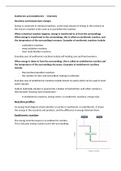
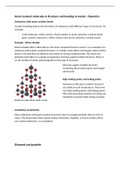
An energy level diagram shows whether a reaction is exothermic or endothermic. It shows
the energy in the reactants and products, and the difference in energy between them.
Exothermic reaction-
The energy level decreases in an exothermic reaction.
This is because energy is given out to the surroundings.
, Endothermic reaction
The energy level increases in an endothermic reaction. This is because energy is taken in
from the surroundings.
It is usually more helpful to describe how the
energy of the chemicals changes during the reaction, so a reaction profile is more useful
than an energy level diagram.
A reaction profile includes the activation energy, which is the minimum energy needed by
particles when they collide for a reaction to occur. The activation energy is shown as a
'hump' in the line, which:
- starts at the energy of the reactants
- is equal to the difference in energy between the top of the 'hump' and the reactant
The overall change in energy in a reaction is the difference between the energy of the
reactants and products.
Exothermic reactions
The diagram shows a reaction profile for an exothermic reaction.
Reactions and temperature changes
Energy is conserved in chemical reactions, so the total amount of energy in the universe at
the end of a reaction is the same as it was before the reaction.
When a chemical reaction happens, energy is transferred to or from the surroundings.
When energy is transferred to the surroundings, this is called an exothermic reaction, and
the temperature of the surroundings increases. Examples of exothermic reactions include:
- combustion reactions
- many oxidation reactions
- most neutralisation reactions
Everyday uses of exothermic reactions include self-heating cans and hand warmers.
When energy is taken in from the surroundings, this is called an endothermic reaction and
the temperature of the surroundings decreases. Examples of endothermic reactions
include:
- thermal decomposition reactions
- the reaction of citric acid and sodium hydrogen carbonate
Everyday uses of endothermic reactions include instant ice packs which can be used to treat
sports injuries.
Sodium hydroxide solution is poured into a beaker of hydrochloric acid which contains a
thermometer showing room temperature –
- In endothermic reactions, energy enters. In exothermic reactions, energy exits.
Reaction profiles-
An energy level diagram shows whether a reaction is exothermic or endothermic. It shows
the energy in the reactants and products, and the difference in energy between them.
Exothermic reaction-
The energy level decreases in an exothermic reaction.
This is because energy is given out to the surroundings.
, Endothermic reaction
The energy level increases in an endothermic reaction. This is because energy is taken in
from the surroundings.
It is usually more helpful to describe how the
energy of the chemicals changes during the reaction, so a reaction profile is more useful
than an energy level diagram.
A reaction profile includes the activation energy, which is the minimum energy needed by
particles when they collide for a reaction to occur. The activation energy is shown as a
'hump' in the line, which:
- starts at the energy of the reactants
- is equal to the difference in energy between the top of the 'hump' and the reactant
The overall change in energy in a reaction is the difference between the energy of the
reactants and products.
Exothermic reactions
The diagram shows a reaction profile for an exothermic reaction.