BLP– Taxation of Companies and Other Issues.
Tax levied on companies.
• Companies pay corporation tax.
• This tax is paid on both income and capital profits.
• Principles for calculating the tax on the income profit element are roughly the same as for
Income Tax.
• Principles for calculating the tax on the capital profit element are roughly the same as for
CGT.
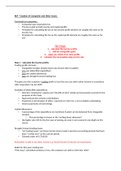
The 4 Steps.
1. calculate the income profits
2. add the chargeable gains
3. apply any reliefs from total profits
4. calculate the tax payable using correct rate
Step 1 – Calculate the income profits.
Trading profits formula =
• Chargeable receipts (simply means any income that is taxable)
• Less any deductible expenditure
• Less any capital allowances
• Less any brought forward trading loss
This gives you the company’s trading profit or loss then you can add in other income in accordance
with corporation Tax Act 2009.
Examples of deductible expenditure:
• Directors’/employees’ salaries and “benefits in kind” wholly and exclusively incurred for the
purposes of the trade.
• Approved pension scheme contributions.
• Payments on termination of office / payment in return for a non-complete undertaking.
• Interest payments on borrowings.
Capital Allowances:
• A percentage of the expenditure on machinery & plant can be deducted from chargeable
receipts
• This percentage is known as the “writing down allowance”
• the higher rate AIA for the first year of owning an asset is not covered in any depth on this
course
Brought forward trading losses.
• “b/f trading losses” are those income losses made in previous accounting periods that have
been “carried over” to the current period.
• Claimed under s45 CTA2010
Remember to add in any other income e.g. Rental income & Interest on investments.
Relief for this years trading loss:
If the step 1 calculation produces a loss, the company can seek to claim loss relief:
Tax levied on companies.
• Companies pay corporation tax.
• This tax is paid on both income and capital profits.
• Principles for calculating the tax on the income profit element are roughly the same as for
Income Tax.
• Principles for calculating the tax on the capital profit element are roughly the same as for
CGT.
The 4 Steps.
1. calculate the income profits
2. add the chargeable gains
3. apply any reliefs from total profits
4. calculate the tax payable using correct rate
Step 1 – Calculate the income profits.
Trading profits formula =
• Chargeable receipts (simply means any income that is taxable)
• Less any deductible expenditure
• Less any capital allowances
• Less any brought forward trading loss
This gives you the company’s trading profit or loss then you can add in other income in accordance
with corporation Tax Act 2009.
Examples of deductible expenditure:
• Directors’/employees’ salaries and “benefits in kind” wholly and exclusively incurred for the
purposes of the trade.
• Approved pension scheme contributions.
• Payments on termination of office / payment in return for a non-complete undertaking.
• Interest payments on borrowings.
Capital Allowances:
• A percentage of the expenditure on machinery & plant can be deducted from chargeable
receipts
• This percentage is known as the “writing down allowance”
• the higher rate AIA for the first year of owning an asset is not covered in any depth on this
course
Brought forward trading losses.
• “b/f trading losses” are those income losses made in previous accounting periods that have
been “carried over” to the current period.
• Claimed under s45 CTA2010
Remember to add in any other income e.g. Rental income & Interest on investments.
Relief for this years trading loss:
If the step 1 calculation produces a loss, the company can seek to claim loss relief: