

Amina Ali
Unit 15: Microbiological Techniques
Assignment 2: Classification of micro-organisms
Task 2
M4: Outline how the techniques used to identify micro-organisms relate to their structure
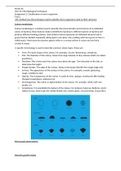
Colony morphology
Colony morphology is a method used to describe the characteristics and structure of an individual
colony of bacteria, these features help to identify the bacterium. Different species of bacteria will
produce different-looking colonies. Each distinct colony represents an individual bacterial cell or
group that has divided repeatedly. Being kept in one place, the resulting cells have grown to form a
visible patch. Most bacterial colonies appear white or a creamy yellow in colour and are fairly
circular in shape.
A specific terminology is used to describe common colony types. These are:
Form: The basic shape of the colony. For example, circular, filamentous, rhizoid etc.
Size: The diameter of the colony. Varies from large colonies to tiny colonies which are called
punctiform.
Elevation: This is how much the colony rises above the agar. Turn the plate to the side, to
determine the height.
Margin/border: The edge of the colony. Using a microscope identify the margin edge well.
Surface: The appearance of the surface of the colony. For example, smooth, glistening,
rough, wrinkled or dull.
Opacity: The transparency of the colony. It could be clear, opaque, translucent (like looking
through frosted glass), iridescent etc
Chromogenesis: The colour or pigmentation of the colony. For example, white, buff, red,
purple, etc.
Consistency: It is essentially the texture of the colony. For instance, butyrous (buttery), viscid
(sticks to loop, hard to get off), brittle/friable (dry, breaks apart), mucoid (sticky, mucus-like).
Microscopic observations
Selective growth media
Unit 15: Microbiological Techniques
Assignment 2: Classification of micro-organisms
Task 2
M4: Outline how the techniques used to identify micro-organisms relate to their structure
Colony morphology
Colony morphology is a method used to describe the characteristics and structure of an individual
colony of bacteria, these features help to identify the bacterium. Different species of bacteria will
produce different-looking colonies. Each distinct colony represents an individual bacterial cell or
group that has divided repeatedly. Being kept in one place, the resulting cells have grown to form a
visible patch. Most bacterial colonies appear white or a creamy yellow in colour and are fairly
circular in shape.
A specific terminology is used to describe common colony types. These are:
Form: The basic shape of the colony. For example, circular, filamentous, rhizoid etc.
Size: The diameter of the colony. Varies from large colonies to tiny colonies which are called
punctiform.
Elevation: This is how much the colony rises above the agar. Turn the plate to the side, to
determine the height.
Margin/border: The edge of the colony. Using a microscope identify the margin edge well.
Surface: The appearance of the surface of the colony. For example, smooth, glistening,
rough, wrinkled or dull.
Opacity: The transparency of the colony. It could be clear, opaque, translucent (like looking
through frosted glass), iridescent etc
Chromogenesis: The colour or pigmentation of the colony. For example, white, buff, red,
purple, etc.
Consistency: It is essentially the texture of the colony. For instance, butyrous (buttery), viscid
(sticks to loop, hard to get off), brittle/friable (dry, breaks apart), mucoid (sticky, mucus-like).
Microscopic observations
Selective growth media



