↑
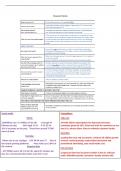
17 Ivalence e-
&
CH-2 -
Periodic Table I I
&
a
Organization
-
-
-
-
I
I se the
>
-
Period (rows) + show the highest I - -
on
level
&
-
1 pull energy
energy Nh - outer
levelseerw)
>
-
Groups (columns) > show -
the families of lop
element which have the - I &
more ve-
same # of e- in their -
↑
energyleve-
Ive-
I
t
H 2ve-
↓
Quer more nuclear charge
2 Li Be B(NO F Ne >
-
furthest from the
= smaller radius
3 NaMs Alsi PS Cl Ar nucleas
4k (a ↑
Br Kv >
highest potential energy
-
Calcogens
↑ ↑ / T
-
>
-
determine the activity ,
Alkali ↑
Alkali
Metals
Earth
Metals Halogens reactivity & intrinsic
characteristics of the atom .
(Al halogens
R Atomic radius goes down across
Types of Metals a period .
>
-
Metals-left of table >
-
more protonsw/ same electron cloud
>
-
luster , malleable, =
smaller radius
ductility electropositive
,
> conductive ·
Ionization
Energy
-
Non-metals to
energy required
- >
-
remove an e-
>
-
brittle from the outer shell of an atom
>
-
Jeff & : ↑ Fionation >
-
entirely dependent on
↑ EN effective nuclear charge [zeff]
↓ Atomic Radius > IE <
IEz
-
,
>
-
less unified in their shared
characteristics EX1) Ma >
-
Mat
>
Metalloids B Si Ge , As , Sb , Te Po At
# D mat Tie
-
-
, , , ,
-
Ionic Radius -
D Zeff
15292[ph
2)
Energy levels Ex2) ↑
3) Octect Rule Mg +
MqT + e-
IE , =
738k5/mol
↑
Ex) Mat-> Ma + e - FEz = 1450k5/mol
(i
g2- F Ne ↑
15
?
is 152
25 25 252 Octet is full
2 e & but
>
po now
-
2
Mg2 - Mat
6 +
+ e
-
27
Nat Mg D > IE= 7730K5/mol
Everyone wants to
-
15 152 look like neon
2
?
2s 25 ② # of proton-ionic radius
2p6 2pd M & Nat Fe
T
02-
sp smallest-> Largest
17 Ivalence e-
&
CH-2 -
Periodic Table I I
&
a
Organization
-
-
-
-
I
I se the
>
-
Period (rows) + show the highest I - -
on
level
&
-
1 pull energy
energy Nh - outer
levelseerw)
>
-
Groups (columns) > show -
the families of lop
element which have the - I &
more ve-
same # of e- in their -
↑
energyleve-
Ive-
I
t
H 2ve-
↓
Quer more nuclear charge
2 Li Be B(NO F Ne >
-
furthest from the
= smaller radius
3 NaMs Alsi PS Cl Ar nucleas
4k (a ↑
Br Kv >
highest potential energy
-
Calcogens
↑ ↑ / T
-
>
-
determine the activity ,
Alkali ↑
Alkali
Metals
Earth
Metals Halogens reactivity & intrinsic
characteristics of the atom .
(Al halogens
R Atomic radius goes down across
Types of Metals a period .
>
-
Metals-left of table >
-
more protonsw/ same electron cloud
>
-
luster , malleable, =
smaller radius
ductility electropositive
,
> conductive ·
Ionization
Energy
-
Non-metals to
energy required
- >
-
remove an e-
>
-
brittle from the outer shell of an atom
>
-
Jeff & : ↑ Fionation >
-
entirely dependent on
↑ EN effective nuclear charge [zeff]
↓ Atomic Radius > IE <
IEz
-
,
>
-
less unified in their shared
characteristics EX1) Ma >
-
Mat
>
Metalloids B Si Ge , As , Sb , Te Po At
# D mat Tie
-
-
, , , ,
-
Ionic Radius -
D Zeff
15292[ph
2)
Energy levels Ex2) ↑
3) Octect Rule Mg +
MqT + e-
IE , =
738k5/mol
↑
Ex) Mat-> Ma + e - FEz = 1450k5/mol
(i
g2- F Ne ↑
15
?
is 152
25 25 252 Octet is full
2 e & but
>
po now
-
2
Mg2 - Mat
6 +
+ e
-
27
Nat Mg D > IE= 7730K5/mol
Everyone wants to
-
15 152 look like neon
2
?
2s 25 ② # of proton-ionic radius
2p6 2pd M & Nat Fe
T
02-
sp smallest-> Largest