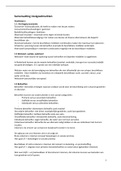
Summary: Language study 1: Grammar
Inhoudsopgave
Present and Perfect:....................................................................................................... 2
The Present simple:..................................................................................................... 2
The Present Continuous:.............................................................................................. 3
The present perfect simple:.........................................................................................4
The present perfect continuous:..................................................................................4
The past simple:............................................................................................................. 5
The past perfect simple:..............................................................................................7
The past perfect continuous:.......................................................................................7
The Future simple:.......................................................................................................... 8
The future continuous................................................................................................. 8
The future perfect:...................................................................................................... 9
The future perfect continuous:....................................................................................9
Other ways to express the future:...............................................................................9
Verb classes:................................................................................................................. 10
Auxiliaries:................................................................................................................. 10
Primary auxiliaries..................................................................................................... 10
Modal auxiliaries....................................................................................................... 10
Copular or linking verbs............................................................................................ 16
Full or lexical verbs.................................................................................................... 16
, Summary: Language study 1: Grammar
Present and Perfect:
The Present simple:
Use:
1. Daily routines, habits, regular or repeated actions or events.
I usually get up early
2. General truths
water boils at 100 degrees C
3. Permanent situations, current state, or things that are generally true.
We have a dog at home.
4. Profession or characteristics.
I am a teacher / he is shy.
5. A series of actions in a narrative à Historic present or commentary.
Clayton kicks the ball, and his contender goes down.
6. State verbs/ Perceptions verbs.
Emotions: like, love, hate à He loves/hates/likes pizza
Thoughts: know, believe, understand à She knows/
believes/understands the answer.
Senses: see, hear, taste à This cake tastes delicious or This
flower smells nice.
Possessions: have, own, belong à She has/owns a car.
Being: be, seem, exist à He is/seems tired.
7. Present simple expressing future fixed plans like a timetable.
My train to school leaves at 8:04 in Duffel.
Form:
1. Infinitive (I, you, we and they)
2. For the 3rd person singular: 3 groups. `
a. Infinitive + -s à he/she/it read, plays, walks, …
b. Infinitive + -es (when your verb end in the hissing sound) à
misses, watches, matches, washes, …
c. Infinitive + -es (when your verb ends in -o) à goes, does
3. Infinitive ending in -y à -y becomes -I + -es à tries, lies, …
Pronunciation in the 3rd person singular
Hissing sound -S sounds like a -Z -S sound as a -S
(after a voiceless
sound, P, T, K, F
(PoTKoFi)
Brushes Does Gets
Washes Goes Ask
Watches Copies Puts
Pushes Studies Jumps
Finishes Says Stops
Wishes Cleans cooks
, Summary: Language study 1: Grammar
The Present Continuous:
Use:
1. An action happening at the time of speaking (to be in the
middle of something, an action is in progress at this very
moment of speaking):
The action is in progress right now and may continue after the
moment of speaking.
She is writing a letter.
They are playing football in the park.
2. An action in progress around the time of speaking:
The action isn’t necessarily happening at the exact moment but
occurs during this general period.
I am reading a fascinating book these days.
We are working on a new project this week.
3. Frequent actions that are annoying (they happen more than
we would normally expect):
Used to express annoyance or frustration.
He is always losing his keys
It is taking you forever to get ready.
4. Describing pictures, plots anecdotes or commentaries
Often used in storytelling, descriptions, or sport commentaries.
In this picture, the girl is standing by the lake.
The hero is chasing the villain through the streets.
5. Expressing future arrangements:
Refer to definite plans or arrangements for the near future.
We are meeting them at 7 PM tonight.
She is flying to Paris next week.
Form:
1. Infinitive + ing
singing, walking, talking, washing
2. There are two forms for the second one:
A. Infinitive -e + ing
nudge à nudging
make à making
dance à dancing
B. Infinitive +ing à double consonants
run à running,
sit à sitting
Fit à Fitting
Stop à Stopping
3. Infinitive – ie becomes Y +ing
1. Lying, dying, tying, …
Inhoudsopgave
Present and Perfect:....................................................................................................... 2
The Present simple:..................................................................................................... 2
The Present Continuous:.............................................................................................. 3
The present perfect simple:.........................................................................................4
The present perfect continuous:..................................................................................4
The past simple:............................................................................................................. 5
The past perfect simple:..............................................................................................7
The past perfect continuous:.......................................................................................7
The Future simple:.......................................................................................................... 8
The future continuous................................................................................................. 8
The future perfect:...................................................................................................... 9
The future perfect continuous:....................................................................................9
Other ways to express the future:...............................................................................9
Verb classes:................................................................................................................. 10
Auxiliaries:................................................................................................................. 10
Primary auxiliaries..................................................................................................... 10
Modal auxiliaries....................................................................................................... 10
Copular or linking verbs............................................................................................ 16
Full or lexical verbs.................................................................................................... 16
, Summary: Language study 1: Grammar
Present and Perfect:
The Present simple:
Use:
1. Daily routines, habits, regular or repeated actions or events.
I usually get up early
2. General truths
water boils at 100 degrees C
3. Permanent situations, current state, or things that are generally true.
We have a dog at home.
4. Profession or characteristics.
I am a teacher / he is shy.
5. A series of actions in a narrative à Historic present or commentary.
Clayton kicks the ball, and his contender goes down.
6. State verbs/ Perceptions verbs.
Emotions: like, love, hate à He loves/hates/likes pizza
Thoughts: know, believe, understand à She knows/
believes/understands the answer.
Senses: see, hear, taste à This cake tastes delicious or This
flower smells nice.
Possessions: have, own, belong à She has/owns a car.
Being: be, seem, exist à He is/seems tired.
7. Present simple expressing future fixed plans like a timetable.
My train to school leaves at 8:04 in Duffel.
Form:
1. Infinitive (I, you, we and they)
2. For the 3rd person singular: 3 groups. `
a. Infinitive + -s à he/she/it read, plays, walks, …
b. Infinitive + -es (when your verb end in the hissing sound) à
misses, watches, matches, washes, …
c. Infinitive + -es (when your verb ends in -o) à goes, does
3. Infinitive ending in -y à -y becomes -I + -es à tries, lies, …
Pronunciation in the 3rd person singular
Hissing sound -S sounds like a -Z -S sound as a -S
(after a voiceless
sound, P, T, K, F
(PoTKoFi)
Brushes Does Gets
Washes Goes Ask
Watches Copies Puts
Pushes Studies Jumps
Finishes Says Stops
Wishes Cleans cooks
, Summary: Language study 1: Grammar
The Present Continuous:
Use:
1. An action happening at the time of speaking (to be in the
middle of something, an action is in progress at this very
moment of speaking):
The action is in progress right now and may continue after the
moment of speaking.
She is writing a letter.
They are playing football in the park.
2. An action in progress around the time of speaking:
The action isn’t necessarily happening at the exact moment but
occurs during this general period.
I am reading a fascinating book these days.
We are working on a new project this week.
3. Frequent actions that are annoying (they happen more than
we would normally expect):
Used to express annoyance or frustration.
He is always losing his keys
It is taking you forever to get ready.
4. Describing pictures, plots anecdotes or commentaries
Often used in storytelling, descriptions, or sport commentaries.
In this picture, the girl is standing by the lake.
The hero is chasing the villain through the streets.
5. Expressing future arrangements:
Refer to definite plans or arrangements for the near future.
We are meeting them at 7 PM tonight.
She is flying to Paris next week.
Form:
1. Infinitive + ing
singing, walking, talking, washing
2. There are two forms for the second one:
A. Infinitive -e + ing
nudge à nudging
make à making
dance à dancing
B. Infinitive +ing à double consonants
run à running,
sit à sitting
Fit à Fitting
Stop à Stopping
3. Infinitive – ie becomes Y +ing
1. Lying, dying, tying, …