© 2026 – Kato Van de Velde
Engels:
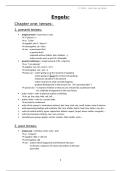
Chapter one: tenses:
1. present tenses:
simple present = base from a verb
3rd person + s
ex. “I play”
negative: don’t / doesn’t
interrogative: do / does
use: - a permanent fact
- a general truth
- repeated actions (habits, jobs, hobbies, …)
- future events seen as part of a timetable
present continuous = simple present of be + ing form
ex. “I am playing”
negative: am not / aren’t / isn’t
interrogative: am / are / is
basic use: - action going on at the moment of speaking
- action going on about the moment of speaking
- temporary situation in the present
- action contrary to what normally happens
- gradual development in the present (ex. “he is growing older”)
special use: - to express irritation or that you are annoyed by a particular habit
- for a definite arrangement in the near future
action verbs = refer to physical actions or thinking
do, go, buy, stop, take, ask, tell, …
stative verbs = refer to a certain state
not used in continuous
verbs of the senses (= involuntary actions): feel, hear, look, see, smell, notice, taste & observe
verbs expressing feelings and emotions: like, love, dislike, detest, hate, fear, desire, care for, …
verbs of mental activity: agree, appreciate, believe, expect, forget, know, realize, recognize, …
verbs of possession: belong, owe, own, possess
miscellaneous group: appear, consist, contain, hold, matter, seem, …
2. past tenses:
simple past = infinitive of the verb + (e)d
ex. “I played”
negative: didn’t / did not
interrogative: did
use: - actions which happened and finished in the past
- to denote a sequence of events and actions in the past
- past habit
1
, © 2026 – Kato Van de Velde
past continuous = simple past of ‘to be’ + ing form
ex. “I was playing”
negative: wasn’t / weren’t
interrogative: was / were
use: - action that was going on at a past moment or during a past period
- action which was taking place at the time of another action in the past which was
still going on during that time (= background action)
- 2 actions which continued over the same period in the past
- action that interrupted an action that was going on
- to emphasize the idea of repetition of the action, often expresses irritation or anger
3. perfect tenses:
present perfect = have + past participle
ex. “I have played”
negative: haven’t / hasn’t
interrogative: have / has
use: - to denote states, actions and habits which begin in the past and continue up to the
present time (= action-up-to-now), ‘for’ and ‘since’ often used
- action is over but period is incomplete (= periode-up-to-now)
- after expressions like; ‘it is the first’ / ‘it’s the only’ / “it’s the best” …
- to denote interests in present or future result of action already completed
present perfect continuous = have + been
ex. “I have been playing”
negative: haven’t been / hasn’t been
interrogative: have … been / has … been
use: -actions or states which began in the past and are still in progress now
- when we have clearly observable present evidence of an action that has been going
on for a while
- never when you count !!
- rarely used in the negative
past perfect = had
ex. “I had played”
negative: had + not + past participle
interrogative: had + subject + past participle
use: - action that had happened before another action in the past
- action that continued up to a certain moment in the past
- action that had been completed before another action started in the past
- action that took place in a period that lasted up to a certain moment in the past
4. future tenses:
2
Engels:
Chapter one: tenses:
1. present tenses:
simple present = base from a verb
3rd person + s
ex. “I play”
negative: don’t / doesn’t
interrogative: do / does
use: - a permanent fact
- a general truth
- repeated actions (habits, jobs, hobbies, …)
- future events seen as part of a timetable
present continuous = simple present of be + ing form
ex. “I am playing”
negative: am not / aren’t / isn’t
interrogative: am / are / is
basic use: - action going on at the moment of speaking
- action going on about the moment of speaking
- temporary situation in the present
- action contrary to what normally happens
- gradual development in the present (ex. “he is growing older”)
special use: - to express irritation or that you are annoyed by a particular habit
- for a definite arrangement in the near future
action verbs = refer to physical actions or thinking
do, go, buy, stop, take, ask, tell, …
stative verbs = refer to a certain state
not used in continuous
verbs of the senses (= involuntary actions): feel, hear, look, see, smell, notice, taste & observe
verbs expressing feelings and emotions: like, love, dislike, detest, hate, fear, desire, care for, …
verbs of mental activity: agree, appreciate, believe, expect, forget, know, realize, recognize, …
verbs of possession: belong, owe, own, possess
miscellaneous group: appear, consist, contain, hold, matter, seem, …
2. past tenses:
simple past = infinitive of the verb + (e)d
ex. “I played”
negative: didn’t / did not
interrogative: did
use: - actions which happened and finished in the past
- to denote a sequence of events and actions in the past
- past habit
1
, © 2026 – Kato Van de Velde
past continuous = simple past of ‘to be’ + ing form
ex. “I was playing”
negative: wasn’t / weren’t
interrogative: was / were
use: - action that was going on at a past moment or during a past period
- action which was taking place at the time of another action in the past which was
still going on during that time (= background action)
- 2 actions which continued over the same period in the past
- action that interrupted an action that was going on
- to emphasize the idea of repetition of the action, often expresses irritation or anger
3. perfect tenses:
present perfect = have + past participle
ex. “I have played”
negative: haven’t / hasn’t
interrogative: have / has
use: - to denote states, actions and habits which begin in the past and continue up to the
present time (= action-up-to-now), ‘for’ and ‘since’ often used
- action is over but period is incomplete (= periode-up-to-now)
- after expressions like; ‘it is the first’ / ‘it’s the only’ / “it’s the best” …
- to denote interests in present or future result of action already completed
present perfect continuous = have + been
ex. “I have been playing”
negative: haven’t been / hasn’t been
interrogative: have … been / has … been
use: -actions or states which began in the past and are still in progress now
- when we have clearly observable present evidence of an action that has been going
on for a while
- never when you count !!
- rarely used in the negative
past perfect = had
ex. “I had played”
negative: had + not + past participle
interrogative: had + subject + past participle
use: - action that had happened before another action in the past
- action that continued up to a certain moment in the past
- action that had been completed before another action started in the past
- action that took place in a period that lasted up to a certain moment in the past
4. future tenses:
2