THE ANUS
It is a sophisticated and crucial terminal organ of the digestive system. Its primary functions are not
merely expulsion but, more importantly, the maintenance of continence—the controlled storage and
release of fecal matter.
1. The anus is the external opening of the anal canal, the final 3-4 cm segment of the gastrointestinal
tract. It marks the end of the digestive tract, where the rectum transitions to the external environment.
It is located within the perineum, between the buttocks.
2. Anatomical Structure (Layered and Zonal)
The anus is not a simple opening but a complex, layered structure with distinct zones.
A. The Anal Canal:
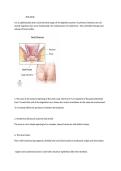
This is the functional passageway, divided into two halves based on embryonic origin and innervation.
· Upper Zone (Colorectal Zone): Lined with columnar epithelium (like the intestine).
, It contains the important anal columns (of Morgagni) and anal sinuses, which secrete mucus to aid in
passage.
· Lower Zone (Squamous Zone):
Lined with squamous epithelium (like skin), sensitive to touch, pain, and temperature.
The boundary between these zones is the dentate (or pectinate) line, a critical landmark.
B. Sphincter Muscles (The Gatekeepers): Continence is maintained by two concentric rings of muscle.
i· Internal Anal Sphincter (IAS): An involuntary, smooth muscle extension of the circular muscle of the
rectum.
It is under autonomic control and provides ~70% of resting tone, keeping the anus closed at all times to
prevent passive leakage of gas or fluid.
It relaxes reflexively when the rectum distends (the rectoanal inhibitory reflex).
ii· External Anal Sphincter (EAS):
A voluntary, striated muscle under conscious control (via the pudendal nerve).
We contract it to delay defecation until socially appropriate.
It provides the "squeeze" during moments of high abdominal pressure (e.g., coughing, lifting).
C. The Hemorrhoidal Vascular Cushions: These are normal clusters of veins, smooth muscle, and
connective tissue located in the upper anal canal.
They function like "watertight seals" or gaskets, ensuring complete closure and fine-touch continence.
When pathologically engorged, they become symptomatic hemorrhoids.
It is a sophisticated and crucial terminal organ of the digestive system. Its primary functions are not
merely expulsion but, more importantly, the maintenance of continence—the controlled storage and
release of fecal matter.
1. The anus is the external opening of the anal canal, the final 3-4 cm segment of the gastrointestinal
tract. It marks the end of the digestive tract, where the rectum transitions to the external environment.
It is located within the perineum, between the buttocks.
2. Anatomical Structure (Layered and Zonal)
The anus is not a simple opening but a complex, layered structure with distinct zones.
A. The Anal Canal:
This is the functional passageway, divided into two halves based on embryonic origin and innervation.
· Upper Zone (Colorectal Zone): Lined with columnar epithelium (like the intestine).
, It contains the important anal columns (of Morgagni) and anal sinuses, which secrete mucus to aid in
passage.
· Lower Zone (Squamous Zone):
Lined with squamous epithelium (like skin), sensitive to touch, pain, and temperature.
The boundary between these zones is the dentate (or pectinate) line, a critical landmark.
B. Sphincter Muscles (The Gatekeepers): Continence is maintained by two concentric rings of muscle.
i· Internal Anal Sphincter (IAS): An involuntary, smooth muscle extension of the circular muscle of the
rectum.
It is under autonomic control and provides ~70% of resting tone, keeping the anus closed at all times to
prevent passive leakage of gas or fluid.
It relaxes reflexively when the rectum distends (the rectoanal inhibitory reflex).
ii· External Anal Sphincter (EAS):
A voluntary, striated muscle under conscious control (via the pudendal nerve).
We contract it to delay defecation until socially appropriate.
It provides the "squeeze" during moments of high abdominal pressure (e.g., coughing, lifting).
C. The Hemorrhoidal Vascular Cushions: These are normal clusters of veins, smooth muscle, and
connective tissue located in the upper anal canal.
They function like "watertight seals" or gaskets, ensuring complete closure and fine-touch continence.
When pathologically engorged, they become symptomatic hemorrhoids.