War and Memory
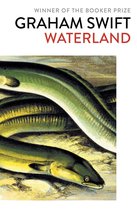
Graham Swift, Waterland
, Waterland lectures
Lecture one:
– Swift’s life and career
– importance of war in Swift’s fiction, esp. WWII
Waterland:
– importance of war
– WWI and shell-shock
– role of WWII
Lecture two:
– war and philosophies of progress
– threat of nuclear war
– style and narrative structure
, Graham Swift
• Born May 1949, South London
• Father decorated for services as
fighter pilot in WWII – rarely
discussed experiences with
children; mother lived through
bombing of London
• Attended Universities of Cambridge
and York, 1967-1973
• Novels: The Sweet Shop Owner
(1980), Shuttlecock (1981),
Waterland (1983), Out of this World
(1988), Ever After (1992), Last
Orders (1996), The Light of Day
(2003), Tomorrow (2007)
, Swift and War
• WWII features in all novels, except The Light of Day
(features Balkans war of early 1990s)
• ‘Growing up in the 1950s, there was all the physical
evidence of war. Whenever we went away on holiday we
would pack stuff in five or six very sturdy brown canvas
bags called parachute bags. I didn’t realise what it
meant. But my father would have put a parachute in this
bag and it might have saved his life. So the second world
war, which I never went through, has been my great
history lesson.’
‘Triumph of the Common Man’, interview with John O’Mahony, Guardian 1 March
2003, available at: <
http://books.guardian.co.uk/departments/generalfiction/story/0,,904963,00.html>.
• For Julian Barnes (b. 1946), Ian McEwan (b. 1948),
Martin Amis (b. 1949), Kazuo Ishiguro (b. 1954), and
Graham Swift (b. 1949), WWII is ‘their fathers’ war’ (A.S.
Byatt, On Histories and Stories [London: Chatto, 2000], p. 12)
Graham Swift, Waterland
, Waterland lectures
Lecture one:
– Swift’s life and career
– importance of war in Swift’s fiction, esp. WWII
Waterland:
– importance of war
– WWI and shell-shock
– role of WWII
Lecture two:
– war and philosophies of progress
– threat of nuclear war
– style and narrative structure
, Graham Swift
• Born May 1949, South London
• Father decorated for services as
fighter pilot in WWII – rarely
discussed experiences with
children; mother lived through
bombing of London
• Attended Universities of Cambridge
and York, 1967-1973
• Novels: The Sweet Shop Owner
(1980), Shuttlecock (1981),
Waterland (1983), Out of this World
(1988), Ever After (1992), Last
Orders (1996), The Light of Day
(2003), Tomorrow (2007)
, Swift and War
• WWII features in all novels, except The Light of Day
(features Balkans war of early 1990s)
• ‘Growing up in the 1950s, there was all the physical
evidence of war. Whenever we went away on holiday we
would pack stuff in five or six very sturdy brown canvas
bags called parachute bags. I didn’t realise what it
meant. But my father would have put a parachute in this
bag and it might have saved his life. So the second world
war, which I never went through, has been my great
history lesson.’
‘Triumph of the Common Man’, interview with John O’Mahony, Guardian 1 March
2003, available at: <
http://books.guardian.co.uk/departments/generalfiction/story/0,,904963,00.html>.
• For Julian Barnes (b. 1946), Ian McEwan (b. 1948),
Martin Amis (b. 1949), Kazuo Ishiguro (b. 1954), and
Graham Swift (b. 1949), WWII is ‘their fathers’ war’ (A.S.
Byatt, On Histories and Stories [London: Chatto, 2000], p. 12)