Morphogens, pattern formation and regeneration in planarians
Planarians
Animal model
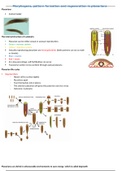
The internal structure of a planaria
Planarian can be either sexual or asexual reproduction.
Green = nervous system
Yellow = digestive system
Sexually reproducing planarians are hermaphrodites (both partners can act as male
or female)
Blue = ovaries
Red = testes
At a low percentage, self-fertilisation can occur.
Transverse section (cross section) through asexual planaria
Planarian life cycles
Regeneration:
- Attach self to surface tightly
- Rip selves apart
- Tear themselves into 2 pieces
- The anterior planarian will grow the posterior and vice versa
- Outcome: 2 planaria
Planarians can shrink in unfavourable environments to save energy, which is called degrowth
, Planarian regeneration under the microscope
Planarian cut into 3 section
The middle section (ph = pharynx)
Blastemal = group of dividing cells capable for growth and regeneration into organs or body parts.
Blastema formation in the anterior area, which will regenerate the head
Blastema formation in the posterior area, which will regenerate the tail.
After 17 days = complete regeneration of planarian
How do the cells now which part to regenerate?
Planarians have stem cells, which are called neoblasts
Neoblasts migrate to the wound and bind there, then differentiate to the type of cells needed to form the rest of the body.
Neoblasts can give rise to all different tissue/cells needed to regenerate planaria
- nervous system tissues
- digestive system tissues
- etc
Planarians
Animal model
The internal structure of a planaria
Planarian can be either sexual or asexual reproduction.
Green = nervous system
Yellow = digestive system
Sexually reproducing planarians are hermaphrodites (both partners can act as male
or female)
Blue = ovaries
Red = testes
At a low percentage, self-fertilisation can occur.
Transverse section (cross section) through asexual planaria
Planarian life cycles
Regeneration:
- Attach self to surface tightly
- Rip selves apart
- Tear themselves into 2 pieces
- The anterior planarian will grow the posterior and vice versa
- Outcome: 2 planaria
Planarians can shrink in unfavourable environments to save energy, which is called degrowth
, Planarian regeneration under the microscope
Planarian cut into 3 section
The middle section (ph = pharynx)
Blastemal = group of dividing cells capable for growth and regeneration into organs or body parts.
Blastema formation in the anterior area, which will regenerate the head
Blastema formation in the posterior area, which will regenerate the tail.
After 17 days = complete regeneration of planarian
How do the cells now which part to regenerate?
Planarians have stem cells, which are called neoblasts
Neoblasts migrate to the wound and bind there, then differentiate to the type of cells needed to form the rest of the body.
Neoblasts can give rise to all different tissue/cells needed to regenerate planaria
- nervous system tissues
- digestive system tissues
- etc