Endocytosis and exocytosis part II
Learning objectives:
1. Outline the biochemistry of the lysosomal enzyme sorting signal
2. Explain how specific proteins enable targeting of transport vesicles to a partilar compartment
3. Describe the overall structure of clathrin coated vesicles at the TGN and during endocytosis
4. Explain the role of dynamin in the formation of clatrin coated vesicles
5. Describe the different steps of the endocytic pathway
COPI vesicles are similar to COPII
• The COPI and COPII protein coat systems function in similar ways
• COPI mediates retrograde signalling, returning receptors and ER proteins to the ER
• the small GTP exchange in COPI is called Arf1
Targeting proteins to a specific cellular destination: sorting at the TGN
, Targeting Lysosomal Enzymes to Lysosomes
• Lysosomal enzymes are modified by two enzymes in the cis Golgi cisternae at their N-linked carbohydrate chains:
- The sorting signals of lysosomal enzymes are phosphorylated mannose residues
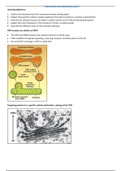
Targeting lysosomal enzymes to lysosomes
2. lysosomal enzymes bound to mannose-6-phosphate receptors (MPRs) and are incorporated into clathein coated
vesicles
3. MPRs bind lysosomal enzymes in the lumen and interact with adaptor proteins in the cytosol
4. Enzymes dissociate from MPR’s and clathrin coat disassembles
5. MPRs returned to the golgi complex
6. Lysosomal enzymes delivered to endosome and
Eventually a lysosome
1. MPRs in the plasma membrane involved in endocytosis of secreted lysosomal enzymes
Learning objectives:
1. Outline the biochemistry of the lysosomal enzyme sorting signal
2. Explain how specific proteins enable targeting of transport vesicles to a partilar compartment
3. Describe the overall structure of clathrin coated vesicles at the TGN and during endocytosis
4. Explain the role of dynamin in the formation of clatrin coated vesicles
5. Describe the different steps of the endocytic pathway
COPI vesicles are similar to COPII
• The COPI and COPII protein coat systems function in similar ways
• COPI mediates retrograde signalling, returning receptors and ER proteins to the ER
• the small GTP exchange in COPI is called Arf1
Targeting proteins to a specific cellular destination: sorting at the TGN
, Targeting Lysosomal Enzymes to Lysosomes
• Lysosomal enzymes are modified by two enzymes in the cis Golgi cisternae at their N-linked carbohydrate chains:
- The sorting signals of lysosomal enzymes are phosphorylated mannose residues
Targeting lysosomal enzymes to lysosomes
2. lysosomal enzymes bound to mannose-6-phosphate receptors (MPRs) and are incorporated into clathein coated
vesicles
3. MPRs bind lysosomal enzymes in the lumen and interact with adaptor proteins in the cytosol
4. Enzymes dissociate from MPR’s and clathrin coat disassembles
5. MPRs returned to the golgi complex
6. Lysosomal enzymes delivered to endosome and
Eventually a lysosome
1. MPRs in the plasma membrane involved in endocytosis of secreted lysosomal enzymes