Amino acids as biosynthetic precursors
Learning objectives:
1. Not that AA are the fundamental building molecules used in constructing many other small molecules in human body
2. Identify the similarities between many of the processes involved in construction of small molecules and others
3. Note some of the rare diseases that result through enzyme dysfunction in some of these processes
LO1. AA ARE THE FUNDERMENTAL BUILDING MOLECULES USED IN CONSTRUCTING MANY OTHER SMALL MOLECULES IN THE
HUMAN BODY
AA are precursors of many biologically important molecules
Examples:
- Heam
- Sphingosine
- GABA
- Histamine
- Dopamine
- Melanin
- Norepinephrine
- Epinephrine
- Thyroxine
- Serotonin
- NAD+ (nicotinamide unit)
- Glutathione
- Pyrimidines
Cytosine
- Purines
Adenine
LO2. IDENTIFY THE SIMILARITIES BETWEEN MANY OF THE PROCESSES INVOLVED IN CONSTUCTION OF THESE SMALL
MOLECULES
Heam
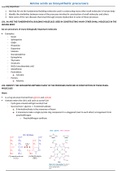
Is a ring structure formed from glycine and acetate
Acetate enters the citric acid cycle as acetyl CoA
- Cycle goes around until get succinyl CoA
- Succinyl-CoA + glycine => δ-Aminolevulinate
δ-Aminolevulinate is the monomer of heam
2 monomers make a single pyrrole ring component in a staggered (next to each other) arrangement form
porphobilinogen
o Porphobilinogen synthase
, The process occurs in 2 compartments in the body:
Process starts in the mitochondria
Moves into the cytosol
Then back into mitochondria
- Where iron is added (lots of energy required)
LO3. NOTE SOME OF THE RAREE DISEASES THAT RESULT THROUGH ENZYMES DYSFUNCTION IN SOME OF THESE PROCESSES
Diseases
The porphyrias
- Most common is porphobiligen deaminase deficiency
- Symptoms include:
Abdominal pain
Neurological dysfunction
Port wine coloured urine
- Erythropoietic porhoria
Limited life expectancy
- Congenital erythropoietic porhoria
Red coloured urine
Teeth fluorescent red
Skin photosensitive
Learning objectives:
1. Not that AA are the fundamental building molecules used in constructing many other small molecules in human body
2. Identify the similarities between many of the processes involved in construction of small molecules and others
3. Note some of the rare diseases that result through enzyme dysfunction in some of these processes
LO1. AA ARE THE FUNDERMENTAL BUILDING MOLECULES USED IN CONSTRUCTING MANY OTHER SMALL MOLECULES IN THE
HUMAN BODY
AA are precursors of many biologically important molecules
Examples:
- Heam
- Sphingosine
- GABA
- Histamine
- Dopamine
- Melanin
- Norepinephrine
- Epinephrine
- Thyroxine
- Serotonin
- NAD+ (nicotinamide unit)
- Glutathione
- Pyrimidines
Cytosine
- Purines
Adenine
LO2. IDENTIFY THE SIMILARITIES BETWEEN MANY OF THE PROCESSES INVOLVED IN CONSTUCTION OF THESE SMALL
MOLECULES
Heam
Is a ring structure formed from glycine and acetate
Acetate enters the citric acid cycle as acetyl CoA
- Cycle goes around until get succinyl CoA
- Succinyl-CoA + glycine => δ-Aminolevulinate
δ-Aminolevulinate is the monomer of heam
2 monomers make a single pyrrole ring component in a staggered (next to each other) arrangement form
porphobilinogen
o Porphobilinogen synthase
, The process occurs in 2 compartments in the body:
Process starts in the mitochondria
Moves into the cytosol
Then back into mitochondria
- Where iron is added (lots of energy required)
LO3. NOTE SOME OF THE RAREE DISEASES THAT RESULT THROUGH ENZYMES DYSFUNCTION IN SOME OF THESE PROCESSES
Diseases
The porphyrias
- Most common is porphobiligen deaminase deficiency
- Symptoms include:
Abdominal pain
Neurological dysfunction
Port wine coloured urine
- Erythropoietic porhoria
Limited life expectancy
- Congenital erythropoietic porhoria
Red coloured urine
Teeth fluorescent red
Skin photosensitive