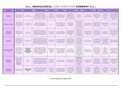
NEUROLOGICAL CORE CONDITIONS SUMMARY
Condition Summary Epidemiology Pathophysiology Prognosis Aetiology Risk Factors S/S Investigations DDs Treatment Complications
Accidents resulting
Seizures are paroxysmal FHx; condition a/w Record duration
Depends on Syncope; cardiac from seizure; status
Transient occurrence manifestations of the electrical Idiopathic: infection, fever epilepsy; previous Aura; seizure; of seizure;
frequency of CT in A&E; MRI if arrhythmias; panic epilepticus; SUDEP;
of symptoms due to People with properties of the cerebral cortex; Symptomatic: tumour, febrile seizures in post-ictal protect patient
Epilepsy abnormal electrical learning disabilities result when sudden imbalance occurs
seizures, cause,
cerebrovascular disease, childhood; previous drowsiness or
seizure continues; attacks; metabolic
from injury;
depression/anxiety;
and response to EEG; ECG; bloods conditions; TIA; school performance
activity in the brain between excitation and inhibition, in genetics, infection intracranial infection; amnesia anticonvulsant
anti-epileptics migraine issues; behaviour
favour of sudden net excitation brain trauma/surgery therapy difficulties
Head pain often
Generalised, ’tight- bilateral, pressure, Chronic migraine;
Release and activation of Muscle contraction is the Mental tension; Simple analgesia;
band’ headache Very common non-throbbing, Clinical diagnosis; medication-overuse; Peptic ulcers
inflammatory agents leading to cause of the pain; most stress; missing antidepressants;
Headache, tension most often affecting Young adults/adults
sensitisation of trigeminal afferents
Good
commonly triggered by meals; fatigue;
frontal/occipital exclusions with (CT sphenoid sinusitis;
CBT; muscle
secondary to NSAID
frontal and occipital M≤F areas; normal sinus, MRI brain, LP) giant cell arteritis; use
and hypersensitivity psychological stress young adult relaxants
regions neurological exam; TMJ pain; tumour
neck tenderness
Headache; neck
Shock; elevated ICP;
Bacteria reach the CNS by direct Extremes of age; not stiffness; fever; Encephalitis; viral
Inflammation of the LP; blood cultures; cognitive, academic
extension form a contiguous site or Often good with Strep. pneumoniae; immunised; cancer; altered mental meningitis; drug- Empirical Abx;
Meningitis meninges, usually Bimodal at haematogenous spread; bacteria prompt Abx Neisseria meningitidis; pathogen exposure; state; seizures; FBC; CRP; U&Es; induced meningitis; targeted Abx; and behavioural
(bacterial) caused by bacterial extremes of age coagulation profile; problems; seizures;
multiply quickly in the sub-arachnoid administration Haemophilus influenzae immunodeficiency; photophobia; rash; TB meningitis; Dexamethasone
infection CT head; PCR hearing loss; brain
space and induce inflammation no spleen Kernig’s sign; fungal meningitis
abscess
Brudzinski’s sign
Headache that
Neurological disorder, Trigeminal inflammation causes a FHx; caffeine; Rescue therapy;
worsens with Other headache;
characterised by change in the way pain is processed Brain is hyper-excitable exposure to change corticosteroids;
Frequency activity; nausea; SAH; CVA; CNS Status migrainous;
nausea, photophobia Young white adults by the brain; dilator release causes to a variety of stimuli; in pressure; obesity; Clinical diagnosis; NSAIDs/aspirin;
Migraine and headache, M<F leakage of proteins into surrounding
decreases with
neuronal depolarisation is stressful life events;
decreased ability
ESR; LP; CT head
infection; neoplasm;
anti-emetics;
migraine-triggered
age to function; aura; temporal arteritis; seizures; depression
typically preceded by tissue, sensitising nerves so that once the initiating event medication overuse; Paracetamol;
photophobia; arterial dissection
aura ignored stimuli are interpreted as pain lack of sleep trigger avoidance
phonophobia
Greying in one
eye; eye pain; loss
Inflammatory Most common T cells seek access to the CNS, Fibromyalgia; Methyl-
of colour vision; UTIs; osteoporosis;
demyelinating CNS cause of breaching the BBB and causing an Some have slow Genetic (HLA genes) and SLE; vitamin B12- prednisolone;
Young adult; wetness/burning depression; visual
Multiple sclerosis disease, defined by neurological influx of inflammatory cells that progression, environmental (toxin, MRI brain/spinal deficiency; Guillain- immuno-
genetics; smoking; sensation; hemi- impairment; erectile
dysfunction in at disability among contribute to demyelination; this while others virus (e.g. EBV)) factors; cord; FBC; U&Es; Barre syndrome; modulators;
(MS) vitamin D-deficiency; body sensory dysfunction;
least two areas of the young adults destabilises membrane potentials, deteriorate relapses sometimes TSH; vitamin B12 ischaemic stroke; PT; lifestyle
autoimmune disease deficit; urinary cognitive impairment;
CNS, separated in resulting in multifactorial areas of rapidly triggered by infection ALS; peripheral modification;
M<F frequency; bowel impaired mobility
time and space demyelination neuropathy anticonvulsants
dysfunction; foot
dragging
Bradykinesia;
Chronic, progressive Loss of dopaminergic neurones in the resting tremor; LBD; AD with MAO-B inhibitor;
neurological disorder Levodopa-induced
substantia nigra pars compacta No cure, and rigidity; postural Parkinsonisms; Amantadine;
Parkinson’s characterised by Age; FHx; chronic Dopaminergic agent dyskinesia; motor
Adults (SNc); motor symptoms occur from degenerative; Genetic mutations; instability; masked normal pressure physical activity;
resting tremor, exposure to metals; trial; MRI brain if fluctuations;
disease M≥F loss of striatal dopaminergic output symptoms environmental factors facies; shuffling hydrocephalus; Carbidopa;
rigidity, postural head trauma atypical features dementia; psychosis;
within the basal ganglia; bradykinesia become bilateral gait; hypophonia; hereditary disorders Levodopa; deep
instability and depression
occurs from dopamine-deficiency depression; (e.g. Huntington’s) brain stimulation
bradykinesia
dementia
Asymptomatic; Uraemia;
Poorly controlled Glycaemic
Protein glycation, increased oxidative A/w poor QoL; pain; reduced or Clinical diagnosis; hypothyroidism; Foot wounds/ulcers;
Most common Hyperglycaemia (causes DM; prolonged control; lifestyle
stress, and hypoxia/ischaemia of improvement of absent reflexes; fasting blood acute intermittent wound infection;
Peripheral Pathological changes complication of nerve trunks/ganglia; these factors blood glucose microvascular event); duration of DM; age; painless injuries; glucose; HbA1c; porphyria; heavy advise; feet care; gangrene; silent MI;
neuropathy to peripheral nerves DM HTN and hyperlipidaemia CVD; obesity; HTN; Pregabalin and
impair mitochondrial function and may slow tachycardia; TSH; vitamin B12; metal poisoning; amputation;
accelerates the effects smoking; hyper- Gabapentin;
mediate nerve injury progression urinary symptoms; lipid profile Guillain-Barre; depression
lipidaemia analgesia
erectile problems Myasthenia gravis
www.medicsummaries.com
Condition Summary Epidemiology Pathophysiology Prognosis Aetiology Risk Factors S/S Investigations DDs Treatment Complications
Accidents resulting
Seizures are paroxysmal FHx; condition a/w Record duration
Depends on Syncope; cardiac from seizure; status
Transient occurrence manifestations of the electrical Idiopathic: infection, fever epilepsy; previous Aura; seizure; of seizure;
frequency of CT in A&E; MRI if arrhythmias; panic epilepticus; SUDEP;
of symptoms due to People with properties of the cerebral cortex; Symptomatic: tumour, febrile seizures in post-ictal protect patient
Epilepsy abnormal electrical learning disabilities result when sudden imbalance occurs
seizures, cause,
cerebrovascular disease, childhood; previous drowsiness or
seizure continues; attacks; metabolic
from injury;
depression/anxiety;
and response to EEG; ECG; bloods conditions; TIA; school performance
activity in the brain between excitation and inhibition, in genetics, infection intracranial infection; amnesia anticonvulsant
anti-epileptics migraine issues; behaviour
favour of sudden net excitation brain trauma/surgery therapy difficulties
Head pain often
Generalised, ’tight- bilateral, pressure, Chronic migraine;
Release and activation of Muscle contraction is the Mental tension; Simple analgesia;
band’ headache Very common non-throbbing, Clinical diagnosis; medication-overuse; Peptic ulcers
inflammatory agents leading to cause of the pain; most stress; missing antidepressants;
Headache, tension most often affecting Young adults/adults
sensitisation of trigeminal afferents
Good
commonly triggered by meals; fatigue;
frontal/occipital exclusions with (CT sphenoid sinusitis;
CBT; muscle
secondary to NSAID
frontal and occipital M≤F areas; normal sinus, MRI brain, LP) giant cell arteritis; use
and hypersensitivity psychological stress young adult relaxants
regions neurological exam; TMJ pain; tumour
neck tenderness
Headache; neck
Shock; elevated ICP;
Bacteria reach the CNS by direct Extremes of age; not stiffness; fever; Encephalitis; viral
Inflammation of the LP; blood cultures; cognitive, academic
extension form a contiguous site or Often good with Strep. pneumoniae; immunised; cancer; altered mental meningitis; drug- Empirical Abx;
Meningitis meninges, usually Bimodal at haematogenous spread; bacteria prompt Abx Neisseria meningitidis; pathogen exposure; state; seizures; FBC; CRP; U&Es; induced meningitis; targeted Abx; and behavioural
(bacterial) caused by bacterial extremes of age coagulation profile; problems; seizures;
multiply quickly in the sub-arachnoid administration Haemophilus influenzae immunodeficiency; photophobia; rash; TB meningitis; Dexamethasone
infection CT head; PCR hearing loss; brain
space and induce inflammation no spleen Kernig’s sign; fungal meningitis
abscess
Brudzinski’s sign
Headache that
Neurological disorder, Trigeminal inflammation causes a FHx; caffeine; Rescue therapy;
worsens with Other headache;
characterised by change in the way pain is processed Brain is hyper-excitable exposure to change corticosteroids;
Frequency activity; nausea; SAH; CVA; CNS Status migrainous;
nausea, photophobia Young white adults by the brain; dilator release causes to a variety of stimuli; in pressure; obesity; Clinical diagnosis; NSAIDs/aspirin;
Migraine and headache, M<F leakage of proteins into surrounding
decreases with
neuronal depolarisation is stressful life events;
decreased ability
ESR; LP; CT head
infection; neoplasm;
anti-emetics;
migraine-triggered
age to function; aura; temporal arteritis; seizures; depression
typically preceded by tissue, sensitising nerves so that once the initiating event medication overuse; Paracetamol;
photophobia; arterial dissection
aura ignored stimuli are interpreted as pain lack of sleep trigger avoidance
phonophobia
Greying in one
eye; eye pain; loss
Inflammatory Most common T cells seek access to the CNS, Fibromyalgia; Methyl-
of colour vision; UTIs; osteoporosis;
demyelinating CNS cause of breaching the BBB and causing an Some have slow Genetic (HLA genes) and SLE; vitamin B12- prednisolone;
Young adult; wetness/burning depression; visual
Multiple sclerosis disease, defined by neurological influx of inflammatory cells that progression, environmental (toxin, MRI brain/spinal deficiency; Guillain- immuno-
genetics; smoking; sensation; hemi- impairment; erectile
dysfunction in at disability among contribute to demyelination; this while others virus (e.g. EBV)) factors; cord; FBC; U&Es; Barre syndrome; modulators;
(MS) vitamin D-deficiency; body sensory dysfunction;
least two areas of the young adults destabilises membrane potentials, deteriorate relapses sometimes TSH; vitamin B12 ischaemic stroke; PT; lifestyle
autoimmune disease deficit; urinary cognitive impairment;
CNS, separated in resulting in multifactorial areas of rapidly triggered by infection ALS; peripheral modification;
M<F frequency; bowel impaired mobility
time and space demyelination neuropathy anticonvulsants
dysfunction; foot
dragging
Bradykinesia;
Chronic, progressive Loss of dopaminergic neurones in the resting tremor; LBD; AD with MAO-B inhibitor;
neurological disorder Levodopa-induced
substantia nigra pars compacta No cure, and rigidity; postural Parkinsonisms; Amantadine;
Parkinson’s characterised by Age; FHx; chronic Dopaminergic agent dyskinesia; motor
Adults (SNc); motor symptoms occur from degenerative; Genetic mutations; instability; masked normal pressure physical activity;
resting tremor, exposure to metals; trial; MRI brain if fluctuations;
disease M≥F loss of striatal dopaminergic output symptoms environmental factors facies; shuffling hydrocephalus; Carbidopa;
rigidity, postural head trauma atypical features dementia; psychosis;
within the basal ganglia; bradykinesia become bilateral gait; hypophonia; hereditary disorders Levodopa; deep
instability and depression
occurs from dopamine-deficiency depression; (e.g. Huntington’s) brain stimulation
bradykinesia
dementia
Asymptomatic; Uraemia;
Poorly controlled Glycaemic
Protein glycation, increased oxidative A/w poor QoL; pain; reduced or Clinical diagnosis; hypothyroidism; Foot wounds/ulcers;
Most common Hyperglycaemia (causes DM; prolonged control; lifestyle
stress, and hypoxia/ischaemia of improvement of absent reflexes; fasting blood acute intermittent wound infection;
Peripheral Pathological changes complication of nerve trunks/ganglia; these factors blood glucose microvascular event); duration of DM; age; painless injuries; glucose; HbA1c; porphyria; heavy advise; feet care; gangrene; silent MI;
neuropathy to peripheral nerves DM HTN and hyperlipidaemia CVD; obesity; HTN; Pregabalin and
impair mitochondrial function and may slow tachycardia; TSH; vitamin B12; metal poisoning; amputation;
accelerates the effects smoking; hyper- Gabapentin;
mediate nerve injury progression urinary symptoms; lipid profile Guillain-Barre; depression
lipidaemia analgesia
erectile problems Myasthenia gravis
www.medicsummaries.com