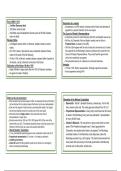
End of WW1, 1918 Declaration of a republic
2 million Germans dead Scheidemann, an SPD member, declares that the Kaiser had abdicated &
150 billion marks of debt appeals for a peaceful transition to the new regime.
The British navy blockaded the German ports & 750,000 civillians The Council of People’s Representatives
starve to death. A temporary council to control Germany while the new Republic was set up.
Workers Strike 9th Nov, the Chancellor, Max von Baden, handed over his office to
In Stuttgard workers strike. In Hanover, soldiers refuse to control Friedrich Ebert, the leader of the SPD.
rioters. 10th Nov, Ebert agrees with the army to keep the communists out of power.
Oct 1918; crews in the German navy mutinied & refused to follow He suspends the old Reichstag & names 6 politicians who would form the
orders in the ports of Kiel & Hamburg. Council of People’s Representatives. They would head the government
7th Nov 1918; in Munich, workers declare a general strike & protest in until a new constitution was agreed.
the streets. Led by a German communist, Kurt Eisner. This prevented anarchy or a takeover by communist extremes.
Armistice
Abdication of the Kaiser, 9th Nov 1918
11th Nov 1918, Ebert’s representative, Erzberger signed the armistice.
Kaiser Wilhelm II steps down after the 1918-19 German revolution.
Formal agreement ending WW1
He goes into exile in Holland.
Setting up the new government
Strengths of the Weimar Constitution
Ebert ensured civil servants stayed in office, he reassured the army that they’d
not be reformed, & the industry leaders that there’d not be any nationalisation. Democratic - Article 1 declared Germany a democracy. For the first
Ebert won the support of trade unions by promising their leader, Carl Legien, time, women could vote. The voting age was reduced from 25 to 21.
that the new Republic would try to achieve an 8 hour work week. Proportional Representation - Every party could have their fair share
Ebert had achieved fragile control - there were still some riots & of seats in the Reichstag. Every party was allocated 1 representative
demonstrations in major cities.
for every 60,000 votes.
Elections were held on 19th Jan 1919. SPD gained 40% of the votes & the
Centre Party won 20%. The National assembly (those voted into power) met in Checks & Balances - No one person or group could have too much
Weimar for the first time (as it was more peaceful than Berlin). power (The President (changed every 7 years) appointed the
Weimar Republic / Constitution Chancellor, who decided which laws to be passed. The Reichstag
31 July, the National assembly agreed a new constitution by 262 votes to 75. controlled taxation, & the Reichsrat could delay laws unless the
Proportional representation (% of votes = % of seats in parliment)
Reichstag overuled it by a 2/3 majority. The Central Government had
Coalition government
Article 48 meant that the president could rule by decree in an emergency more power than previously, & the local governments controlled key
without consulting the Reichstag services such as the police, schools etc.)
, Treaty of Versailles, 28th Jun 1919
Weaknesses of the Weimar Constitution
Decided the terms of the peace
Coalition Government - proportional representatiion meant that no .
single party had a clear majority. The coalitions often argued & fell Land - lost 13% of its European territory, all of its colonies (in Africa & Far
apart. East), & 50% of its iron reserves & 15% of its coal reserves.
Army - reduced to 100,000 men, with no heavy artillery. Most of their naval fleet
Weakness in a crisis - The coalition government meant that a swift & the entire air force was destroyed.
decision couldn’t be made. To solve this, they made Article 48, where Money - reparations, £6.6 billion.
the President could rule by decree in an emergency. By 1930, the Blame - Article 231 - had to accept full blame for starting the war.
Chancellor regularly relied on the President to pass laws, which made
Diktat - dictated peace - The Germans had been excluded from the
the constitution seem weak. negotiations. The terms were imposed not agreed.The Germans hated this &
Based on division & violence - During the German Revolution, the asked for concessions, but were refused.
government relied on the army to subdue riots. The Nationalists & Dolchstoss - the stab in the back - German people didn’t believe Germany had
lost the war. They blamed the politicians who had signed the armistice - who
Communists were opposed to democracy & actively despised the new
were named the November Criminals. From the start, the Weimar Republic
constitution. The Weimar Republic was created out of violence. was associated with humiliation & weakness.
Challenges to the Weimar Republic (3/4)
Challenges to the Weimar Republic (2/4)
Extremist parties Kapp Putsch 1920
Extreme right-wing groups wanted a return of the strong government & army, Right Wing, led by Wolfgang Kapp.
headed by a powerful leader. They wanted traditionalism, law & order, & Provoked by the Freikorps units being due to be disbanded. Friekorps
placed their interests in the nation over the individual. fearing unemployment.
Exreme left-wing groups wanted to abolish private ownership, & Germany to
Aim to set up a right wing government.
be controlled by the people.
Spartacist Revolt 6th Jan 1919 5,000 marched on Berlin, declared a new government & invited the
Left Wing, led by Rosa Luxemburg & Karl Leibknecht. Kaiser back. The army refused to help Weimar Republic, *”Reichswehr
Provoked by the sacking of the police chief in Berlin, who was loved by the does not fire upon Reichswehr”, so government flees.
workers. Government asks unions to make workers strike, they do & cause
6 Jan - 100,000 workers protest. Managed to take over government
chaos - gas, electricity, water, transport - capital grounds to a halt, so
newspapers.
13 Jan - Goverment sent Freikorps to stop it. They were mostly right wing. putsch fails.
16 Jan - Luxemburg / Leibknecht are killed by Freikorp officers. After 4 days, Kapp realises he can’t govern, so flees but is caught &
dies in prison. The rebellion collapses.
2 million Germans dead Scheidemann, an SPD member, declares that the Kaiser had abdicated &
150 billion marks of debt appeals for a peaceful transition to the new regime.
The British navy blockaded the German ports & 750,000 civillians The Council of People’s Representatives
starve to death. A temporary council to control Germany while the new Republic was set up.
Workers Strike 9th Nov, the Chancellor, Max von Baden, handed over his office to
In Stuttgard workers strike. In Hanover, soldiers refuse to control Friedrich Ebert, the leader of the SPD.
rioters. 10th Nov, Ebert agrees with the army to keep the communists out of power.
Oct 1918; crews in the German navy mutinied & refused to follow He suspends the old Reichstag & names 6 politicians who would form the
orders in the ports of Kiel & Hamburg. Council of People’s Representatives. They would head the government
7th Nov 1918; in Munich, workers declare a general strike & protest in until a new constitution was agreed.
the streets. Led by a German communist, Kurt Eisner. This prevented anarchy or a takeover by communist extremes.
Armistice
Abdication of the Kaiser, 9th Nov 1918
11th Nov 1918, Ebert’s representative, Erzberger signed the armistice.
Kaiser Wilhelm II steps down after the 1918-19 German revolution.
Formal agreement ending WW1
He goes into exile in Holland.
Setting up the new government
Strengths of the Weimar Constitution
Ebert ensured civil servants stayed in office, he reassured the army that they’d
not be reformed, & the industry leaders that there’d not be any nationalisation. Democratic - Article 1 declared Germany a democracy. For the first
Ebert won the support of trade unions by promising their leader, Carl Legien, time, women could vote. The voting age was reduced from 25 to 21.
that the new Republic would try to achieve an 8 hour work week. Proportional Representation - Every party could have their fair share
Ebert had achieved fragile control - there were still some riots & of seats in the Reichstag. Every party was allocated 1 representative
demonstrations in major cities.
for every 60,000 votes.
Elections were held on 19th Jan 1919. SPD gained 40% of the votes & the
Centre Party won 20%. The National assembly (those voted into power) met in Checks & Balances - No one person or group could have too much
Weimar for the first time (as it was more peaceful than Berlin). power (The President (changed every 7 years) appointed the
Weimar Republic / Constitution Chancellor, who decided which laws to be passed. The Reichstag
31 July, the National assembly agreed a new constitution by 262 votes to 75. controlled taxation, & the Reichsrat could delay laws unless the
Proportional representation (% of votes = % of seats in parliment)
Reichstag overuled it by a 2/3 majority. The Central Government had
Coalition government
Article 48 meant that the president could rule by decree in an emergency more power than previously, & the local governments controlled key
without consulting the Reichstag services such as the police, schools etc.)
, Treaty of Versailles, 28th Jun 1919
Weaknesses of the Weimar Constitution
Decided the terms of the peace
Coalition Government - proportional representatiion meant that no .
single party had a clear majority. The coalitions often argued & fell Land - lost 13% of its European territory, all of its colonies (in Africa & Far
apart. East), & 50% of its iron reserves & 15% of its coal reserves.
Army - reduced to 100,000 men, with no heavy artillery. Most of their naval fleet
Weakness in a crisis - The coalition government meant that a swift & the entire air force was destroyed.
decision couldn’t be made. To solve this, they made Article 48, where Money - reparations, £6.6 billion.
the President could rule by decree in an emergency. By 1930, the Blame - Article 231 - had to accept full blame for starting the war.
Chancellor regularly relied on the President to pass laws, which made
Diktat - dictated peace - The Germans had been excluded from the
the constitution seem weak. negotiations. The terms were imposed not agreed.The Germans hated this &
Based on division & violence - During the German Revolution, the asked for concessions, but were refused.
government relied on the army to subdue riots. The Nationalists & Dolchstoss - the stab in the back - German people didn’t believe Germany had
lost the war. They blamed the politicians who had signed the armistice - who
Communists were opposed to democracy & actively despised the new
were named the November Criminals. From the start, the Weimar Republic
constitution. The Weimar Republic was created out of violence. was associated with humiliation & weakness.
Challenges to the Weimar Republic (3/4)
Challenges to the Weimar Republic (2/4)
Extremist parties Kapp Putsch 1920
Extreme right-wing groups wanted a return of the strong government & army, Right Wing, led by Wolfgang Kapp.
headed by a powerful leader. They wanted traditionalism, law & order, & Provoked by the Freikorps units being due to be disbanded. Friekorps
placed their interests in the nation over the individual. fearing unemployment.
Exreme left-wing groups wanted to abolish private ownership, & Germany to
Aim to set up a right wing government.
be controlled by the people.
Spartacist Revolt 6th Jan 1919 5,000 marched on Berlin, declared a new government & invited the
Left Wing, led by Rosa Luxemburg & Karl Leibknecht. Kaiser back. The army refused to help Weimar Republic, *”Reichswehr
Provoked by the sacking of the police chief in Berlin, who was loved by the does not fire upon Reichswehr”, so government flees.
workers. Government asks unions to make workers strike, they do & cause
6 Jan - 100,000 workers protest. Managed to take over government
chaos - gas, electricity, water, transport - capital grounds to a halt, so
newspapers.
13 Jan - Goverment sent Freikorps to stop it. They were mostly right wing. putsch fails.
16 Jan - Luxemburg / Leibknecht are killed by Freikorp officers. After 4 days, Kapp realises he can’t govern, so flees but is caught &
dies in prison. The rebellion collapses.