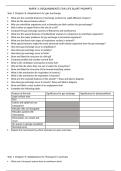
PAPER 3: REQUIREMENTS FOR LIFE BLURT PROMPTS
Year 1 Chapter 8: Adaptations for gas exchange
What are the essential features of exchange surfaces for rapid diffusion of gases?
What do the above features allow?
Why can unicellular organisms such as Amoeba use their surface for gas exchange?
Why is there an upper limit to the size of a cell?
Compare the gas exchange systems of flatworms and earthworms
What are the special features of multicellular animals in comparison to unicellular organisms?
What are the major problems for gas exchange in terrestrial organisms?
What are the three main types of respiratory surface in animals?
What special features might the most advanced multi-cellular organisms have for gas exchange?
How does gas exchange occur in amphibians?
How does gas exchange occur in reptiles?
How does gas exchange occur in birds?
Draw and label the structure of a fish gill
Compare parallel and counter-current flow
What is the ventilation mechanism in bony fish?
Why do fish die when they are out of water for a long time?
Draw and label the structure of the human breathing system
What is the mechanism for inspiration in humans?
What is the mechanism for expiration in humans?
What are the essential features of the alveoli? + Draw and label a diagram
How does gas exchange occur in insects? Draw and label a diagram
Draw and label a cross section of an angiosperm leaf
Complete the following table:
Feature of the leaf Significance for gas exchange Significance for photosynthesis
Large surface area
Thin
Cuticle and epidermis are
transparent
Palisade cells are elongated
Palisades packed with
chloroplasts
Chloroplasts can rotate and
move
Air spaces in spongy mesophyll
Stomatal pores
Explain the mechanism by which stomata can open and close
Year 1 Chapter 9: Adaptations for Transport in animals
What sort of transport system does an earthworm have?
, What sort of transport system does an insect have?
What sort of transport system does a fish have?
What sort of transport system does a mammal have?
Explain why multicellular animals need transport mechanisms
Draw and label a diagram of the heart
Explain the significance of and the difference between open and closed circulatory systems and single and double
circulations
Explain the relationship between the structure and the function of arteries, veins and capillaries
Interpret graphs showing the cardiac cycle (annotate the following graph)
Explain the electrical control of the heartbeat
Draw and annotate a standard ECG
Describe the structure and adaptations of red blood cells
Describe what plasma is and its function
Draw and label a standard oxygen dissociation curve, then label the dissociation curves of some animals adapted
to low oxygen level habitats such as llama and lugworm
Explain the Bohr effect and chloride shift
Draw the diagram of the cell that explains how carbon dioxide is transported
In what three ways is carbon dioxide transported?
What is the difference between plasma, tissue fluid and lymph?
How does tissue fluid form and what is its importance?
Year 1 Chapter 10: Adaptations for transport in plants
Draw a diagram to show the structure of a dicotyledon root
Explain the structure of the xylem + draw a labelled diagram
Explain the movement of water through the root
Explain the structure and the role of the endodermis
Explain the movement of water from the root to the leaf by two different theories
Explain the effect of different environmental factors affecting transpiration
Explain the adaptations shown by hydrophytes
Explain the adaptations shown by xerophytes
Explain the structure of the phloem + draw a labelled diagram
Explain how translocation occurs
Draw and label a diagram to help explain the mass flow model
Year 1 Chapter 11: Adaptations for Nutrition
Define autotrophic and the different subtypes of autotrophs (2 types)
Define heterotrophic and the subtypes of heterotrophs (3 types)
Explain nutrition in unicellular organisms such as the Amoeba
Year 1 Chapter 8: Adaptations for gas exchange
What are the essential features of exchange surfaces for rapid diffusion of gases?
What do the above features allow?
Why can unicellular organisms such as Amoeba use their surface for gas exchange?
Why is there an upper limit to the size of a cell?
Compare the gas exchange systems of flatworms and earthworms
What are the special features of multicellular animals in comparison to unicellular organisms?
What are the major problems for gas exchange in terrestrial organisms?
What are the three main types of respiratory surface in animals?
What special features might the most advanced multi-cellular organisms have for gas exchange?
How does gas exchange occur in amphibians?
How does gas exchange occur in reptiles?
How does gas exchange occur in birds?
Draw and label the structure of a fish gill
Compare parallel and counter-current flow
What is the ventilation mechanism in bony fish?
Why do fish die when they are out of water for a long time?
Draw and label the structure of the human breathing system
What is the mechanism for inspiration in humans?
What is the mechanism for expiration in humans?
What are the essential features of the alveoli? + Draw and label a diagram
How does gas exchange occur in insects? Draw and label a diagram
Draw and label a cross section of an angiosperm leaf
Complete the following table:
Feature of the leaf Significance for gas exchange Significance for photosynthesis
Large surface area
Thin
Cuticle and epidermis are
transparent
Palisade cells are elongated
Palisades packed with
chloroplasts
Chloroplasts can rotate and
move
Air spaces in spongy mesophyll
Stomatal pores
Explain the mechanism by which stomata can open and close
Year 1 Chapter 9: Adaptations for Transport in animals
What sort of transport system does an earthworm have?
, What sort of transport system does an insect have?
What sort of transport system does a fish have?
What sort of transport system does a mammal have?
Explain why multicellular animals need transport mechanisms
Draw and label a diagram of the heart
Explain the significance of and the difference between open and closed circulatory systems and single and double
circulations
Explain the relationship between the structure and the function of arteries, veins and capillaries
Interpret graphs showing the cardiac cycle (annotate the following graph)
Explain the electrical control of the heartbeat
Draw and annotate a standard ECG
Describe the structure and adaptations of red blood cells
Describe what plasma is and its function
Draw and label a standard oxygen dissociation curve, then label the dissociation curves of some animals adapted
to low oxygen level habitats such as llama and lugworm
Explain the Bohr effect and chloride shift
Draw the diagram of the cell that explains how carbon dioxide is transported
In what three ways is carbon dioxide transported?
What is the difference between plasma, tissue fluid and lymph?
How does tissue fluid form and what is its importance?
Year 1 Chapter 10: Adaptations for transport in plants
Draw a diagram to show the structure of a dicotyledon root
Explain the structure of the xylem + draw a labelled diagram
Explain the movement of water through the root
Explain the structure and the role of the endodermis
Explain the movement of water from the root to the leaf by two different theories
Explain the effect of different environmental factors affecting transpiration
Explain the adaptations shown by hydrophytes
Explain the adaptations shown by xerophytes
Explain the structure of the phloem + draw a labelled diagram
Explain how translocation occurs
Draw and label a diagram to help explain the mass flow model
Year 1 Chapter 11: Adaptations for Nutrition
Define autotrophic and the different subtypes of autotrophs (2 types)
Define heterotrophic and the subtypes of heterotrophs (3 types)
Explain nutrition in unicellular organisms such as the Amoeba