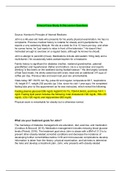
Clinical Case Study & Discussion Questions
Source: Harrison's Principle of Internal Medicine
John is a 46-year-old male who presents for his yearly physical examination. He has no
complaints. Previous medical history is notable for obesity and hyperlipidemia. He
reports a very sedentary lifestyle. He sits at a desk for 8 to 10 hours per day, and when
he comes home, he "just wants to relax in front of the television." He doesn't feel
motivated enough to exercise on a regular basis, although he knows he should.
John is allergic to penicillin (hives). Medications include atorvastatin 10mg daily and a
multivitamin. He occasionally takes acetaminophen for a headache.
Family history is significant for diabetes (mother, maternal grandmother, paternal
grandfather) and hypertension (father and brother). He is a nonsmoker and reports
drinking "a few beers on the weekend during football season." His diet largely consists
of fast food meals. He drinks sweet tea with every meal and an additional 3-4 cups of
coffee per day. Previous labs and exam last year are unremarkable.
Vitals today: BP 130/70 mm Hg, pulse 82 and regular, temperature 98.7, respirations
18, height 6'1", weight 235 pounds (up 3 lbs. since his visit 1 year ago). He completed
fasting labs prior to this appointment as he was instructed, which reveal the following:
Fasting plasma glucose=209 mg/dl, HgbA1C=9.1%, TSH=4.0mU/L and Free T4=1.1
ng/dl. Fasting lipid panel includes the following: total cholesterol=190 mg/dL, HDL=35
mg/dL, LDL=120 mg/dL and triglycerides=260 mg/dL.
Physical exam is remarkable for obesity but is otherwise normal.
What are your treatment goals for John?
The mainstays of diabetes management are education, diet, exercise, and medication
(Cordisco & Broccoli, 2015). Medication management includes reducing blood glucose
levels (Pickett, 2016). The treatment goal since John is obese with a BMI of 31.0 is to
prevent other obesity-related comorbid conditions and decrease the incidence of
developing further comorbidities before CVD and microvascular complications develop.
Information is taken from the history, physical examination, and lab tests to determine
the risks and develop a treatment plan. John, who presents with obesity-related
Source: Harrison's Principle of Internal Medicine
John is a 46-year-old male who presents for his yearly physical examination. He has no
complaints. Previous medical history is notable for obesity and hyperlipidemia. He
reports a very sedentary lifestyle. He sits at a desk for 8 to 10 hours per day, and when
he comes home, he "just wants to relax in front of the television." He doesn't feel
motivated enough to exercise on a regular basis, although he knows he should.
John is allergic to penicillin (hives). Medications include atorvastatin 10mg daily and a
multivitamin. He occasionally takes acetaminophen for a headache.
Family history is significant for diabetes (mother, maternal grandmother, paternal
grandfather) and hypertension (father and brother). He is a nonsmoker and reports
drinking "a few beers on the weekend during football season." His diet largely consists
of fast food meals. He drinks sweet tea with every meal and an additional 3-4 cups of
coffee per day. Previous labs and exam last year are unremarkable.
Vitals today: BP 130/70 mm Hg, pulse 82 and regular, temperature 98.7, respirations
18, height 6'1", weight 235 pounds (up 3 lbs. since his visit 1 year ago). He completed
fasting labs prior to this appointment as he was instructed, which reveal the following:
Fasting plasma glucose=209 mg/dl, HgbA1C=9.1%, TSH=4.0mU/L and Free T4=1.1
ng/dl. Fasting lipid panel includes the following: total cholesterol=190 mg/dL, HDL=35
mg/dL, LDL=120 mg/dL and triglycerides=260 mg/dL.
Physical exam is remarkable for obesity but is otherwise normal.
What are your treatment goals for John?
The mainstays of diabetes management are education, diet, exercise, and medication
(Cordisco & Broccoli, 2015). Medication management includes reducing blood glucose
levels (Pickett, 2016). The treatment goal since John is obese with a BMI of 31.0 is to
prevent other obesity-related comorbid conditions and decrease the incidence of
developing further comorbidities before CVD and microvascular complications develop.
Information is taken from the history, physical examination, and lab tests to determine
the risks and develop a treatment plan. John, who presents with obesity-related