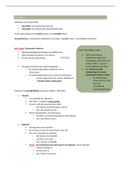
NU 160 Exam 2 Content Enrichment Items
1. Defense mechanisms (definition of each and examples) P. 206 Table 18.2
Compensation: attempt to overcome feelings of inferiority or make up for deficiency. EX: A
girl who thinks she cannot sing studies to become an expert pianist
Conversion: channeling of unbearable anxieties into body signs and symptoms. EX: a boy who
injured a animal by kicking it develops a painful limp.
Denial: refusal to acknowledge conflict and the escaping reality of a situation. EX: A child
covered with chocolate refuses to admit eating candy
Displacement: redirecting of energies to another person or object. EX: a husband shouts at his
wife than berates her child; the child than scolds the dog.
Dissociation: separation of emotions from situation; removal of painful anxieties from conscious
awareness. EX: A teen casually describes the auto accident in which he lost his legs.
Fantasy: Distortion of unacceptable wishes, behaviors. EX: a teenager doing poorly in school
daydreams about owning a private jet.
Identification: taking on personal characteristics of admired person to conceal own feelings of
inadequacy. EX: adolescents dress and behave like members of a popular singing group.
Intellectualization: focusing of attention on technical or logical aspects of threatening situation.
EX: a wife describes the details of the nurses unsuccessful attempts to prevent the death of her
husband.
Isolation: separation of anxious feelings from content to cope unemotionally with topics that
would normally be overwhelming. EX: a soldier humorously describes how he was seriously
wounded in combat.
Projection: putting of ones own unacceptable thoughts, wishes, or emotions onto others. EX: A
woman is afraid to leave her house because she knows people will ridicule her.
Rationalization: Use of “hood” reason to explain behavior to make unacceptable behavior more
acceptable. EX: A student justifies failing an examination by saying that there was too much
material to cover.
2. PTSD and clinical manifestations P. 214
PTSD- defined as pathological anxiety. They have been exposed to traumatic events that
were outside the realm of normal life expectations.
Signs and Symptoms- intense fear, horror, or helplessness that was associated with precipitating
events and the repeated reliving of the traumatic events or situations. They become emotionally
numb, extremely alert, guarded, and easily startled. Eating and sleeping disturbances are
common. Emotional distress can trigger flashbacks, vivid recollections of the event. They isolate
, themselves from society. Suicide rates are higher with PTSD. Children with PTSD express
themselves through disorganized or agitated behaviors.
3. Why are defense mechanisms used? P 206
They help to lessen anxious feelings, reduce, or avoid negative states such as conflict, frustration,
anxiety, and stress. They are used when one feels threatened. They help avoid emotional states,
but usually individuals are not consciously aware of using them.
4. Generalized anxiety disorder and those at-risk P 210
Diagnosed when an individual's anxiety is broad, long lasting, and excessive. It is a disturbance
in the emotional area of functioning, but eventually it affects every other aspect of ones world.
At risk- People with irritable bowel syndrome, headaches, sleep disturbances, and substance
abuse
5. Treatment for anxiety disorder P 214
The best way to cope is to prevent it. Learn to recognize signs and symptoms of anxiety in
yourself and others. Include an anxiety assessment for every client. Be extra alert for signs of
anxiety in children and talk with them about their concerns.
Cognitive behavioral therapy- helps individuals understand ineffective behaviors they use to
cope with anxiety and replace them with more successful behaviors.
6. Levels of anxiety P 205 Table 18.1 Look at the table.
7. Reasons for not taking benzodiazepines for long term use P. 69
There is a potential for dependency and withdrawal symptoms if stopped abruptly.
8. Panic attack signs and symptoms P. 210 Box 18.1
Palpitations, pounding heart, tachycardia
Sweating, trembling, or shaking
Feeling short of breath, feeling of choking, chest pain or discomfort
Nausea or abdominal distress
Dizzy, unsteady, lightheaded, faint
Derealization or depersonalization
Fear of losing control, going crazy, or dying
Parasthesias, chills, hot flashes
1. Defense mechanisms (definition of each and examples) P. 206 Table 18.2
Compensation: attempt to overcome feelings of inferiority or make up for deficiency. EX: A
girl who thinks she cannot sing studies to become an expert pianist
Conversion: channeling of unbearable anxieties into body signs and symptoms. EX: a boy who
injured a animal by kicking it develops a painful limp.
Denial: refusal to acknowledge conflict and the escaping reality of a situation. EX: A child
covered with chocolate refuses to admit eating candy
Displacement: redirecting of energies to another person or object. EX: a husband shouts at his
wife than berates her child; the child than scolds the dog.
Dissociation: separation of emotions from situation; removal of painful anxieties from conscious
awareness. EX: A teen casually describes the auto accident in which he lost his legs.
Fantasy: Distortion of unacceptable wishes, behaviors. EX: a teenager doing poorly in school
daydreams about owning a private jet.
Identification: taking on personal characteristics of admired person to conceal own feelings of
inadequacy. EX: adolescents dress and behave like members of a popular singing group.
Intellectualization: focusing of attention on technical or logical aspects of threatening situation.
EX: a wife describes the details of the nurses unsuccessful attempts to prevent the death of her
husband.
Isolation: separation of anxious feelings from content to cope unemotionally with topics that
would normally be overwhelming. EX: a soldier humorously describes how he was seriously
wounded in combat.
Projection: putting of ones own unacceptable thoughts, wishes, or emotions onto others. EX: A
woman is afraid to leave her house because she knows people will ridicule her.
Rationalization: Use of “hood” reason to explain behavior to make unacceptable behavior more
acceptable. EX: A student justifies failing an examination by saying that there was too much
material to cover.
2. PTSD and clinical manifestations P. 214
PTSD- defined as pathological anxiety. They have been exposed to traumatic events that
were outside the realm of normal life expectations.
Signs and Symptoms- intense fear, horror, or helplessness that was associated with precipitating
events and the repeated reliving of the traumatic events or situations. They become emotionally
numb, extremely alert, guarded, and easily startled. Eating and sleeping disturbances are
common. Emotional distress can trigger flashbacks, vivid recollections of the event. They isolate
, themselves from society. Suicide rates are higher with PTSD. Children with PTSD express
themselves through disorganized or agitated behaviors.
3. Why are defense mechanisms used? P 206
They help to lessen anxious feelings, reduce, or avoid negative states such as conflict, frustration,
anxiety, and stress. They are used when one feels threatened. They help avoid emotional states,
but usually individuals are not consciously aware of using them.
4. Generalized anxiety disorder and those at-risk P 210
Diagnosed when an individual's anxiety is broad, long lasting, and excessive. It is a disturbance
in the emotional area of functioning, but eventually it affects every other aspect of ones world.
At risk- People with irritable bowel syndrome, headaches, sleep disturbances, and substance
abuse
5. Treatment for anxiety disorder P 214
The best way to cope is to prevent it. Learn to recognize signs and symptoms of anxiety in
yourself and others. Include an anxiety assessment for every client. Be extra alert for signs of
anxiety in children and talk with them about their concerns.
Cognitive behavioral therapy- helps individuals understand ineffective behaviors they use to
cope with anxiety and replace them with more successful behaviors.
6. Levels of anxiety P 205 Table 18.1 Look at the table.
7. Reasons for not taking benzodiazepines for long term use P. 69
There is a potential for dependency and withdrawal symptoms if stopped abruptly.
8. Panic attack signs and symptoms P. 210 Box 18.1
Palpitations, pounding heart, tachycardia
Sweating, trembling, or shaking
Feeling short of breath, feeling of choking, chest pain or discomfort
Nausea or abdominal distress
Dizzy, unsteady, lightheaded, faint
Derealization or depersonalization
Fear of losing control, going crazy, or dying
Parasthesias, chills, hot flashes