BLP WS 8
Directors’ Duties
Duties
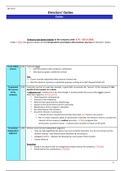
Directors owe general duties to the company under s170 – 182 CA 2006.
Under 170(4), the general duties will be interpreted in accordance with previous case law on directors’ duties.
To act within s171 A director must:
powers ü Act in accordance with company’s constitution
ü Only exercise powers conferred on them
Test:
® Courts ascertain objectively what purpose of power was
® Was this directors’ primary or substantial purpose in acting as he did? (Howard Smith Ltd)
To promote s172 A director must act in a way they consider, in good faith, to promote the “success” of the company for the
the success benefit of the members as a whole
of the = subjective test – whether he at the time thought it would promote the success (thus hard to prove)
company Must have regard to: (s172(1)(a)-(f))
ü Likely long-term consequences
ü Interests of the employees
ü Need to foster good business relationships
ü Impact on the environment and the community
ü Maintenance of the company’s reputation
ü Act fairly between the members
ü Any other relevant circumstances
® In board minutes, should show that they have taken s172 factors into account.
® NB: in certain situations (likely to become/are insolvent), the directors need to consider the
interests of the company’s creditors primarily – s172(3) recognises this.
At this point, to preserve assets – excessive loans would be in breach at this point.
To exercise s173 Director must exercise independent judgment
independent o They can take legal/financial advice, but must not fetter discretion. E.g. do not contract out the
judgment decision making – may fetter/restrain discretion by not doing so.
o Delegation (MA5) – allowed, but allowing too much power? Must monitor
o Undue influence
Exceptions:
ü Acting in accordance with an arrangement entered into by the company (s173(2)(a))
ü Authorised by the constitution (s173(2)(b))
1
Directors’ Duties
Duties
Directors owe general duties to the company under s170 – 182 CA 2006.
Under 170(4), the general duties will be interpreted in accordance with previous case law on directors’ duties.
To act within s171 A director must:
powers ü Act in accordance with company’s constitution
ü Only exercise powers conferred on them
Test:
® Courts ascertain objectively what purpose of power was
® Was this directors’ primary or substantial purpose in acting as he did? (Howard Smith Ltd)
To promote s172 A director must act in a way they consider, in good faith, to promote the “success” of the company for the
the success benefit of the members as a whole
of the = subjective test – whether he at the time thought it would promote the success (thus hard to prove)
company Must have regard to: (s172(1)(a)-(f))
ü Likely long-term consequences
ü Interests of the employees
ü Need to foster good business relationships
ü Impact on the environment and the community
ü Maintenance of the company’s reputation
ü Act fairly between the members
ü Any other relevant circumstances
® In board minutes, should show that they have taken s172 factors into account.
® NB: in certain situations (likely to become/are insolvent), the directors need to consider the
interests of the company’s creditors primarily – s172(3) recognises this.
At this point, to preserve assets – excessive loans would be in breach at this point.
To exercise s173 Director must exercise independent judgment
independent o They can take legal/financial advice, but must not fetter discretion. E.g. do not contract out the
judgment decision making – may fetter/restrain discretion by not doing so.
o Delegation (MA5) – allowed, but allowing too much power? Must monitor
o Undue influence
Exceptions:
ü Acting in accordance with an arrangement entered into by the company (s173(2)(a))
ü Authorised by the constitution (s173(2)(b))
1